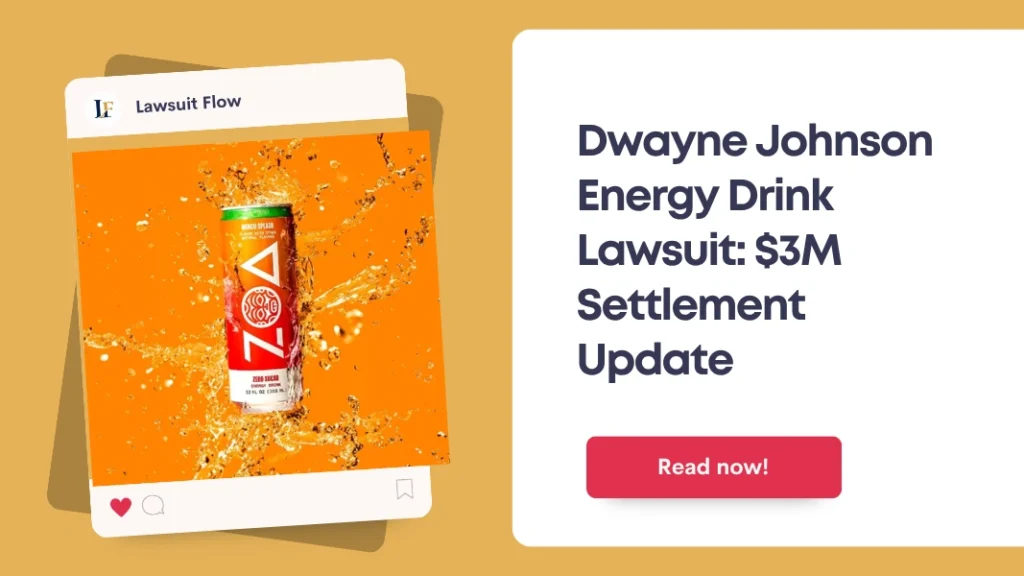

ZOA Energy, the energy drink brand co-founded by Dwayne “The Rock” Johnson, became the subject of a consumer class action over how certain drinks were labeled. The Dwayne Johnson Energy Drink Lawsuit centers on allegations that ZOA products advertised as containing “0 Preservatives” included ingredients the plaintiff claimed could function as preservatives.
Consumers searching the case are mainly looking for information about the lawsuit’s status, the $3 million proposed settlement, eligibility requirements, expired claim deadline, possible payments, and whether Johnson himself was sued.
The case is formally known as Mikhail Gershzon v. ZOA Energy, LLC, Case No. 3:23-cv-5444-JD, in the U.S. District Court for the Northern District of California. Importantly, ZOA has denied wrongdoing, and the settlement does not amount to a finding that the company violated the law.
What Is the Dwayne Johnson Energy Drink Lawsuit?
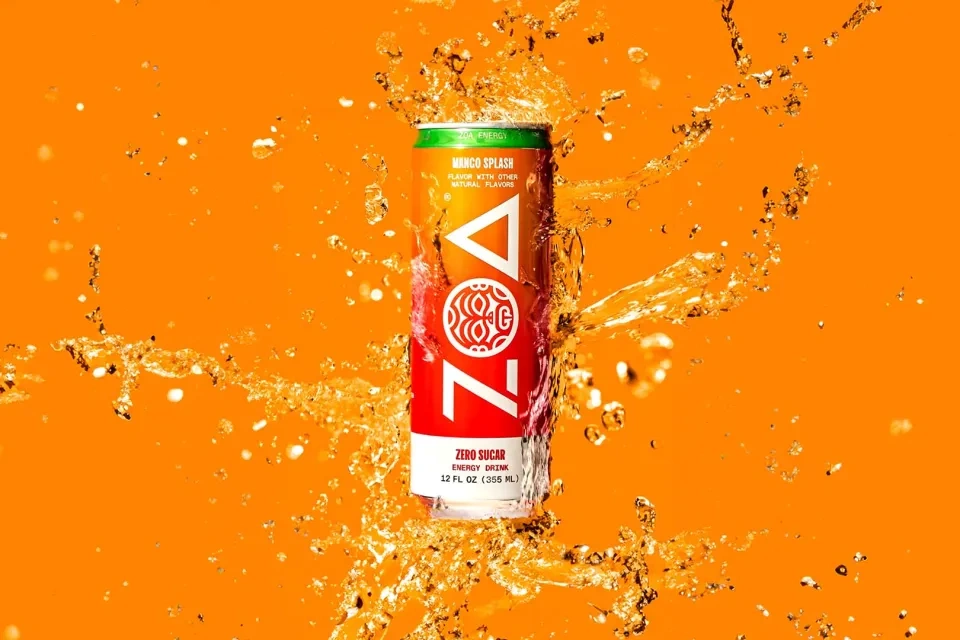
The Dwayne Johnson Energy Drink Lawsuit is a consumer labeling case involving ZOA Energy, a brand Johnson helped create. Plaintiff Mikhail Gershzon alleged that ZOA misled consumers by selling energy drinks displaying the statement “0 Preservatives” even though the products contained citric acid and ascorbic acid.
According to the settlement materials, the plaintiff alleged these ingredients were being used as chemical preservatives. The lawsuit therefore focused primarily on whether the labeling could mislead reasonable consumers—not on allegations that drinking ZOA caused physical injuries.
The claims included alleged violations of California consumer-protection and false-advertising laws, breach of warranty, and restitution based on quasi-contract or unjust enrichment.
ZOA denied the allegations. Rather than continue litigating the dispute, the parties reached a proposed $3 million class action settlement intended to resolve covered claims. The court did not make a finding that ZOA’s labeling was unlawful.
What Is ZOA Energy and Dwayne Johnson’s Role?
ZOA Energy is an energy drink and performance-focused beverage brand launched in 2021. Dwayne Johnson co-founded the business alongside Dany Garcia, Dave Rienzi, and John Shulman.
ZOA identifies Johnson as its “Chief Energy Officer.” His public profile has played a significant role in the brand’s marketing and identity, which helps explain why consumers often refer to the litigation as the “Dwayne Johnson energy drink lawsuit.”
That description can be misleading from a legal standpoint, however. The defendant identified in the federal class action is ZOA Energy, LLC. The dispute concerns representations appearing on ZOA products rather than a separate personal lawsuit accusing Johnson individually of making the challenged labeling statements.
This distinction matters because a celebrity’s association with a company does not automatically make that person an individual defendant whenever the company faces litigation.
Why Was ZOA Energy Sued?
ZOA Energy was sued because the plaintiff challenged the accuracy of the “0 Preservatives” representation appearing on certain ZOA Energy drink labels.
The lawsuit alleged that reasonable consumers could interpret this representation to mean the products contained no chemical preservatives. According to the plaintiff, that message conflicted with the presence of citric acid and ascorbic acid in the drinks.
The central legal question was therefore one of consumer labeling and advertising. The plaintiff argued that purchasers may have paid for products based, at least partly, on the challenged representation.
ZOA disputed that interpretation and maintained that its labeling and marketing were truthful, accurate, and legally compliant. The settlement was reached without the court deciding the underlying labeling dispute in favor of either party.
What Is Gershzon v. ZOA Energy, LLC?
Gershzon v. ZOA Energy, LLC is the formal name of the federal class action underlying the controversy. The case is identified as Case No. 3:23-cv-5444-JD and is pending in the U.S. District Court for the Northern District of California before Judge James Donato.
Mikhail Gershzon brought the action individually and on behalf of other consumers who allegedly purchased qualifying ZOA drinks.
The litigation ultimately produced a proposed settlement covering U.S. residents who purchased ZOA Energy drinks bearing the “0 Preservatives” statement for personal use during the specified class period.
This is an important distinction for readers researching the case: the litigation is not simply an online controversy or collection of customer complaints. It is an actual federal consumer class action with a court-supervised settlement process.
What Are the Main Allegations in the ZOA Energy Lawsuit?
The lawsuit’s core allegations concerned product labeling rather than the general quality or safety of ZOA Energy drinks.
The plaintiff’s theory can be summarized around three connected issues:
- ZOA drinks displayed a “0 Preservatives” statement.
- The products contained citric acid and ascorbic acid.
- The plaintiff alleged those ingredients were being used as chemical preservatives.
Based on those allegations, Gershzon asserted several legal claims, including breach of warranty and alleged violations of California’s Unfair Competition Law, False Advertising Law, and Consumers Legal Remedies Act.
Those remain allegations rather than judicial findings. ZOA denied that it violated the law or harmed consumers.
The “0 Preservatives” Labeling Claim
The phrase at the center of the dispute was “0 Preservatives.”
According to the plaintiff, consumers viewing that representation could reasonably believe they were buying a beverage that did not contain ingredients serving a preservative function. The lawsuit alleged that this representation influenced purchasing decisions.
Labeling cases often turn on context. Courts may examine what a reasonable consumer would understand from the challenged wording, the overall packaging, ingredient disclosures, and the factual function of particular ingredients.
The settlement avoids a final determination of whether ZOA’s representation would ultimately have been found deceptive.
Citric Acid and Ascorbic Acid Allegations
The plaintiff specifically focused on citric acid and ascorbic acid.
According to the lawsuit and official settlement notice, Gershzon alleged that these substances functioned as chemical preservatives in the challenged ZOA products. On that basis, he claimed their presence was inconsistent with the “0 Preservatives” representation.
The allegation should not be confused with a finding that these ingredients made the drinks unsafe. The dispute concerned their alleged preservative function and what that meant for the accuracy of the product label.
ZOA rejected the plaintiff’s legal theory and maintained that its marketing and labeling were accurate.
False Advertising and Consumer Protection Claims
The plaintiff used the disputed labeling to assert consumer-protection claims under California law.
The settlement notice identifies claims involving California’s Unfair Competition Law, False Advertising Law, Consumers Legal Remedies Act, breach of warranty, and restitution based on quasi-contract or unjust enrichment.
In general, these types of claims can arise when consumers allege that a business representation caused them to purchase a product they otherwise would not have bought or to pay more than they otherwise would have paid.
The settlement resolves the covered claims without establishing that ZOA actually committed false advertising or violated consumer-protection laws.
How Did ZOA Energy Respond to the Lawsuit?
ZOA denied the plaintiff’s allegations.
According to the court-authorized settlement materials, the company maintains that its product labeling and marketing were truthful, accurate, and compliant with applicable law. ZOA also denied that it caused the harm alleged in the lawsuit.
The parties eventually chose settlement rather than continuing toward a contested judgment. Settlement can reduce litigation expenses, uncertainty, discovery burdens, and the risks associated with trial and appeals.
That decision should not be interpreted as an admission of liability. Settlement documents expressly provide that the agreement is not an admission or evidence of wrongdoing by ZOA.
For consumers, the practical result was the creation of a settlement fund and a claims process rather than a judicial ruling on whether the original “0 Preservatives” labeling violated the law.
Is the Dwayne Johnson Energy Drink Lawsuit a Class Action?
Yes. Gershzon v. ZOA Energy, LLC proceeded as a proposed consumer class action, and the court preliminarily certified a settlement class for purposes of resolving the dispute.
The settlement class generally covers U.S. residents who bought qualifying ZOA Energy drinks displaying “0 Preservatives” for personal use—not resale or distribution—between March 1, 2021 and November 21, 2025.
Class actions allow one or more named plaintiffs to pursue claims involving a larger group of people who allegedly experienced similar conduct.
Certification for settlement purposes does not mean the plaintiff proved the underlying allegations. Instead, it allows the parties to resolve qualifying class members’ covered claims collectively, subject to the court’s approval process.
Dwayne Johnson Energy Drink Lawsuit Settlement Details
ZOA agreed to establish a $3 million settlement fund to resolve the covered claims in the lawsuit.
According to the official settlement website, the fund is intended to cover approved consumer claims as well as settlement-related expenses, including administration costs, court-approved attorneys’ fees and costs, and any approved service award for the class representative.
Key settlement information includes:
| Settlement Detail | Information |
|---|---|
| Case | Mikhail Gershzon v. ZOA Energy, LLC |
| Case Number | 3:23-cv-5444-JD |
| Court | U.S. District Court, Northern District of California |
| Settlement Fund | $3 million |
| Class Period | March 1, 2021–November 21, 2025 |
| Claim Deadline | February 20, 2026 |
| Without Proof | Up to $10 per household |
| With Proof | Up to $150 per household |
| Final Approval Hearing | March 26, 2026 |
The settlement resolves claims without ZOA admitting wrongdoing.
How Much Is the ZOA Energy Lawsuit Settlement?
The total settlement fund is $3,000,000.
That figure should not be confused with the amount available to each consumer. The $3 million fund covers multiple settlement obligations, including payments on approved claims and certain court-approved litigation and administration expenses.
Class counsel indicated that it would seek attorneys’ fees of no more than one-third of the settlement fund, or $1 million. A service award of up to $7,500 for the class representative was also contemplated, subject to court approval.
Individual payments depend on the applicable settlement terms, whether acceptable purchase documentation was provided, and the administration of valid claims.
Who Qualifies for the ZOA Energy Settlement?
The settlement class generally includes people who meet all of the following requirements:
- They were residents of the United States.
- They purchased a ZOA Energy drink in the United States.
- The product carried a “0 Preservatives” label.
- The purchase was for personal use.
- The product was not purchased for resale or distribution.
- The purchase occurred during the applicable class period.
Certain people and entities are excluded, including those who validly opted out, government entities, specified released parties, the presiding judge and immediate family members, and purchasers who acquired products for resale.
Eligible Purchase Dates
The qualifying purchase period runs from March 1, 2021 through November 21, 2025.
Purchases outside that window are not included in the settlement class defined in the official notice.
The date requirement matters because settlement eligibility is determined by the class definition negotiated by the parties and preliminarily approved by the court—not simply by whether someone has ever purchased ZOA.
Consumers also needed to satisfy the remaining eligibility requirements and submit a timely claim to seek payment.
Products Covered by the Settlement
The settlement applies to ZOA Energy drinks carrying the statement “0 Preservatives.”
It does not automatically cover every product ever sold under the ZOA brand. The class definition ties eligibility to purchases of energy drinks bearing the challenged labeling during the applicable period.
That distinction is particularly important because ZOA has marketed products beyond its core canned energy drinks.
Consumers determining whether a past purchase qualified needed to consider the product, its labeling, purchase date, location, and intended use.
Purchases With and Without Proof
The settlement allowed claims both with and without qualifying proof of purchase.
Consumers with valid supporting documentation could seek payments for documented purchases, subject to a higher household cap.
Acceptable documentation could include receipts, purchase records, removed UPC codes, or other qualifying third-party documentation reasonably establishing the product and purchase date.
Consumers without receipts were not automatically excluded. The settlement established a separate lower payment cap for approved claims submitted without proof.
Only one claim per household was permitted under the settlement terms.
How Much Could Consumers Receive From the ZOA Settlement?
The settlement establishes different payment limits depending on whether the claimant could document qualifying purchases.
The basic payment structure was based on qualifying units purchased, with household caps applying.
Consumers without proof could receive up to $10 per household, while those submitting qualifying proof could potentially receive up to $150 per household.
These figures represent settlement limits rather than a guarantee that every claimant will receive the maximum amount.
Final payments depend on whether claims are approved and the settlement’s distribution mechanics.
Payments With Proof of Purchase
Class members submitting valid proof of purchase could receive at least $1 per qualifying unit, subject to a maximum payment of $150 per household under the settlement terms.
Proof needed to establish qualifying purchases during the class period. Documentation could include purchase records, receipts, qualifying UPC evidence, or other acceptable commercial records.
A claimant therefore would not automatically receive $150 simply because documentation was provided. The payment depended on documented qualifying purchases and the settlement’s applicable calculation rules.
Payments Without Proof of Purchase
Consumers were also permitted to submit claims without receipts or comparable purchase documentation.
For approved no-proof claims, the settlement provided $1 per unit purchased, up to $10 per household.
This provision made compensation potentially available to consumers who no longer had receipts from purchases made several years earlier.
However, claimants were still required to provide the information requested on the claim form and certify that their submissions were accurate. The no-proof option did not remove the basic eligibility requirements.
How to File a ZOA Energy Settlement Claim
The period for filing a timely settlement claim has now passed.
During the claims period, eligible class members could submit their claim electronically through the court-authorized settlement website or send a completed paper form to the settlement administrator.
The general process required consumers to:
- Confirm that they fell within the settlement class.
- Identify qualifying ZOA purchases.
- Complete the official claim form.
- Provide supporting purchase documentation when seeking documented-purchase benefits.
- Certify the accuracy of the information.
- Submit the form electronically or mail it before the deadline.
The deadline for online submissions or postmarked mailed claims was February 20, 2026.
Consumers should not attempt to submit inaccurate purchase information simply to obtain settlement money.
ZOA Energy Lawsuit Claim Form
The official ZOA Energy lawsuit claim form was provided through the court-authorized settlement website administered for Gershzon v. ZOA Energy, LLC.
The settlement site’s documents section includes the claim form along with the amended settlement agreement, preliminary approval order, long-form notice, and related court materials.
Official ZOA Settlement Website
Because the filing deadline has passed, consumers should not assume that a new claim can still be submitted merely because the settlement website remains accessible.
The administrator—not unrelated settlement websites or social-media posts—is the appropriate source for official information about previously submitted claims.
What Was the ZOA Energy Settlement Claim Deadline?
The claim deadline was Friday, February 20, 2026.
Online claim forms needed to be submitted by that deadline, while mailed forms needed to be postmarked by February 20, 2026.
Two other deadlines applied earlier in the process. Class members wishing to exclude themselves from the settlement generally needed to do so by February 13, 2026. Objections were also due by February 13, 2026.
As of August 2026, those dates have passed. Anyone who already submitted a claim should retain copies of confirmation emails, claim numbers, receipts, and correspondence from the settlement administrator until the distribution process is complete.
ZOA Energy Settlement Payout Date
The official settlement website does not currently provide a confirmed universal payout date.
The settlement materials explain that benefits are distributed only after the settlement receives the necessary court approval and any applicable appeals are resolved.
That means consumers should be cautious with websites giving a specific payment date unless that date is confirmed by the settlement administrator or court record.
Settlement distributions can take time because administrators must process claims, identify duplicates or deficiencies, calculate approved payments, address court orders, and complete any required appeal period.
For claimants, the safest approach is to monitor the court-authorized settlement website rather than treating an estimated payment month as guaranteed.
Dwayne Johnson Energy Drink Lawsuit Update 2026
As of August 2026, the major development is that the parties reached a proposed $3 million settlement, the claims deadline has passed, and the scheduled final approval hearing date of March 26, 2026 has also passed.
However, the court-authorized settlement website available at the time of this update still describes the settlement in preliminary/proposed terms and continues to display the March 26 hearing as the final approval hearing. Its public documents page lists the amended settlement agreement, preliminary approval order, notice, claim form, and related materials but does not presently display a final approval order.
Accordingly, it would be premature to state that payouts have definitely been issued or that a specific distribution date has been officially confirmed.
The confirmed points are that the $3 million agreement was reached, ZOA denies wrongdoing, and the February 20, 2026 claim deadline has expired.
Is Dwayne Johnson Personally Named in the ZOA Energy Lawsuit?
The defendant identified in the settlement case is ZOA Energy, LLC, not Dwayne Johnson personally.
Johnson’s name is closely connected with the controversy because he co-founded ZOA and remains one of the brand’s most recognizable public figures. ZOA itself identifies him as a founder and its Chief Energy Officer.
But celebrity involvement in a brand and personal legal liability are different issues.
The court-authorized settlement materials identify Mikhail Gershzon as the plaintiff and ZOA Energy, LLC as the defendant. They do not identify Johnson as the individual defendant in the action.
For that reason, describing the case simply as “Dwayne Johnson being sued over an energy drink” can create an inaccurate impression of the actual parties.
Did ZOA Energy Admit Any Wrongdoing?
No. ZOA did not admit wrongdoing as part of the settlement.
The company denies the plaintiff’s allegations and maintains that its labeling and marketing were truthful, accurate, and compliant with applicable law. The court also did not decide the underlying dispute in favor of either party before the settlement was reached.
The settlement documents further state that the agreement should not be construed as an admission or evidence of a legal violation, liability, wrongdoing, or the truth of the allegations asserted against ZOA.
This distinction is fundamental in settlement reporting. A company may agree to resolve litigation for financial and practical reasons without accepting the plaintiff’s factual or legal position.
ZOA Energy Lawsuit Timeline
The case developed over several years, moving from the original consumer dispute to a negotiated class action settlement.
| Date | Development |
|---|---|
| March 1, 2021 | Beginning of the settlement class purchase period |
| October 23, 2023 | Federal lawsuit filed |
| November 21, 2025 | Court granted preliminary approval; class period ended |
| February 13, 2026 | Opt-out and objection deadline |
| February 20, 2026 | Claim submission deadline |
| March 26, 2026 | Scheduled final approval hearing |
| August 2026 | Claim period closed; official settlement site still does not publicly list a final payout date |
The case remains important for consumers because settlement administration can continue after the headline litigation has effectively moved away from active merits disputes.
Claimants should therefore distinguish between the date a settlement agreement is announced, the date claims close, final court approval, and the eventual distribution of payments.
What Happens After the ZOA Energy Settlement?
For consumers who submitted timely claims, the next practical stage is settlement administration.
The claims administrator must review submissions and determine which claims qualify under the settlement terms. Claims involving supporting documentation may require verification, while duplicate, incomplete, or otherwise deficient submissions can require additional review.
If the settlement becomes fully effective after the required court proceedings and any applicable appeals, approved payments can then be distributed according to the agreement.
Class members who did not submit claims generally cannot receive settlement payments merely because they purchased qualifying products. The February 20, 2026 claims deadline has passed.
Consumers who filed claims should preserve their records and monitor official communications. Any unexpected message requesting fees to “release” settlement money should be treated cautiously, since legitimate class action claims do not require consumers to pay an outside service to obtain an approved settlement benefit.
Read: Monday Shampoo Lawsuit
Read: McDonald’s 100% Beef Lawsuit
Read: HexClad Lawsuit
Read: Manny Khoshbin Lawsuit
Read: Blind Frog Ranch Lawsuit
Read: Sierra Mist Lawsuit
Read: 100 Day Dream Home Lawsuit
Read: Breo Ellipta Lawsuit
Frequently Asked Questions
What was the ZOA Energy lawsuit about?
The lawsuit alleged that ZOA Energy drinks labeled “0 Preservatives” contained citric acid and ascorbic acid, which the plaintiff claimed functioned as chemical preservatives. ZOA denied that its labeling was misleading or unlawful.
How much is the ZOA Energy settlement?
ZOA agreed to establish a $3 million settlement fund. That fund is intended to cover approved consumer payments and certain court-approved costs associated with resolving and administering the litigation.
Can I still file a ZOA Energy claim in 2026?
The stated claim deadline was February 20, 2026, so the ordinary claims period has expired. Consumers who already submitted claims should monitor communications from the settlement administrator and the official settlement website for further information.
When will ZOA settlement payments be sent?
A confirmed universal payout date has not been publicly announced. Approved claimants should rely on the official settlement administrator for payment updates.
Did ZOA Energy admit wrongdoing?
No. ZOA denied the allegations and agreed to settle without admitting liability or violating consumer protection laws.
Final Thoughts
The Dwayne Johnson Energy Drink Lawsuit is ultimately a consumer-labeling dispute involving ZOA Energy rather than a personal liability case against Johnson. Plaintiff Mikhail Gershzon alleged that the company’s “0 Preservatives” representation was misleading because qualifying products contained citric acid and ascorbic acid. ZOA denied those allegations and agreed to a proposed $3 million settlement without admitting wrongdoing.
For consumers, the most important facts are now procedural. The qualifying class period ran from March 1, 2021 through November 21, 2025, and the claim deadline expired on February 20, 2026. Consumers who filed valid claims should rely on the court-authorized settlement administrator for payment updates rather than unofficial payout predictions. As with any class action, a settlement resolves disputed claims; it does not by itself prove the allegations made in the lawsuit.