HexClad is known for hybrid cookware that combines stainless-steel construction with a nonstick cooking surface. The HexClad Lawsuit gained attention after consumers challenged how certain cookware products and their nonstick coatings were advertised, particularly claims involving PFAS, PFOA, toxicity, and metal-utensil safety.
Consumers searching the case often want to know whether a class action actually existed, whether HexClad admitted wrongdoing, how much the settlement was worth, who qualified, whether claims remain open, and when settlement payments were expected.
The key point is that this was not simply an internet controversy. A class action was filed, and a $2.5 million settlement was ultimately reached. However, the allegations should not be treated as findings of wrongdoing: HexClad denied liability, and settlement does not constitute an admission that the plaintiffs’ claims were true.
What Is the HexClad Lawsuit?
The HexClad lawsuit refers principally to Cliburn v. One Source to Market, LLC d/b/a HexClad Cookware, Inc., a consumer class action filed in Los Angeles County Superior Court. The action was filed on November 17, 2023, under case number 23STCV28390.
Plaintiffs alleged that HexClad falsely or misleadingly advertised and labeled the nonstick coating on certain cookware. Among the challenged representations were claims that products were “non-toxic,” “PFAS Free,” “PFOA Free,” or otherwise free of certain chemicals. Claims concerning whether the cookware was “metal utensil safe” were also part of the litigation.
The dispute was significant because plaintiffs contended that covered cookware contained PTFE, or polytetrafluoroethylene. The litigation challenged the relationship between that coating and broad PFAS-free marketing representations.
HexClad denied the allegations and did not admit wrongdoing, fault, liability, or damages. The parties eventually agreed to settle rather than continue litigating the disputed claims.
Why Are People Searching for the HexClad Lawsuit?
Interest in the case comes from several overlapping issues. HexClad cookware is relatively expensive, widely promoted online, and associated with claims about hybrid performance and nonstick convenience. Questions about the composition of older cookware therefore attracted considerable consumer attention.
The settlement also created practical questions for past purchasers. Consumers wanted to determine whether their cookware was included, whether they could file a claim, and what compensation might be available.
Common search concerns include:
- whether HexClad cookware contained PTFE;
- whether previous PFAS-free marketing was accurate;
- whether a class action was actually filed;
- whether a settlement was approved;
- how much individual payments would be;
- whether Costco purchases qualified; and
- whether current HexClad cookware uses the same coating.
These questions should be separated carefully. The lawsuit addressed specific advertising and consumer-protection allegations involving covered products and a defined purchase period. It did not amount to a judicial finding that every HexClad product is unsafe.
Is There an Active HexClad Lawsuit?
Yes, a real class action was filed against One Source to Market, LLC, doing business as HexClad Cookware. However, the principal PFAS-related advertising case has moved beyond the initial litigation stage and into settlement administration.
The parties reached a $2.5 million proposed class settlement. Official settlement records identify the case as Cliburn v. One Source to Market, LLC d/b/a HexClad Cookware, Inc. and provide court documents covering preliminary approval, settlement terms, claims administration, and final approval.
By 2026, the claim-filing period had closed. The deadline for settlement claims was November 14, 2025. Updated settlement reporting states that final approval was granted on March 9, 2026, with payments beginning in May 2026.
That distinction matters. Someone searching today should not assume that the original settlement is still accepting new claims merely because older articles describe it as an “active” class action.
What Are the Main Allegations in the HexClad Lawsuit?
The case primarily concerned representations made about the cookware rather than a court determination that HexClad products caused a particular disease or physical injury.
Plaintiffs challenged advertising and labeling involving the chemical composition and performance of the nonstick coating. Official settlement materials summarize allegations involving representations such as “non-toxic,” “PFAS Free,” “PFOA Free,” and “metal utensil safe.”
Nonstick Coating Claims
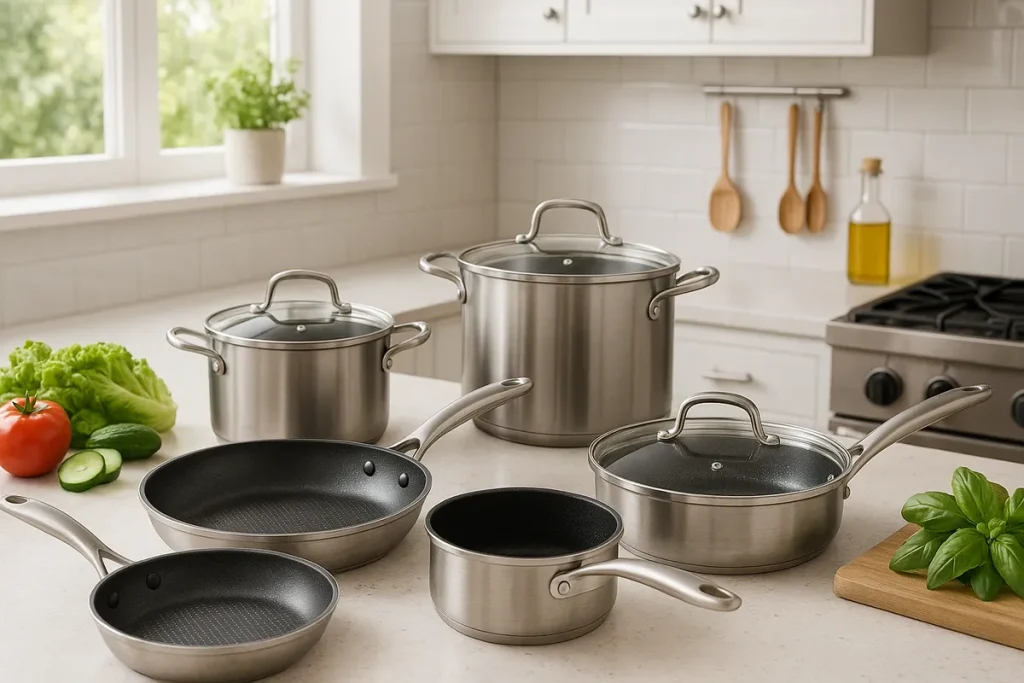
HexClad’s hybrid design combines raised stainless-steel portions with recessed areas containing nonstick material. The lawsuit focused in part on how the nonstick component of covered products was described to consumers.
Plaintiffs alleged that buyers paid for cookware based partly on representations concerning the coating and its characteristics. They contended that accurate disclosure of the coating’s composition could have affected purchasing decisions or the amount consumers were willing to pay.
This is fundamentally a consumer-advertising theory. A false-advertising case does not necessarily require proof that every product malfunctioned. The legal question can instead involve whether a material representation was likely to mislead a reasonable consumer.
PFAS and PTFE Concerns
PTFE stands for polytetrafluoroethylene, a fluoropolymer commonly associated with nonstick cookware. The plaintiffs’ theory connected PTFE with the broader PFAS category and challenged advertising that characterized certain cookware as PFAS-free.
The litigation therefore involved more than whether a product contained PFOA. PFAS is a broad chemical category, while PFOA is one specific substance. Those terms should not be treated as interchangeable.
The settlement ultimately included restrictions on marketing products containing PTFE or another chemical within the PFAS family as “PFAS free,” “PFOA free,” or “non-toxic,” according to court materials submitted in connection with final approval.
Marketing and Advertising Claims
Marketing was central to the case.
Plaintiffs alleged that consumers encountered representations suggesting that certain cookware was non-toxic or free from PFAS or PFOA. They argued that those statements were important to purchasers specifically seeking alternatives to cookware containing fluorinated nonstick substances.
HexClad denied that it engaged in actionable wrongdoing.
The settlement therefore should not be described as a verdict establishing intentional deception. Settlement agreements commonly resolve disputed claims without requiring either side to concede its underlying legal position.
Product Safety Concerns
Safety concerns contributed to consumer interest, but they need to be distinguished from what the lawsuit legally established.
The class action focused on alleged advertising, labeling, and marketing practices. It did not establish through a trial verdict that HexClad cookware caused widespread injuries or that every covered pan presented a proven health hazard.
Consumers concerned about damaged cookware should follow the manufacturer’s current care instructions and evaluate the condition of their individual product. A visibly deteriorated cooking surface is also a separate issue from whether historical marketing complied with consumer-protection law.
What Is HexClad Cookware Made Of?
Current HexClad cookware uses a layered hybrid construction.
According to HexClad’s current product explanation, its cookware includes an aluminum core for heat conduction, stainless-steel layers, a magnetic steel base for compatibility with induction cooktops, and raised stainless-steel hexagonal ridges surrounding recessed nonstick areas.
The company currently identifies the material in those nonstick areas as TerraBond™, a proprietary ceramic nonstick coating.
This hybrid configuration is intended to combine characteristics associated with stainless steel and conventional nonstick cookware. The steel ridges provide exposed cooking and searing surfaces while helping protect the recessed coating.
The composition of current cookware should not automatically be assumed to describe every historical HexClad product. The class action involved products sold during an earlier defined period, while HexClad’s current website describes its newer TerraBond formulation as PTFE-free and PFAS-free.
Does HexClad Contain PTFE or PFAS?
The answer depends on which generation of cookware is being discussed.
The lawsuit alleged that certain covered HexClad products contained PTFE despite marketing representations concerning PFAS, PFOA, and toxicity. That alleged inconsistency formed an important part of the consumer claims resolved through the settlement.
Current HexClad materials tell a different story. HexClad now states that its TerraBond ceramic nonstick coating is both PTFE-free and PFAS-free. The company’s current product pages also publish third-party testing representations showing results reported as below detection limits for listed PFAS compounds and PTFE.
Consumers therefore should not treat an older HexClad pan and a newly manufactured TerraBond product as necessarily having identical coating chemistry.
For someone trying to identify a specific pan, the product model, purchase date, packaging, manufacturer information, and direct confirmation from HexClad may be more useful than broad online statements about the entire brand.
When Did HexClad Stop Using PTFE Coating?
The settlement class covered eligible purchases made from February 1, 2022 through March 31, 2024. That period is important for settlement eligibility, but it should not automatically be treated as an exact manufacturing cutoff for every PTFE-coated item.
Current HexClad cookware is advertised with the company’s TerraBond ceramic coating, which HexClad describes as PTFE-free and PFAS-free. The company’s present product and FAQ pages consistently use that formulation.
Consumers sometimes state online that the formulation changed during 2024. However, an individual product’s coating should not be identified solely from a Reddit comment or an assumed purchase-year cutoff.
If determining whether an older pan contains PTFE is important, check its model information and purchase records and request product-specific confirmation from the manufacturer.
Is HexClad Still Safe to Use?
The settlement itself does not establish that all HexClad cookware is unsafe.
Its core legal allegations concerned advertising and labeling. The court’s settlement process resolved disputed consumer claims without a trial finding that HexClad cookware generally causes physical injury.
Current HexClad cookware is marketed as using TerraBond ceramic nonstick material that is PTFE-free and PFAS-free. HexClad also states that testing of current products returned “Non-Detect” results for listed PFAS compounds and PTFE. Those are manufacturer-provided representations and should be understood as such.
Consumers should nevertheless inspect cookware for unusual deterioration and follow appropriate care and temperature instructions. If a coating is visibly peeling, severely scratched, separating, or otherwise damaged, discontinuing use until the manufacturer can evaluate the product is a prudent product-care step.
The class action should not be used as a substitute for individualized medical, toxicological, or product-safety advice.
What Is the HexClad Controversy?
The controversy developed because HexClad built part of its appeal around premium hybrid cookware and consumer-friendly descriptions of its nonstick technology.
Plaintiffs argued that representations concerning PFAS, PFOA, and toxicity gave consumers a particular impression about the chemical composition of covered products. The lawsuit alleged that those representations were misleading because of PTFE in the nonstick coating.
The issue became more visible as consumers discussed the difference between PTFE, PFOA, and PFAS. Those terms are frequently confused in cookware discussions, creating additional uncertainty about exactly what “PFAS-free” means.
The $2.5 million settlement gave the controversy a concrete legal outcome. Yet the result still needs proper context: HexClad denied wrongdoing, and settlement was a negotiated resolution rather than a liability verdict.
What Do HexClad Reviews and Consumer Complaints Say?
Consumer experiences are mixed and should not be confused with verified legal findings.
Some purchasers praise HexClad’s searing ability, appearance, initial nonstick performance, and ease of cleanup. Others report dissatisfaction involving food sticking, surface wear, coating deterioration, cleaning difficulty, or warranty interactions.
Online reviews can help identify patterns worth investigating, but they do not establish causation or legal liability.
Nonstick Performance Complaints
One recurring complaint in online cookware discussions is that a pan initially performed well but became more difficult to cook with or clean over time.
Nonstick performance can depend on several factors, including cooking temperature, seasoning or preparation practices, cleaning methods, utensils, oils, and ordinary surface wear.
For that reason, an individual report of sticking does not prove a manufacturing defect.
Consumers experiencing a major decline in performance should document the condition of the pan and compare their use with the manufacturer’s instructions before making a warranty request.
Coating and Durability Concerns
Some online users have posted photographs or descriptions of cookware they believe shows surface wear, coating deterioration, or other changes.
These reports are anecdotal. They should not be interpreted as proof that all HexClad products develop the same condition.
Still, visible deterioration deserves attention. Photographs, purchase receipts, model numbers, and records showing how the cookware was used can become useful if a consumer later seeks warranty service or needs to establish the history of the product.
Warranty Complaints
HexClad currently advertises a lifetime warranty, but a lifetime warranty does not necessarily cover every type of damage.
The company’s warranty information excludes damage caused by misuse, abuse, alteration, and certain other circumstances. It also states that surface imperfections may develop over time and can constitute normal wear. Proof of purchase and purchase through an authorized source may be required.
This explains why two customers with superficially similar complaints may receive different warranty outcomes.
Consumers should preserve receipts and communicate with customer service in writing when possible.
Is There a HexClad Class Action Lawsuit?
Yes.
Cliburn v. One Source to Market, LLC d/b/a HexClad Cookware, Inc. was handled as a class action involving purchasers of eligible cookware. Official settlement documents identify multiple class representatives and define the covered settlement class.
The class generally covered qualifying purchasers of eligible products during the period from February 1, 2022 through March 31, 2024.
The settlement created a $2.5 million common fund and provided cash benefits to consumers who met the applicable requirements and submitted valid claims.
The agreement also included prospective changes affecting certain marketing statements.
Importantly, certification of a settlement class and approval of a settlement do not mean that a court found every allegation true. HexClad continued to deny wrongdoing.
HexClad Lawsuit Update 2026
The most important 2026 update is that the principal false-advertising class action has reached the settlement distribution stage.
| Case Detail | Current Information |
|---|---|
| Case | Cliburn v. One Source to Market, LLC d/b/a HexClad Cookware, Inc. |
| Case Number | 23STCV28390 |
| Court | Los Angeles County Superior Court |
| Lawsuit Filed | November 17, 2023 |
| Settlement Fund | $2.5 million |
| Covered Purchase Period | February 1, 2022–March 31, 2024 |
| Claim Deadline | November 14, 2025 |
| 2026 Status | Final approval granted; distribution underway |
| New Claims | Claim deadline has passed |
Official case materials include an order granting final approval, while updated settlement reporting states that final approval occurred March 9, 2026. Payments to approved claimants reportedly began on May 21, 2026.
This means articles suggesting that consumers can still freely join the original settlement are outdated.
Has a HexClad Lawsuit Settlement Been Reached?
Yes. A $2.5 million class action settlement was reached to resolve the consumer claims.
The settlement addressed allegations that HexClad falsely advertised or labeled covered cookware in connection with claims such as “non-toxic,” “PFAS Free,” and “PFOA Free.” HexClad denied the allegations.
Settlement proceeds were intended to cover valid consumer claims as well as court-approved attorneys’ fees, litigation expenses, administration costs, and class-representative awards.
The agreement also contained non-monetary relief. Court filings described restrictions preventing HexClad from marketing a product containing PTFE or a chemical within the PFAS family using certain PFAS-free, PFOA-free, or non-toxic representations.
A settlement is a negotiated resolution. It avoids the expense and uncertainty of continuing litigation and does not, by itself, prove liability.
What Are the HexClad Lawsuit Settlement Amounts?
The gross settlement fund is $2.5 million.
Not all $2.5 million was available for direct payments to consumers. Settlement funds also cover expenses associated with administering and resolving a class action.
Reported allocations included:
- attorneys’ fees of up to approximately one-third of the fund;
- litigation expenses;
- settlement administration and notice costs;
- service awards for class representatives; and
- payments to consumers with valid claims.
The remaining net settlement fund was distributed according to the settlement’s pro rata methodology.
Therefore, a consumer should not divide $2.5 million by an arbitrary number of purchasers to estimate a personal award. The actual calculation depends on valid claims, eligible purchase amounts, approved deductions, and the settlement formula.
Is There a HexClad Lawsuit Payout Per Person?
There was no universal fixed payout promised to every claimant.
The settlement used a pro rata payment structure. In general, that means the net amount available for consumers is allocated proportionally among valid claims rather than giving everyone a predetermined flat award.
The calculation takes into account factors such as:
- the number of valid claims;
- qualifying products;
- the applicable purchase amount;
- whether required documentation was provided; and
- the net settlement fund remaining after approved deductions.
Payments were also not supposed to exceed the amount attributable to eligible products purchased by the claimant.
Some online reports have discussed relatively small individual payments. Those anecdotal amounts should not be treated as a guaranteed payout for another claimant because the settlement administrator’s approved calculation controls.
When Is the HexClad Lawsuit Settlement Payout Date?
Settlement payments entered distribution in 2026.
Updated settlement tracking indicates that final approval was granted on March 9, 2026 and that the administrator began issuing payments to approved claimants on approximately May 21, 2026.
The exact date on which an individual claimant receives money can differ based on payment method, claims processing, address accuracy, check delivery, and any administrative issue affecting a particular claim.
Consumers who filed valid claims should rely on communications from the settlement administrator rather than social-media estimates.
A delayed payment also does not necessarily mean that a claim was rejected. Claimants with unresolved questions should use the official settlement administrator’s contact information.
Who May Qualify for the HexClad Lawsuit?
The settlement generally included people who purchased one or more defined eligible HexClad products during the applicable class period.
The key purchase period was:
February 1, 2022 through March 31, 2024.
Eligible cookware included various Hybrid fry pans, woks, griddles, pots, saucepans, sauté pans, and sets containing covered products. The official claim form provides a detailed product list.
However, being a settlement class member and receiving money were not necessarily identical.
To receive a settlement payment, consumers had to comply with the claims process and submit a valid claim by the applicable deadline. The claim deadline was November 14, 2025.
Because that date has passed, someone who discovers the settlement in 2026 generally cannot simply file a new standard settlement claim now.
Is There a HexClad Lawsuit Claim Form Online?
An official claim form existed through the settlement process, but the deadline for submitting it was November 14, 2025.
The settlement website expressly stated that submitting a claim form was the method required to obtain a cash payment.
The claim window is therefore closed for ordinary new filings.
Consumers should be cautious with third-party websites that still display old “file a claim” buttons or pages written before the deadline. An outdated page does not reopen a court-approved deadline.
How to Verify an Official Claim Form
The safest method is to use the court-authorized settlement website and compare the case name and number with the official notice.
For this settlement, consumers should look for:
- Cliburn v. One Source to Market, LLC d/b/a HexClad Cookware, Inc.;
- Los Angeles County Superior Court;
- case number 23STCV28390;
- the authorized settlement administrator; and
- the November 14, 2025 claim deadline.
The official settlement portal is HexClad Settlement Website.
Avoid submitting sensitive information to an unrelated website simply because it ranks for “HexClad claim form.”
Information You May Need to Submit a Claim
During the open claims period, claimants were asked for identifying information and details concerning eligible purchases.
Relevant records included:
- name and mailing information;
- product purchased;
- approximate purchase date;
- quantity;
- purchase amount;
- settlement Claim ID and PIN when applicable;
- Amazon order information when applicable; and
- proof of purchase where required.
The official paper claim form specifically requested purchase dates, eligible products, quantities, and total amounts paid.
Consumers who already filed should continue keeping receipts, emails, notices, and copies of their submitted claim until payment and any administrative questions are fully resolved.
How to Join the HexClad Lawsuit
For the settled Cliburn class action, the ordinary deadline to submit a claim has passed.
The claim deadline was November 14, 2025. The separate deadline to exclude yourself from the settlement was August 5, 2025.
Therefore, consumers discovering the case in 2026 should not rely on instructions written while claims were still open.
If you submitted a claim before the deadline, your next step is generally to monitor settlement communications and verify the status of your payment if necessary.
If you did not submit a claim, whether you retain any separate legal option depends on facts such as your purchase date, the nature of your potential claim, applicable releases, statutes of limitation, and whether you were legally bound by the settlement. Individual legal advice may be appropriate where substantial losses or separate injuries are alleged.
What Is the Connection Between Costco and the HexClad Lawsuit?
Costco is relevant because HexClad products have been sold through Costco, including warehouse special events or roadshows. HexClad currently identifies Costco as one of its authorized U.S. sales channels.
The lawsuit was not simply a lawsuit “against Costco.” The defendant in the principal settlement was One Source to Market, LLC, doing business as HexClad Cookware.
Some consumers who purchased HexClad products through Costco have discussed returns and refunds online. Those experiences reflect individual retailer interactions and should not be confused with settlement benefits.
A Costco refund and a class-action settlement payment are separate mechanisms governed by different rules. Anyone considering a return should check the retailer’s current policy and retain purchase documentation.
What Are Reddit Users Saying About the HexClad Lawsuit?
Reddit discussions show substantial consumer interest in the settlement, but the posts vary widely in reliability.
Some users have discussed receiving settlement notices, difficulty identifying Claim IDs, concerns about older PTFE-containing cookware, and uncertainty about expected payments. Others have shared experiences involving declining nonstick performance, warranty disputes, Costco returns, or surface wear.
By early 2026, Reddit users were also asking when settlement checks would arrive and whether people who missed the November 2025 deadline had any remaining options.
These discussions can reveal what consumers are worried about, but Reddit is not an authoritative source for settlement rules, chemical safety, or legal eligibility.
The official settlement documents control issues such as deadlines, covered products, releases, and payment calculations.
Does Gordon Ramsay Really Support HexClad?
Yes. Gordon Ramsay has had a genuine commercial relationship with HexClad rather than merely appearing in an isolated advertisement.
HexClad’s official materials describe Ramsay as a partner and state that he uses the cookware at home and in studio settings. The company prominently features his endorsement in its marketing.
His involvement, however, does not determine the merits of the class action.
Celebrity or professional-chef endorsements are marketing relationships. They do not replace independent evidence concerning chemical composition, product durability, consumer-protection compliance, or safety.
Likewise, the existence of the lawsuit does not prove that Ramsay personally made the challenged representations or had responsibility for the disputed labeling practices.
Consumers evaluating cookware should consider product specifications and their own cooking requirements independently of celebrity endorsements.
What HexClad Consumers Should Do Next
The appropriate next step depends on whether a consumer owns older cookware, filed a settlement claim, or is considering buying a current HexClad product.
For consumers affected by the settlement:
- Check your claim records. Keep your confirmation, Claim ID, emails, and purchase documentation.
- Use the official settlement portal. Do not rely solely on old third-party claim pages.
- Inspect older cookware. Document unusual surface deterioration or coating problems with photographs.
- Preserve proof of purchase. Receipts and order confirmations may also matter for warranty service.
- Check the exact model. Current TerraBond cookware should not automatically be treated as chemically identical to older covered products.
- Contact the manufacturer for product-specific questions. Ask for written confirmation if you need to identify an older coating.
- Seek legal advice when necessary. Separate personal-injury, property-damage, or consumer claims can involve rules beyond this class settlement.
Most importantly, distinguish between the lawsuit’s proven procedural history and broader online speculation. The class action and settlement are real; not every health or safety claim posted online has been established in court.
Read: Samsung S22 Software Update Lawsuit
Read: YES Communities Lawsuit
Read: Rael Pads Lawsuit
Read: Janice Griffith Lawsuit
Read: Blind Frog Ranch Lawsuit
Read: Sierra Mist Lawsuit
Read: 100 Day Dream Home Lawsuit
Read: Breo Ellipta Lawsuit
Frequently Asked Questions
Is the HexClad lawsuit real?
Yes. A class action was filed against One Source to Market, LLC d/b/a HexClad Cookware. The dispute resulted in a $2.5 million settlement addressing alleged advertising and labeling representations.
What was the HexClad lawsuit about?
Plaintiffs alleged that certain cookware was misleadingly marketed using statements involving “non-toxic,” PFAS-free, PFOA-free, and metal-utensil-safe characteristics. HexClad denied wrongdoing and liability.
How much was the HexClad settlement?
The gross settlement fund was $2.5 million. That money also covered approved legal fees, expenses, administration costs, and class-representative awards, so the entire amount was not distributed directly to consumers.
Can I still file a HexClad settlement claim?
The standard claim deadline has passed. Eligible consumers were required to submit claims by November 14, 2025. Consumers with questions about previously submitted claims should contact the settlement administrator.
Does current HexClad cookware contain PTFE?
HexClad currently states that its TerraBond ceramic nonstick coating is PTFE-free and PFAS-free. Older cookware involved in the litigation should not automatically be assumed to use the same formulation.
Did HexClad admit wrongdoing?
No. HexClad denied the plaintiffs’ allegations, including wrongdoing, fault, liability, and damages. Resolving the case through settlement did not constitute an admission that the allegations were true.
When did HexClad settlement payments start?
Updated settlement information indicates that payments to approved claimants began around May 21, 2026, after final approval of the settlement in March 2026.
Final Thoughts
The HexClad Lawsuit ultimately became a significant consumer-advertising case concerning how certain nonstick cookware was marketed. Plaintiffs challenged representations involving PFAS, PFOA, toxicity, and product characteristics, while HexClad denied wrongdoing. The dispute resulted in a $2.5 million class action settlement rather than a trial verdict establishing liability.
For consumers in 2026, timing is particularly important. The November 14, 2025 claim deadline has passed, final approval has been granted, and settlement payments entered distribution in 2026. Current HexClad cookware is also advertised as using a PTFE-free and PFAS-free TerraBond ceramic coating. Consumers should rely on official settlement documents for legal status and product-specific information for questions about newer cookware, rather than treating older allegations, Reddit discussions, or individual complaints as established facts.