
Bravenly Global is a health-and-wellness direct-selling company whose rapid growth has also generated questions about litigation, distributor recruitment, products, and its multi-level marketing model. The Bravenly Global lawsuit receiving the most attention is a federal case filed by Plexus Worldwide against Bravenly Global and company co-founder Aspen Emry in December 2023.
People researching the dispute often want to know whether Bravenly was accused of unsafe products, whether consumers can receive a payout, and whether the case remains active. Those issues need to be separated from the actual commercial dispute.
Public court information shows that the Plexus case concerned a contract-related business conflict and ultimately ended after the parties reported a settlement. This article explains the verified case history, allegations, products, consumer discussions, and current legal status.
What Is the Bravenly Global Lawsuit?
The principal verified lawsuit associated with Bravenly Global is Plexus Worldwide, LLC v. Bravenly Global, LLC et al., Case No. 8:23-cv-02793. Plexus filed the federal action on December 7, 2023, in the U.S. District Court for the Middle District of Florida. Bravenly Global and Aspen Emry were named as defendants.
The court classified the matter as an “Other Contract” action under diversity jurisdiction. This distinction matters because online searches sometimes combine the business litigation with unrelated questions about supplements, customer experiences, or MLM practices.
The dispute was not filed as a consumer product-liability class action. Rather, reporting on the case describes allegations involving distributor recruitment, contractual restrictions, confidential business information, and competition between direct-selling companies.
Most importantly, the lawsuit is no longer pending. The parties reached a settlement in May 2024, and the action was subsequently dismissed with prejudice. The publicly reported settlement terms were not disclosed.
Background of Bravenly Global
Bravenly Global is a U.S.-based health and wellness company founded in 2020 and headquartered in Seminole, Florida. It distributes nutritional supplements, weight-management products, skincare, and other wellness products through a direct-selling network of independent Brand Partners.
The business model allows individuals to purchase, promote, and sell products while potentially earning compensation through sales and network-related activities. Bravenly’s website currently offers participation options for customers, affiliates, and Brand Partners.
This structure places Bravenly in the broader direct-selling or MLM industry. In that industry, distributor relationships can become commercially significant because experienced sales leaders may have substantial customer contacts and networks.
Competition over those networks can create disputes when distributors move from one company to another. Contracts may contain confidentiality, non-solicitation, or other restrictions intended to protect existing business relationships. Those issues provide important context for understanding the Plexus litigation.
How the Legal Dispute Began
The verified federal case did not begin as a dispute between Bravenly and its customers. It began when Plexus Worldwide filed suit against Bravenly Global and Aspen Emry on December 7, 2023.
Plexus and Bravenly operate in overlapping areas of the wellness and direct-sales market. According to reporting based on the litigation, the disagreement involved allegations surrounding recruitment of distributors and contractual restrictions designed to prevent improper solicitation or interference with Plexus’s network.
Such allegations are significant in an MLM business because distributors can represent both sales volume and an established organizational network. When prominent participants leave for a competitor, disagreements may arise over whether normal competition has occurred or contractual boundaries were crossed.
However, allegations in a complaint represent the plaintiff’s position. Filing a lawsuit does not establish that the defendants violated the law or breached an enforceable agreement.
Bravenly vs. Plexus Lawsuit Explained
The Bravenly vs. Plexus lawsuit was fundamentally a commercial dispute between competitors rather than a lawsuit alleging that Bravenly supplements injured consumers.
Publicly reported issues surrounding the litigation included:
- Alleged improper recruitment or solicitation of Plexus distributors
- Contractual restrictions affecting distributor movement
- Alleged interference with existing business relationships
- Questions involving confidential or proprietary information
- Competitive activity within the direct-selling industry
Plexus filed the original complaint in December 2023 and an amended complaint in February 2024. Bravenly and Emry later sought dismissal of the amended complaint, arguing that it failed to state a legally sufficient claim.
The court did not ultimately resolve those competing positions through a trial verdict. The parties proceeded toward mediation and reached a settlement before the motion to dismiss was decided on its merits.
That distinction is important. A settlement ends litigation by agreement; it does not necessarily mean either side admitted liability or that a court determined the allegations were true.
Bravenly Global Lawsuit Timeline
The timeline is sometimes described inaccurately online because Bravenly’s growth and industry discussions began before the verified Plexus lawsuit was actually filed.
2021
Bravenly was still a relatively young direct-selling business during 2021. Its expanding Brand Partner network placed it in direct competition with other established wellness MLM companies.
This period provides business context for later disputes, but readers should not confuse Bravenly’s 2021 operations with the filing date of the Plexus federal lawsuit.
The verified federal docket shows that Plexus Worldwide v. Bravenly Global was not filed in 2021. The complaint was filed on December 7, 2023.
2022
Bravenly continued operating and developing its distributor-based wellness business during 2022.
Again, the publicly available federal docket does not show the Plexus case beginning during this year. Statements suggesting that the verified Plexus lawsuit was filed in 2022 should therefore be treated cautiously unless supported by a separate court record.
This distinction illustrates why lawsuit timelines should rely on actual filings rather than search snippets, social-media discussions, or general industry disputes.
2023–Present
The key documented events occurred from late 2023 onward.
| Date | Development |
|---|---|
| December 7, 2023 | Plexus filed its federal complaint against Bravenly Global and Aspen Emry |
| February 2024 | Litigation continued through an amended complaint, defense motion practice, and mediation preparations |
| May 2, 2024 | Mediation resulted in a reported settlement |
| May 2024 | The case was dismissed following settlement |
| May 20, 2024 | Final dismissal with prejudice was entered |
| 2026 | No publicly reported continuation of the same federal case |
The dismissal with prejudice means the dismissed action was closed in a manner that prevents the same claims from simply being refiled as the same lawsuit.
What Allegations Were Raised?
The central allegations associated with the Plexus litigation concerned commercial conduct, not a mass consumer injury claim.
Reporting on the case describes the dispute as involving distributor recruitment, non-solicitation restrictions, contractual obligations, and potentially confidential information connected with Plexus’s distributor network.
Plexus’s position was essentially that conduct involving its distributor relationships crossed legally protected contractual boundaries. Bravenly and Emry contested the case and later moved to dismiss the amended complaint.
Because the dispute settled, the court never issued a trial judgment determining that Bravenly was liable for the allegations.
That procedural history should shape how the case is described. It is accurate to say allegations were made. It would be misleading to present those allegations as judicial findings of misconduct.
Has Bravenly Global Been Accused of Selling Unsafe Products?
The verified Plexus lawsuit should not be characterized as a product-safety lawsuit.
Its publicly documented classification and reported allegations concern a commercial contract dispute. The federal docket identifies the nature of suit as “Contract: Other,” rather than product liability or personal injury.
That does not mean every consumer will have the same experience with Bravenly products. Supplements can affect individuals differently, and product effectiveness or tolerability should be evaluated separately from the Plexus litigation.
Consumers should also distinguish three different types of information:
- A personal negative product review
- A report of an adverse experience
- A legally established finding that a product is defective or unsafe
Those are not interchangeable. Based on the verified Plexus case reviewed here, the litigation itself does not establish that Bravenly’s products were unsafe.
Bravenly Global Products
Bravenly markets a substantial range of nutritional and wellness products. Its current catalog includes products aimed at energy, fitness, gut health, mood and cognition, general wellness, hydration, and weight management.
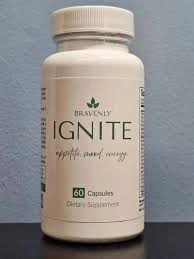
Examples appearing in Bravenly’s current catalog include Balance, Gold, Hydrate, Rush, Rush Extreme, Adapt, Burn, Ignite, Reset, Drift, Calm, Glow, Renew, Relief, and Bravenly Fit Fuel.
Bravenly makes various wellness-support claims about individual products on its website. Consumers should evaluate those claims based on the specific product, ingredients, labeling, available evidence, and their individual circumstances.
The existence of the Plexus lawsuit does not itself demonstrate anything about whether a particular Bravenly supplement is effective, ineffective, safe, or defective. The litigation and product-performance questions involve different factual and legal issues.
Negative Reviews and Consumer Complaints
Like many direct-selling wellness businesses, Bravenly attracts both positive customer experiences and criticism. Online complaints may discuss product expectations, pricing, subscriptions or ordering experiences, refunds, sales practices, or dissatisfaction with the MLM business structure.
Those reports can be useful when consumers are researching a company, but they should be interpreted carefully. An online complaint is not equivalent to a verified legal claim, regulatory finding, or court judgment.
A stronger evaluation looks for patterns across multiple independent sources and distinguishes between subjective dissatisfaction and objectively verifiable problems.
Consumers researching supplements should pay particular attention to ingredient lists, directions, refund terms, recurring-order conditions, and claims made by individual sellers. Statements made by independent Brand Partners should also not automatically be assumed to represent an official company position.
Reddit Discussions About Bravenly Global
Bravenly is discussed on Reddit, particularly in communities critical of MLM and direct-selling businesses. Recent discussions have questioned the company’s international expansion, distributor marketing, earnings expectations, and the broader economics of participating in an MLM.
These discussions can reveal the concerns of former participants, observers, or MLM critics. They can also help prospective Brand Partners identify questions they may want to investigate before joining.
However, Reddit posts are user-generated commentary. They should not be treated as proof that Bravenly committed unlawful conduct, that a product is unsafe, or that a particular legal allegation is true.
For legal research, court filings and regulatory records carry substantially more evidentiary weight. Reddit is more useful for understanding public sentiment and identifying issues that warrant independent verification.
How Multi-Level Marketing Lawsuits Usually Work
MLM litigation can involve several different legal theories, which is why simply seeing the words “MLM lawsuit” provides little information about the underlying case.
Disputes may involve:
- Distributor non-solicitation agreements
- Breach-of-contract allegations
- Trade secrets or confidential information
- Compensation or commission disputes
- Advertising and earnings representations
- Consumer-protection allegations
- Regulatory compliance
The Plexus-Bravenly matter belongs primarily in the commercial and contractual category.
Courts examining these disputes may consider the wording of distributor agreements, conduct of the parties, applicable state law, evidence of solicitation, and whether contractual restrictions are enforceable.
Many civil disputes never reach trial. Parties may negotiate privately or participate in mediation because settlement can reduce litigation costs and business disruption. A negotiated settlement also should not automatically be interpreted as an admission of wrongdoing.
Has Any Settlement Been Announced?
Yes. A settlement was reached in the Plexus Worldwide litigation, but its financial and contractual terms were not publicly disclosed in the sources reviewed.
Reporting based on the case docket states that mediation occurred on May 2, 2024, and the mediator reported that the case had settled. The court subsequently acknowledged the settlement and dismissed the action.
Plexus later filed a notice of voluntary dismissal, and on May 20, 2024, the court entered a final order dismissing the action with prejudice.
This was a settlement between the parties to a business lawsuit. It should not be confused with a consumer class-action settlement.
There is no publicly announced consumer compensation fund, payout schedule, or claim form arising from the Plexus-Bravenly settlement identified in the reviewed records. Therefore, consumers should be cautious about websites implying that ordinary Bravenly customers can automatically file claims for settlement money.
How Has Bravenly Responded?
Bravenly and Aspen Emry defended themselves through the federal litigation process rather than allowing Plexus’s allegations to go uncontested.
After Plexus amended its complaint, the defendants filed a motion seeking dismissal under Federal Rule of Civil Procedure 12(b)(6), according to reporting on the docket. Plexus opposed that request.
The court never issued a merits ruling on that dismissal motion because the dispute was resolved through settlement.
Separately, Bravenly has continued operating and expanding its product and Brand Partner programs. Its website currently markets wellness products and participation opportunities for retail customers, affiliates, and Brand Partners.
In a separate 2026 advertising self-regulatory matter, Bravenly also cooperated with the Direct Selling Self-Regulatory Council regarding earnings-related social-media posts. BBB National Programs ultimately administratively closed that inquiry. That matter was separate from the Plexus lawsuit.
Should Consumers Be Concerned?
Consumers should understand the lawsuit without drawing conclusions that the court record does not support.
The Plexus litigation confirms that Bravenly Global was involved in a federal commercial dispute. It does not, by itself, establish that Bravenly products were defective or unsafe.
A sensible consumer evaluation should focus on the product actually being considered. Review its ingredients, serving instructions, warnings, return terms, recurring-purchase conditions, and the evidence supporting any health-related representations.
People taking medication, managing health conditions, pregnant or nursing, or uncertain about supplement interactions should seek individualized advice from a qualified healthcare professional before using dietary supplements.
Legal controversy can be relevant when assessing a company, but the nature of that controversy matters. In this case, the principal verified litigation was primarily about business competition and contractual rights.
Lessons for Potential Brand Partners
The lawsuit may be more directly relevant to prospective or current Brand Partners than to ordinary product customers.
Anyone joining a direct-selling company should carefully read the agreement governing the relationship before building a business around it. Particular attention should be given to provisions covering:
- Recruiting participants from competing organizations
- Non-solicitation obligations
- Confidential business information
- Post-termination restrictions
- Social-media and advertising rules
- Earnings representations
- Termination and dispute procedures
Potential partners should also evaluate income disclosures rather than relying on individual success stories or lifestyle-oriented social posts.
The Plexus-Bravenly litigation demonstrates how distributor movement can develop into a serious contractual dispute when competing companies disagree over recruiting practices.
Independent sellers moving between MLM organizations should therefore understand what obligations survive termination. When substantial income or an established sales organization is involved, obtaining independent legal advice may be more prudent than relying solely on explanations from recruiters or company representatives.
Current Status of the Bravenly Global Lawsuit
The verified Plexus Worldwide lawsuit against Bravenly Global and Aspen Emry is closed.
The action was filed on December 7, 2023, in the Middle District of Florida. After several months of litigation, the parties participated in mediation and reached a settlement in May 2024. The case was then dismissed with prejudice.
| Question | Current Status |
|---|---|
| Was a federal lawsuit filed? | Yes |
| Plaintiff | Plexus Worldwide, LLC |
| Defendants | Bravenly Global, LLC and Aspen Emry |
| Filing date | December 7, 2023 |
| Was it a consumer class action? | No |
| Settlement reached? | Yes |
| Settlement amount public? | No |
| Case still active? | No |
| Final disposition | Dismissed with prejudice |
The distinction between an active lawsuit and a resolved lawsuit is particularly important for readers encountering older or undated online articles.
Bravenly Global Lawsuit Update
As of August 2026, the major verified federal case commonly associated with searches for the Bravenly Global lawsuit has already been resolved.
Plexus Worldwide and Bravenly reached a settlement in May 2024, followed by dismissal with prejudice. Public reporting indicates that the settlement terms remain confidential or otherwise undisclosed.
A separate development occurred in 2026 when the Direct Selling Self-Regulatory Council reviewed earnings-related social-media claims associated with Bravenly Brand Partners. BBB National Programs reported that Bravenly facilitated removal or modification of the challenged posts and implemented additional compliance training; the inquiry was administratively closed in February 2026.
That self-regulatory inquiry should not be conflated with the Plexus lawsuit. They involved different issues and different proceedings.
For readers following future developments, federal and state court records and official regulatory or self-regulatory announcements provide stronger evidence than social-media speculation.
Read: Cora Tampons Lawsuit
Read: Dr. Kevin Sadati Lawsuit
Read: The Wellness Company Lawsuit
Read: Generational Equity Lawsuit
Read: Trellis Law
Read: Fischer Homes Lawsuit
Read: Venmo Class Action Lawsuit
Read: Exploring CNLawBlog
Frequently Asked Questions
Is there a lawsuit against Bravenly Global?
Yes. Plexus Worldwide filed a federal lawsuit against Bravenly Global and Aspen Emry in December 2023. The commercial dispute later settled and was dismissed with prejudice in May 2024.
What was the Bravenly vs. Plexus lawsuit about?
The dispute concerned alleged contractual and competitive issues involving distributor recruitment, solicitation, and related business information. It was not primarily a consumer product-safety or personal-injury lawsuit.
Did Bravenly Global lose the lawsuit?
No trial judgment establishing liability was entered. The parties reached a settlement before the dispute proceeded to a final merits determination, and the federal action was dismissed with prejudice.
Was there a Bravenly Global lawsuit settlement?
Yes. The Plexus-Bravenly dispute settled in May 2024. However, the specific financial and contractual terms of that settlement were not publicly disclosed in the reviewed court-related reporting.
Can Bravenly customers claim settlement money?
There is no publicly identified consumer claim process arising from the Plexus settlement. It was a business dispute, not a consumer class-action settlement establishing a compensation fund for Bravenly customers.
Was the lawsuit about unsafe Bravenly products?
No. The verified federal Plexus case was classified as a contract dispute and centered on business-related allegations. It should not be presented as proof that Bravenly supplements are unsafe.
Final Thoughts
The Bravenly Global lawsuit is best understood as a resolved commercial dispute rather than an ongoing consumer class action. Plexus Worldwide sued Bravenly Global and Aspen Emry in federal court in December 2023, with the litigation focusing on alleged contractual and competitive issues involving the direct-selling business.
The parties reached a settlement in May 2024, and the action was dismissed with prejudice. Because the settlement terms were not publicly disclosed, claims about a specific payout amount or consumer compensation should not be presented as established facts.
Consumers should similarly avoid treating product reviews, Reddit discussions, regulatory matters, and the Plexus litigation as though they were the same issue. Each requires separate evidence. For legal developments, court records and official regulatory sources remain the most reliable basis for determining what was alleged, what was proven, and how a case ultimately ended.