McDonald’s has spent decades promoting its hamburger patties as made with real beef, which has also fueled recurring online rumors about ingredients, fillers, and labeling. Searches for the McDonald’s 100% Beef Lawsuit have increased as consumers try to determine whether those claims are connected to an actual court case.
Some searches mix several separate issues together: rumors about beef composition, a genuine beef price-fixing lawsuit filed by McDonald’s against meat processors, and a newer proposed class action involving the McRib. These are legally distinct matters.
This article separates documented litigation from allegations and internet claims. It also explains the current settlement status, possible compensation, ingredients, eligibility questions, and what consumers should know before assuming that a viral lawsuit claim represents an active case.
What Is the McDonald’s 100% Beef Lawsuit?
The phrase McDonald’s 100% Beef Lawsuit is frequently used online as though it identifies one established consumer class action challenging the composition of McDonald’s hamburger patties. Based on reliable public information, that characterization requires caution.
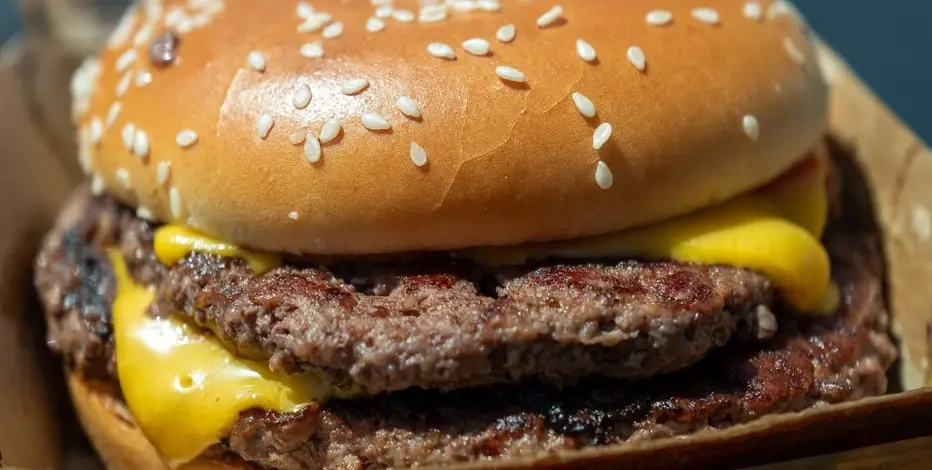
McDonald’s publicly states that its U.S. hamburger patties are made from 100% real beef without fillers, additives, or preservatives. The company says the patties are ground, formed, and frozen, with salt and pepper added during cooking.
There have long been rumors claiming that “100% beef” is misleading wording or that McDonald’s patties contain undisclosed fillers. However, those claims should not automatically be treated as established allegations in an active nationwide consumer lawsuit.
There are documented beef-related legal proceedings involving McDonald’s. Most notably, McDonald’s filed an antitrust lawsuit against major meat processors in 2024, alleging that suppliers conspired to inflate beef prices. That case concerns what McDonald’s allegedly paid for beef—not whether its hamburger patties are actually beef.
McDonald’s 100% Beef Lawsuit Update for 2026
As of 2026, consumers should distinguish online articles about a supposed beef-composition class action from independently documented litigation.
McDonald’s continues to publicly describe its U.S. burger patties as 100% beef with no fillers, additives, or preservatives. Its official ingredient information also states that salt and pepper are added when burgers are cooked.
Meanwhile, two real legal disputes can create confusion:
| Legal Issue | Current Context |
|---|---|
| “100% beef” patty composition | Widely discussed online, but consumers should verify claims against actual court records |
| Beef price fixing | McDonald’s sued major meat processors |
| McRib marketing | Proposed consumer class action filed in December 2025 |
| Beef settlement for burger buyers | No verified nationwide settlement identified from reliable sources reviewed here |
| Open beef-patty claim form | No verified claims process identified |
The distinction matters. A lawsuit involving a McDonald’s meat product does not necessarily establish that ordinary hamburger patties contain fillers or that consumers who purchased burgers are entitled to compensation.
McDonald’s Beef Lawsuit Settlement Details
There is currently no verified nationwide settlement identified here that pays McDonald’s customers because hamburger patties advertised as “100% beef” allegedly contained undisclosed non-beef fillers.
That means consumers should be skeptical of websites presenting settlement amounts, filing deadlines, or payment figures without linking them to a court-approved settlement administrator or identifiable case.
A genuine class action settlement normally produces documentation such as:
- A settlement agreement.
- Preliminary or final court approval.
- An official settlement administrator.
- Defined class eligibility requirements.
- Claim submission deadlines.
- Court-approved notices to potential class members.
The separate beef price-fixing litigation should also not be confused with a consumer settlement. In that dispute, McDonald’s is a plaintiff, alleging that major meat processors charged artificially inflated beef prices.
Related antitrust litigation involving meat processors has produced settlements, but those settlements do not automatically create payments for people who bought McDonald’s hamburgers.
McDonald’s Beef Lawsuit Payout Estimates
There is no reliable basis for estimating an individual payout from a supposed nationwide McDonald’s “100% beef” settlement when no verified settlement establishing such payments has been identified.
Figures circulating online should therefore be treated as speculation unless they come from an actual settlement agreement, court order, or authorized claims administrator.
Class action payouts ordinarily depend on several variables, including the size of the settlement fund, attorneys’ fees, administrative expenses, number of valid claims, purchase history, and the court-approved distribution formula.
For example, even when a settlement fund is substantial, individual payments may be relatively small if millions of consumers qualify. Conversely, a settlement could require proof of purchase or create different payment tiers.
Until a specific court-approved settlement exists, assigning a dollar figure to McDonald’s hamburger buyers risks creating a false expectation of compensation.
How Much Can You Get From the McDonald’s Beef Lawsuit?
At present, there is no confirmed payment amount for consumers based simply on purchasing McDonald’s beef hamburgers under a supposed 100% beef class action settlement.
A legitimate compensation amount could only be calculated after a case reaches settlement or judgment and the court establishes who qualifies and how damages will be distributed.
Consumers should be particularly cautious when they encounter statements promising amounts such as $50, $100, or several hundred dollars without supporting legal documents.
A projected payout is not the same as an approved payment.
The documented price-fixing lawsuit also does not currently provide a general McDonald’s customer payout. McDonald’s filed that action seeking damages for alleged overcharges it says it paid to beef suppliers.
How to Join the McDonald’s Beef Lawsuit
There is currently no verified nationwide claims procedure identified for consumers seeking compensation because McDonald’s allegedly misrepresented ordinary hamburger patties as 100% beef.
Consumers therefore should not submit sensitive personal information to an unofficial website merely because it uses terms such as “McDonald’s settlement,” “beef claim form,” or “class action payout.”
If a genuine settlement eventually creates consumer eligibility, the process would ordinarily explain:
- Which purchases qualify.
- The applicable purchase dates.
- Whether receipts are required.
- How claims must be submitted.
- The filing deadline.
- How compensation will be calculated.
For an existing proposed class action, consumers generally do not simply “join” by finding an online form. Class certification, settlement approval, and notice procedures are controlled by the court.
Who Is Eligible for the McDonald’s Beef Lawsuit?
No verified nationwide eligibility rules currently apply to ordinary McDonald’s hamburger buyers under the supposed beef-composition settlement discussed online.
Eligibility in a real consumer class action depends on the class definition approved by a court. That definition can limit participation by product, purchase location, purchase period, residency, or other factors.
Someone who ate a McDonald’s hamburger would therefore not automatically qualify for compensation merely because online discussions refer to a “100% beef lawsuit.”
The separate price-fixing litigation is especially important here. McDonald’s itself brought that lawsuit against beef processors, so purchasing a Big Mac, Quarter Pounder, or another McDonald’s burger does not by itself make a customer a plaintiff in McDonald’s antitrust action.
Is McDonald’s Beef Really 100% Beef?
McDonald’s says yes.
According to McDonald’s U.S. information, each beef patty consists of 100% real beef and contains no fillers, additives, or preservatives. The patties are formed from ground beef, and salt and pepper are added when they are cooked at restaurants.
McDonald’s has made similar statements in other markets. For example, its Pakistan operation says its patties are produced from 100% pure halal beef without additives, preservatives, or flavor enhancers.
Consumers should distinguish the beef patty from a complete hamburger. A finished burger obviously contains additional ingredients such as a bun, cheese, sauce, onions, pickles, or condiments depending on the menu item.
That distinction can become important when interpreting advertising claims about what is “100% beef.”
McDonald’s Beef Ingredients at the Center of the Lawsuit
Ingredient questions are one of the main reasons consumers encounter the McDonald’s beef lawsuit search term.
McDonald’s states that its hamburger patties are made from ground beef and that no fillers, artificial preservatives, or additives are incorporated into the patties. Salt and pepper are applied during cooking.
The company also specifically addresses the historical “pink slime” controversy. McDonald’s says it does not use lean finely textured beef treated with ammonia in its burger patties.
These are company representations and should be described as such. At the same time, there is not sufficient reliable evidence presented here to state as fact that a court has found McDonald’s guilty of secretly replacing its advertised beef with fillers.
A fact-check by Full Fact similarly reported that it could find no evidence McDonald’s had been found guilty of falsely claiming its burgers used “100% beef.”
McDonald’s Beef Filler Allegations Explained
Rumors about fillers in McDonald’s hamburgers have circulated for years. They commonly mention soy, binders, preservatives, ammonia-treated beef, or other ingredients allegedly hidden inside the patty.
The available company information contradicts those claims. McDonald’s states that its U.S. patties contain beef without fillers, additives, or preservatives.
This does not mean every criticism about McDonald’s food should automatically be dismissed. It means a legal article must distinguish between an allegation supported by a filed complaint and an internet rumor repeated without primary evidence.
That distinction is particularly important for lawsuit searches. Consumer skepticism, social-media posts, and viral videos do not themselves prove false advertising.
A court would normally require evidence concerning the product’s actual composition, the challenged representation, consumer expectations, injury, and applicable consumer-protection law.
What Is Actually in McDonald’s Beef Patties?
For U.S. restaurants, McDonald’s describes its standard hamburger patties as ground beef formed into patties. The company says the beef is quickly frozen after formation, while Quarter Pounder patties at most restaurants in the contiguous United States use fresh beef cooked when ordered.
McDonald’s states that the patties themselves have:
- Ground beef.
- No fillers.
- No additives.
- No preservatives.
- Salt and pepper added during cooking.
Ingredients can differ by country, supplier, product, and menu formulation. Consumers investigating a specific dietary or allergen concern should therefore consult ingredient information for their market rather than assuming every McDonald’s product worldwide follows an identical recipe.
A burger as served also contains ingredients beyond its meat patty.
McDonald’s 100% Beef Claim and False Advertising
A false-advertising case would not succeed merely because someone disagrees with the phrase “100% beef.”
Generally, plaintiffs alleging deceptive marketing must show that a representation or omission was materially misleading under the applicable law and that it affected their purchasing decision or caused a legally recognized injury.
For a hypothetical beef-labeling claim, important questions could include whether:
- The patty actually contained undisclosed non-beef ingredients.
- McDonald’s representations were literally false.
- A reasonable consumer would interpret the statement differently.
- The disputed representation was material to the purchase.
- Consumers suffered measurable economic harm.
Those issues require evidence.
McDonald’s currently represents its beef patties as 100% beef, and reliable sources reviewed for this article do not establish a final judicial finding that this standard hamburger-patty representation is fraudulent.
The McDonald’s Fake Beef Lawsuit Explained
“Fake beef lawsuit” is another search phrase that can give readers the impression that a court has determined McDonald’s hamburgers are fake.
That is misleading.
There is a substantial difference between someone alleging that a food label is deceptive and a court determining, after litigation, that the allegation has been proven.
McDonald’s maintains that its hamburger patties are real beef. Its public food-quality materials consistently describe them as 100% pure beef.
The documented 2024 beef litigation involves alleged price manipulation by meat processors, not an accusation by consumers that McDonald’s serves fake hamburger meat.
Likewise, the 2025 McRib litigation concerns whether McRib branding allegedly misleads consumers about pork rib meat. It does not establish that McDonald’s hamburger patties are fake beef.
The “100 Percent Beef” Company Name Myth
One persistent rumor claims McDonald’s buys meat from a company supposedly called “100% Beef,” allowing the restaurant chain to describe its products using that name regardless of their actual composition.
McDonald’s has directly denied that claim.
Its UK FAQ states that “100% beef” is not a company owned by McDonald’s. According to the company, the phrase describes beef burgers made from beef cuts that are minced and shaped into patties.
Versions of this rumor have circulated for years because they offer a seemingly clever explanation for how food labeling might be manipulated.
But a memorable internet story is not evidence of a corporate entity, ingredient substitution, or deceptive-labeling scheme.
Consumers evaluating such claims should look for corporate records, ingredient disclosures, regulatory findings, laboratory evidence, or court filings rather than relying on repeated social-media posts.
McDonald’s Consumer Fraud Lawsuit in 2026
There is a documented consumer lawsuit against McDonald’s receiving attention in 2026, but it involves the McRib, not the company’s standard beef patties.
Four consumers filed a proposed class action in the U.S. District Court for the Northern District of Illinois in December 2025. They allege McDonald’s misleadingly markets the McRib in a manner suggesting that it contains actual pork rib meat.
The complaint reportedly includes claims involving fraud, misrepresentation, breach of contract, and state consumer-protection laws.
McDonald’s disputes the allegations. The company has said the lawsuit distorts the facts and maintains that the McRib is made with 100% pork sourced from U.S. farmers and suppliers. It has also denied allegations that the patty contains heart, tripe, or scalded stomach.
The allegations remain claims in litigation rather than proven findings.
Why the McRib Case Does Not Prove a “100% Beef” Claim
The McRib litigation concerns pork and product marketing, not the composition of McDonald’s hamburger beef.
Plaintiffs argue that the sandwich’s name and rib-shaped presentation could lead reasonable consumers to expect actual pork rib meat. McDonald’s disputes that interpretation and the complaint’s ingredient allegations.
Therefore, even if the McRib plaintiffs ultimately succeeded, that would not by itself prove that McDonald’s statements about hamburger patties are false.
Different products, representations, ingredients, evidence, plaintiffs, and legal theories are involved.
Conflating the two disputes can turn a legitimate pending consumer case into an inaccurate claim about McDonald’s beef products.
McDonald’s Beef Class Action in 2026
Consumers searching for a McDonald’s beef class action should verify exactly which case is being referenced.
A proposed class action exists over McRib marketing, and other beef-industry antitrust cases have sought or obtained class treatment. Neither fact establishes a nationwide class action proving McDonald’s standard hamburger patties are not 100% beef.
A proposed class action also does not automatically become a certified class action.
Typically, plaintiffs must ask the court to certify a class and demonstrate that applicable procedural requirements are satisfied. Until certification occurs, descriptions such as “class action” can refer to what plaintiffs seek, rather than a class the court has already approved.
This distinction also affects compensation. Filing a proposed class action does not create an immediate settlement fund or claims form.
Consumers should look for a case number, court, named plaintiffs, operative complaint, certification decision, and settlement documentation before relying on claims that a nationwide McDonald’s beef class has been established.
McDonald’s Beef Price-Fixing Lawsuit
Unlike many internet claims surrounding hamburger ingredients, the McDonald’s beef price-fixing lawsuit is a documented federal antitrust case.
McDonald’s filed suit in October 2024 against major beef processors including Cargill, JBS, National Beef, Tyson Foods, and related companies. The lawsuit alleges the defendants coordinated to restrict beef supply and keep prices artificially high.
The case was filed as McDonald’s Corporation v. Cargill, Inc. et al., initially identified as case No. 1:24-cv-07017.
McDonald’s alleges the challenged conduct dates back to at least 2015 and caused it to pay more for beef than it would have under competitive market conditions.
The meat-processing industry has faced similar antitrust allegations from other purchasers, consumers, and cattle producers. Allegations in these cases remain subject to litigation, defenses, settlements, and court rulings.
Why This Case Is Different
The price-fixing lawsuit reverses the role many readers expect: McDonald’s is the party suing, rather than the company being sued by hamburger customers.
Its central issue is price, not whether McDonald’s burger patties contain beef.
McDonald’s alleges suppliers manipulated the market by coordinating production and maintaining beef prices at artificially high levels. The company seeks damages and other relief for alleged antitrust violations.
Consequently, this litigation should not be cited as evidence that McDonald’s falsely advertised hamburger ingredients.
It is an antitrust dispute concerning the beef supply chain and alleged economic harm to purchasers.
McDonald’s Beef Labeling Lawsuit Timeline
The online discussion becomes easier to understand when separate developments are placed chronologically.
| Period | Development |
|---|---|
| For decades | Rumors circulate about fillers and the supposed “100% Beef” company |
| 2018 | McDonald’s UK publicly addresses and denies the company-name rumor |
| 2021 | McDonald’s U.S. reiterates that its patties contain 100% beef and no fillers |
| October 2024 | McDonald’s files its beef price-fixing antitrust lawsuit |
| December 2025 | Consumers file the separate McRib proposed class action |
| January 2026 | McDonald’s publicly disputes allegations concerning McRib ingredients |
| 2026 | Online searches continue mixing beef composition, McRib litigation, and price-fixing claims |
This timeline demonstrates why the phrase McDonald’s 100% Beef Lawsuit needs context.
There are real legal proceedings involving McDonald’s and meat products. But the existence of those cases does not validate every viral allegation concerning hamburger ingredients.
McDonald’s Beef Quality and Ongoing Legal Action
McDonald’s continues to state that its beef patties are made from real beef and do not contain fillers, additives, or preservatives. Its food-quality materials also emphasize supplier controls and ingredient standards.
Legal scrutiny involving the company nevertheless continues in different forms.
The beef-supplier antitrust litigation concerns allegations of artificially inflated wholesale prices. The McRib proposed class action concerns allegedly deceptive product marketing. Neither should be rewritten as a proven finding that standard McDonald’s hamburger patties contain fake beef.
For consumers, the most reliable approach is to separate three categories of information: company ingredient representations, allegations contained in filed lawsuits, and conclusions actually reached by courts.
That distinction prevents an allegation—or an unrelated lawsuit—from becoming an unsupported statement of fact.
Read: Samsung S22 Software Update Lawsuit
Read: YES Communities Lawsuit
Read: Rael Pads Lawsuit
Read: Janice Griffith Lawsuit
Read: Blind Frog Ranch Lawsuit
Read: Sierra Mist Lawsuit
Read: 100 Day Dream Home Lawsuit
Read: Breo Ellipta Lawsuit
Frequently Asked Questions
Is there really a McDonald’s 100% Beef Lawsuit?
Online sources use that phrase broadly, but reliable evidence reviewed here does not establish a finalized nationwide consumer settlement proving McDonald’s standard hamburger patties are not 100% beef.
Has McDonald’s reached a beef lawsuit settlement?
No verified nationwide settlement for ordinary hamburger customers based on alleged “100% beef” misrepresentation was identified. Separate beef-industry litigation and settlements should not be confused with such a case.
Can I file a McDonald’s beef lawsuit claim?
There is no verified nationwide consumer claim form identified for purchasers of ordinary McDonald’s beef burgers. Check court-approved notices before submitting personal or financial information.
Does McDonald’s put fillers in its beef patties?
McDonald’s says its U.S. patties contain 100% real beef without fillers, additives, or preservatives. Salt and pepper are added during cooking.
Is McDonald’s suing its beef suppliers?
Yes. McDonald’s filed an antitrust lawsuit accusing major meat processors of conspiring to keep beef prices artificially high. Those allegations concern wholesale pricing rather than hamburger ingredients.
What is the McRib lawsuit about?
Plaintiffs allege McRib branding misleadingly suggests the sandwich contains pork rib meat. McDonald’s disputes those allegations and says the McRib contains 100% pork.
Is the “100% Beef” company story true?
McDonald’s says no. The company has specifically denied the rumor that it owns a company called “100% Beef” that allows it to use the phrase deceptively.
Final Thoughts
The McDonald’s 100% Beef Lawsuit search trend combines genuine litigation with longstanding internet rumors. McDonald’s continues to state that its hamburger patties contain 100% beef without fillers, additives, or preservatives, and the sources reviewed here do not establish a court finding that its standard beef-patty representation is fraudulent.
Real legal disputes do exist. McDonald’s has pursued an antitrust lawsuit against major beef processors over alleged price fixing, while consumers separately filed a proposed class action concerning McRib marketing. Those cases should not be treated as proof of fake hamburger meat.
Consumers looking for compensation should rely on court records and authorized settlement notices rather than speculative payout estimates or unofficial claim pages. Lawsuit allegations remain allegations unless established through evidence, settlement, or a court decision.