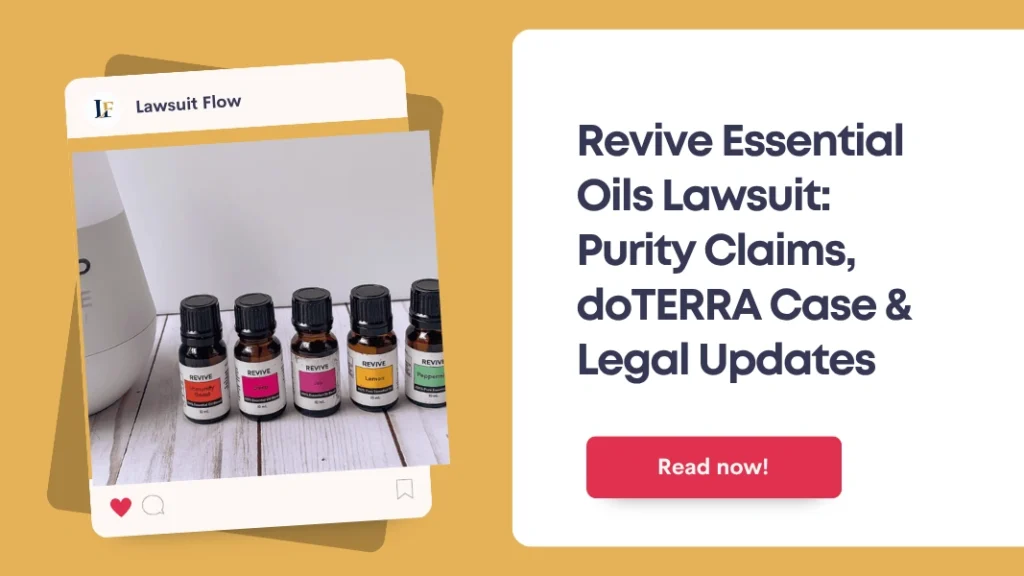

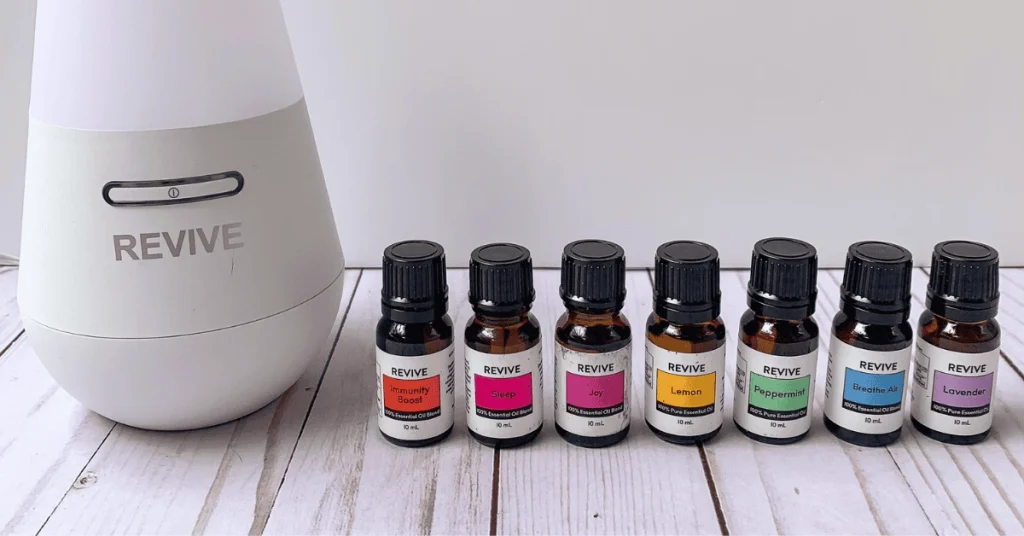
REVIVE Essential Oils has attracted legal and consumer attention for several different reasons, but the Revive Essential Oils Lawsuit search does not point neatly to one single nationwide consumer case. The public record includes a documented trademark dispute with doTERRA, a federal product-safety recall, and more recent litigation involving other legal issues.
Consumers searching the topic often want to know whether allegations about purity, advertising, labeling, or product quality resulted in a class action, whether a settlement exists, and whether customers can submit claims for compensation.
The distinction matters. Some events are supported by court or government records, while other statements circulating online appear to combine complaints, marketing disputes, recalls, and alleged class-action developments. This article separates those categories and explains what consumers can reasonably verify as of 2026.
What Is the Revive Essential Oils Lawsuit?
The term generally refers to legal controversies associated with REVIVE Essential Oils rather than one clearly established lawsuit covering every issue consumers discuss online.
A confirmed federal lawsuit was filed by doTERRA Holdings LLC and doTERRA International LLC against Revive Essential Oils in April 2019. The case, doTerra Holdings et al. v. Revive Essential, was filed in the U.S. District Court for the District of Utah under case number 2:19-cv-00250 and was categorized as trademark litigation.
Separate from that litigation, REVIVE was involved in a 2020 Consumer Product Safety Commission recall affecting certain essential oils and blends because their packaging did not meet child-resistant packaging requirements. That recall was a regulatory product-safety matter, not proof of a purity-related class action.
Some websites now describe a consumer class action involving “100% pure” or “therapeutic grade” representations. However, those claims should not be treated as an established nationwide settlement without a verifiable complaint, docket number, court, settlement administrator, or official claim notice.
Why the Revive Essential Oils Lawsuit Became a Widely Searched Topic
Interest grew partly because several distinct issues became associated with REVIVE over time.
The 2019 doTERRA litigation involved recognizable brands competing in the same essential-oil market. doTERRA publicly stated that it objected to marketing that allegedly compared REVIVE products with doTERRA products and created concerns about false advertising, sourcing representations, and unfair competition. Those were doTERRA’s allegations, not automatic findings of wrongdoing.
The 2020 CPSC recall added another layer. Approximately 26,630 units of specified REVIVE products were recalled because products containing methyl salicylate were packaged without the required child-resistant closures. The CPSC reported no incidents or injuries at the time of the recall.
More recently, online articles have discussed purported consumer litigation involving purity and marketing representations. Because these stories are frequently presented alongside the confirmed doTERRA case, readers can easily assume they all concern the same proceeding.
They do not.
Revive Essential Oils Lawsuit Update 2026
As of 2026, the safest way to describe the legal picture is to separate verified litigation from less clearly substantiated online claims.
| Legal Issue | Current Publicly Verifiable Picture |
|---|---|
| 2019 doTERRA dispute | Confirmed federal trademark litigation |
| 2020 CPSC recall | Confirmed federal product-safety recall |
| 2026 ADA litigation | Federal cases involving disability-access claims have been reported |
| Nationwide purity class action | Not sufficiently established by the reliable records reviewed |
| Final consumer purity settlement | No verified nationwide settlement identified |
| Official consumer claim deadline | No verified nationwide deadline identified |
For example, Wilson v. Revive Essential Oils, LLC, filed May 4, 2026 in the Northern District of Illinois, is listed as an open federal civil-rights case arising under the Americans with Disabilities Act. It should not be confused with a lawsuit alleging that REVIVE oils are adulterated or impure.
This distinction is particularly important for anyone searching for a settlement payment or claim form. A legitimate class-action settlement normally generates identifiable court records, settlement documents, eligibility rules, deadlines, and an authorized administrator.
Revive Oils Lawsuit: The Background Story
REVIVE entered an essential-oil market already populated by major brands such as doTERRA and Young Living. Part of its marketing strategy involved offering oils and blends that consumers could compare with products sold by larger competitors.
That competitive positioning became legally significant in 2019 when doTERRA filed its federal lawsuit. The case was categorized as a trademark matter in the District of Utah. doTERRA publicly accused REVIVE of crossing legal boundaries through comparative marketing and representations involving quality and sourcing.
REVIVE’s broader product-quality marketing has also emphasized purity and testing. The company currently states that its oils undergo internal and independent third-party testing and says GC/MS testing is conducted on every lot.
Those marketing representations help explain why searches involving terms such as “purity lawsuit,” “false advertising,” and “therapeutic grade” attract attention. But a marketing claim, consumer criticism, and a proven legal violation are three different things.
What Legal Issues Have Been Reported?
The issues associated with REVIVE fall into several categories rather than one unified legal theory.
The most clearly documented categories include intellectual-property litigation and product-safety regulation. Consumer complaints about products, refunds, service, or advertising also exist, but complaints submitted to review platforms are not court findings.
This distinction should guide any assessment of the Revive Essential Oils lawsuit. A consumer allegation can potentially become evidence in litigation, but it does not establish liability on its own.
Intellectual Property and Competitor Disputes
The clearest example is the 2019 federal case brought by doTERRA.
The lawsuit was filed on April 12, 2019, in Utah federal court and classified as a trademark action. Public statements from doTERRA indicate that the dispute concerned comparative marketing, sourcing representations, and what doTERRA characterized as misleading use of its brand and product comparisons.
Trademark and unfair-competition disputes generally focus on questions such as whether marketing is likely to confuse consumers, improperly uses another company’s protected marks, or makes actionable comparative representations.
Those questions differ substantially from whether a consumer personally disliked a product or believed an oil did not perform as expected.
Consumer Marketing Allegations
Online discussion also focuses on REVIVE’s descriptions of its oils as pure and therapeutic grade.
REVIVE itself states that its oils are “100% pure therapeutic grade” and free from additives, adulterants, fillers, synthetics, and dilution. The company says independent third-party testing is conducted on every lot and that consumers can request or review lot-specific GC/MS information.
Those are company representations.
Claims appearing online that laboratory testing has conclusively disproved those representations should be evaluated separately and traced to the underlying laboratory report or court exhibit. Without that evidence, repeating them as established findings would go beyond the verified record.
The Earlier Dispute Involving doTERRA
The doTERRA case provides the strongest documented foundation for searches involving a REVIVE lawsuit.
Court-index information identifies the matter as doTerra Holdings et al. v. Revive Essential, case number 2:19-cv-00250, filed in the District of Utah on April 12, 2019. The nature of suit was trademark.
doTERRA also issued a public communication describing its position. It alleged that REVIVE’s marketing improperly compared the companies’ products and made misleading statements about quality or sourcing. REVIVE disputed aspects of the controversy, and the litigation generated competing allegations.
The important legal point is that a complaint states what a plaintiff alleges. It is not equivalent to a judicial finding that every allegation is true.
Consumers researching the current controversy should therefore avoid turning the existence of the doTERRA case into evidence that REVIVE’s entire product line was found defective or impure. Those are different propositions requiring different evidence.
Understanding the Consumer Allegations
Consumer concerns found online tend to involve product performance, quality expectations, customer service, refunds, and marketing representations.
The Better Business Bureau, for example, has published complaints involving REVIVE products and service. One 2025 complaint concerned allegedly defective wall diffusers and a disagreement over replacement or reimbursement. BBB complaints represent individual consumer accounts and should not be treated as court findings.
Another BBB profile reported a small number of complaints during its displayed reporting period. Again, the existence of a complaint does not establish deceptive conduct or legal liability.
For legal analysis, the relevant question is whether particular representations were materially false or misleading and caused legally compensable harm—not simply whether dissatisfied customers exist.
Revive Oils False Advertising: The Core Legal Claims
False-advertising questions can arise when a business makes factual representations about its own products or compares them with competitors.
In the confirmed doTERRA dispute, doTERRA publicly alleged that REVIVE made misleading comparative claims concerning product quality and sourcing. These allegations were part of a commercial dispute between competitors.
Separate online discussions have focused on REVIVE’s own purity-related language. The company currently represents that its oils are pure, independently tested, and free of specified adulterants.
For a consumer false-advertising case to succeed, however, plaintiffs generally need more than skepticism about promotional language. Depending on the law invoked, issues can include whether a representation was factual and misleading, whether it was material to purchasing decisions, and whether consumers suffered a legally recognized loss.
No reader should assume those elements have been judicially established merely because a lawsuit article or social-media post alleges them.
Revive Essential Oils Purity Claims: What the Tests Showed
REVIVE states that it conducts both internal and independent testing of its essential oils.
According to the company’s published quality information, Essential Oil University performs third-party testing, including Gas Chromatography-Mass Spectrometry, or GC/MS. REVIVE says these tests are used to assess purity, potency, and composition and that testing is conducted for individual lots.
GC/MS can provide valuable information about the chemical constituents of an essential oil. But interpreting a chromatogram is not the same as reading a simple pass-or-fail consumer test. Botanical variation, expected chemical profiles, reference standards, laboratory methodology, and expert interpretation can all matter.
Some lawsuit-focused websites claim separate testing showed synthetics, dilution, or chemical inconsistencies in REVIVE products. Without a clearly identified court filing and underlying laboratory evidence establishing those findings, such statements should remain characterized as allegations rather than proven facts.
Revive Essential Oils Therapeutic Grade Lawsuit: Why That Label Matters
“Therapeutic grade” is widely used in essential-oil marketing, but consumers should be careful about assuming the phrase functions like a government certification.
REVIVE uses “100% pure therapeutic grade” in its product-quality descriptions. It supports those representations by pointing to sourcing standards and laboratory testing.
From a legal perspective, terminology becomes important when a reasonable consumer could interpret a phrase as communicating a specific, measurable characteristic. Whether particular wording is deceptive depends on context, the representation being challenged, applicable consumer-protection law, and supporting evidence.
That means the phrase itself does not prove either purity or deception.
Anyone evaluating an alleged “therapeutic grade lawsuit” should look for an actual complaint identifying the challenged statement, legal cause of action, named plaintiffs, court, and supporting evidence before treating the claim as established litigation.
Revive Essential Oils Mislabeling: The Specific Complaints
Online references to “mislabeling” can describe several very different issues.
They may concern:
- Statements about purity or ingredients.
- Descriptions of product quality.
- Comparisons with competing essential-oil blends.
- Trademark or branding concerns.
- Directions, warnings, or packaging requirements.
One verified regulatory event involved packaging rather than proof that REVIVE had mislabeled its entire oil line. In August 2020, the CPSC announced a recall involving Wintergreen, Birch, Sore No More, Ache Away, and Breeze products because they contained methyl salicylate but lacked required child-resistant packaging.
Approximately 26,630 units were affected. The remedy was a free child-resistant replacement cap, and the CPSC reported no incidents or injuries.
That event should not be inaccurately transformed into a finding that REVIVE’s oils generally contained undisclosed synthetic ingredients.
Revive Essential Oils Class Action: How It Works
A class action allows one or more plaintiffs to pursue claims on behalf of a larger group when procedural requirements are satisfied.
Typically, plaintiffs must first file a complaint. The court may later consider whether the proposed class meets requirements involving common issues, typical claims, adequate representation, and other procedural standards.
This is why statements that a “Revive Essential Oils class action” has reached a settlement require verification.
A genuine consumer class-action settlement would ordinarily have identifiable documentation, potentially including:
- A case name and docket number.
- A court supervising the litigation.
- A defined settlement class.
- Preliminary or final approval documents.
- An authorized settlement administrator.
- Claim deadlines and eligibility rules.
The reliable materials reviewed for this article establish that REVIVE has been sued, but they do not provide sufficient support for presenting a nationwide purity-related consumer settlement as a confirmed fact.
Are REVIVE Essential Oils Pure?
REVIVE says yes.
The company states that its oils are 100% pure and free from additives, adulterants, fillers, synthetics, and dilutions. It also says every lot undergoes internal and independent third-party testing, including GC/MS analysis.
That is REVIVE’s stated quality position rather than an independent judicial determination.
Consumers who want to investigate a particular bottle can examine the lot-specific testing information available from the company and consider how the laboratory data were produced and interpreted.
Legal reporting should avoid reaching a broader scientific conclusion than the available evidence supports. The existence of online accusations does not establish adulteration, while company testing claims should likewise be understood as representations that can be evaluated against underlying laboratory evidence.
How Does REVIVE Compare With Young Living and doTERRA?
REVIVE, Young Living, and doTERRA operate in the same broad essential-oil market, but their business models, product positioning, pricing, testing disclosures, and branding strategies are not identical.
The comparison is legally relevant because REVIVE’s positioning against established competitors contributed to the historical doTERRA dispute.
REVIVE
REVIVE promotes a direct-to-consumer model and emphasizes testing, purity, sourcing, and lower prices than some established essential-oil brands.
The company states that every lot undergoes third-party testing and that GC/MS reports are available to consumers.
REVIVE has also marketed products as alternatives or comparable options to blends offered by other brands. Comparative marketing can be lawful, but companies must still comply with trademark, advertising, and unfair-competition rules.
Young Living
Young Living is a long-established essential-oil company with its own branded products, sourcing standards, terminology, and distribution structure.
Consumers sometimes compare REVIVE products with Young Living oils because of similarities in intended use, blend categories, pricing, or product positioning.
Those comparisons should not imply that one company’s product is manufactured by, endorsed by, or legally equivalent to another company’s product unless evidence supports that conclusion.
The same caution applies when assessing online claims about comparative purity. Brand loyalty and customer reviews are not substitutes for properly interpreted laboratory evidence.
doTERRA
doTERRA is particularly relevant because it was the plaintiff in the confirmed 2019 federal lawsuit.
The company argued that aspects of REVIVE’s comparative marketing crossed legal boundaries and could mislead consumers regarding quality, sourcing, or brand relationships.
Those allegations demonstrate why comparative advertising requires careful wording. A company may compare competing products, but trademark use and factual claims can create legal exposure when consumers could allegedly be confused or when statements about a competitor are challenged as false.
The lawsuit itself does not establish that every doTERRA allegation was ultimately proven.
Consumer Reviews and Online Discussions
Online reviews present a mixed and inherently subjective source of information.
Some consumers praise REVIVE for pricing, product selection, scent, and accessibility. Others have reported problems involving products, customer service, refunds, or performance.
BBB complaint records provide examples of dissatisfied consumers, including complaints involving product or service issues.
However, review platforms serve a different purpose from courts and scientific laboratories.
A negative review can identify a potential problem worth investigating, but it cannot establish that a company violated a consumer-protection statute. Similarly, positive reviews cannot disprove a properly supported legal claim.
Consumers researching REVIVE should therefore use reviews as one input alongside product information, lot-specific testing, government notices, and verified court records.
What About Consumer Reports?
The phrase “Revive Essential Oils consumer reports” can create confusion because users may be searching generically for consumer experiences rather than referring specifically to the publication Consumer Reports.
Reviews, BBB complaints, Reddit discussions, blog posts, and customer testimonials should not automatically be described as findings from Consumer Reports.
More importantly, none of those sources should be represented as a legal judgment.
For product-quality questions, consumers should identify who performed a test, which lot was tested, what methodology was used, whether the laboratory report is available, and what the results actually establish.
For lawsuit questions, the equivalent verification process involves locating the court, docket number, complaint, orders, and settlement documents.
That approach helps separate evidence from repetition. A claim appearing across multiple blogs does not necessarily become more reliable if those sites ultimately rely on the same unverified source.
Revive Oils Who Qualifies for the Lawsuit or Settlement?
At present, consumers should be cautious about websites claiming that broad categories of REVIVE purchasers automatically qualify for settlement compensation.
Eligibility cannot be reliably determined without an established settlement class or other court-approved recovery program.
If a legitimate settlement were created, eligibility could depend on factors such as:
- Products purchased.
- Purchase dates.
- Where the transaction occurred.
- Whether proof of purchase is required.
- Whether the consumer falls within the court-defined class.
- Whether a claim is submitted by the official deadline.
Consumers should not provide Social Security numbers, banking credentials, or unnecessary sensitive information to an unfamiliar website merely because it advertises a REVIVE payout.
Verify the case and settlement administrator first.
Revive Essential Oils Settlement Amount: What to Expect
No reliable nationwide consumer settlement amount should be quoted unless it comes from an actual settlement agreement, court order, or authorized administrator.
Some online articles provide estimated dollar amounts for potential REVIVE payments. Such estimates can look authoritative but may simply be based on payouts in unrelated consumer cases.
Class-action compensation varies substantially.
If a settlement were eventually established, individual payments could depend on the total fund, number of valid claims, purchase documentation, attorney fees, administration expenses, and allocation formula.
Until those terms exist in verified settlement documents, assigning a dollar value would be speculative.
Consumers should therefore treat phrases such as “expected payout” or “estimated REVIVE settlement check” cautiously unless the publisher links the figure directly to an identifiable court document.
Revive Oils Compensation: Understanding Your Payment Options
There is currently no basis for assuming every REVIVE customer is entitled to compensation because the company has faced litigation or a recall.
Different legal events produce different remedies.
The 2020 CPSC recall, for example, instructed affected consumers to store the products safely and contact REVIVE for a free child-resistant replacement cap. That remedy was specifically tied to the recalled products and packaging problem.
A class-action settlement could involve cash payments, vouchers, refunds, product credits, or changes in business practices, depending on negotiated terms and court approval.
An individual lawsuit could produce a different result.
The type of compensation therefore cannot be separated from the legal proceeding that creates it. Consumers should identify the actual case before evaluating supposed payment options.
Revive Essential Oils Filing Deadline 2026
No verified nationwide 2026 claim deadline for a REVIVE purity settlement was identified in the reliable records reviewed for this article.
That point is important because deadline language can create artificial urgency.
A legitimate settlement deadline normally appears in court-approved notice documents and on the authorized settlement administrator’s website. The notice explains who qualifies, what rights class members have, and when claims, objections, or exclusion requests must be submitted.
Consumers encountering a supposed deadline should verify:
- The full case name.
- Court and docket number.
- Settlement administrator.
- Court approval documents.
- Exact eligibility period.
- Official claim submission instructions.
Do not assume a deadline is genuine simply because multiple informational websites repeat it.
How to File a Revive Oils Claim
Before filing anything, determine whether an official claims process actually exists for the legal matter being discussed.
If a verified class-action settlement becomes available, the normal process would involve reviewing the settlement notice, confirming eligibility, and submitting the required information through the authorized administrator.
A consumer would typically:
- Confirm the case name and court.
- Read the official settlement notice.
- Check the class definition and purchase period.
- Gather receipts or order records if required.
- Use only the authorized claim form.
- Submit the claim before the court-approved deadline.
- Keep confirmation of the submission.
Be particularly cautious of sites requesting payment to file a basic class-action claim. Legitimate settlement claims generally do not require consumers to pay a fee merely to submit the official form.
Revive Oils Refund: Can You Get Your Money Back?
A lawsuit is not the only potential route for seeking a refund.
Consumers who believe a product is defective, incorrect, or otherwise eligible for return should first review REVIVE’s current return and refund terms and contact the company using official channels.
A recall remedy is different from an ordinary refund. In the 2020 CPSC action, the specified remedy was replacement child-resistant caps for affected products rather than a general cash settlement covering all REVIVE purchases.
Consumers involved in a billing or product dispute may also preserve receipts, order confirmations, photographs, correspondence, and other documentation.
Whether someone has a legal right to reimbursement beyond a company’s normal policy depends on the facts, applicable law, and any relevant settlement or court decision.
Revive Essential Oils Settlement: Has a Final Agreement Been Reached?
A final nationwide consumer settlement involving alleged REVIVE purity or therapeutic-grade representations should not currently be presented as established without supporting court documents.
This is one of the most important distinctions in the entire Revive Essential Oils lawsuit discussion.
Some secondary websites describe settlement negotiations, potential payouts, claim periods, or expected approval dates. Those statements require independent verification before consumers rely on them.
A finalized class settlement normally leaves a substantial documentary trail: the settlement agreement, preliminary approval order, class notice, administrator information, fairness hearing details, and eventually a final approval order.
Until those materials can be tied to a specific case, consumers should regard claims of a finalized nationwide purity settlement as unconfirmed.
The confirmed historical doTERRA litigation and the CPSC recall do not, by themselves, establish such a consumer settlement.
How Lawsuits Affect Consumer Confidence
Legal disputes can influence how consumers view a brand even before a court reaches a final decision.
For an essential-oil company, questions involving purity, sourcing, comparative marketing, packaging, or labeling are especially sensitive because customers often purchase products based on representations about quality.
But reputational impact and legal liability should remain separate concepts.
A lawsuit may contain serious allegations without producing a finding against the defendant. A regulatory recall can identify a specific compliance problem without establishing that every product sold by the company is unsafe.
Consumers can make better decisions by examining the scope of each event rather than treating every controversy as evidence of a single company-wide problem.
Transparency around testing, labeling, complaints, refunds, and regulatory compliance can also influence how effectively a brand maintains consumer confidence after legal scrutiny.
Is Revive Essential Oils Legit? What the Lawsuit Tells Us
REVIVE is a real commercial essential-oil brand, and the existence of litigation does not by itself determine whether a company is “legit.”
The more useful question is what specific legal events establish.
The 2019 doTERRA lawsuit confirms that REVIVE was involved in federal trademark litigation. The 2020 CPSC notice confirms that certain products were recalled over child-resistant packaging requirements. REVIVE also publicly describes a testing program that includes independent GC/MS analysis.
None of those facts independently proves every positive or negative claim made about the company online.
Consumers evaluating REVIVE should consider current product information, testing documentation, refund policies, regulatory notices, and their individual needs rather than relying on a headline suggesting that one lawsuit settles every question about the brand.
Should Existing Customers Be Concerned?
Existing customers do not need to assume that every REVIVE product is defective merely because the company has faced legal disputes.
The verified 2020 recall applied to specifically identified Wintergreen and Birch oils and Sore No More, Ache Away, and Breeze blends sold during the relevant period. It concerned child-resistant packaging for products containing methyl salicylate.
Customers concerned about older products can compare bottle names and lot information with the CPSC recall notice.
For broader quality concerns, consumers can review available lot-specific GC/MS reports and contact the company for testing information. REVIVE states that it can provide reports tied to specific lots.
Anyone who experiences a suspected adverse health effect should seek appropriate medical guidance rather than relying on lawsuit articles to determine whether an essential oil is safe for personal use.
What Could Happen Next?
REVIVE may continue to face ordinary commercial, consumer, regulatory, or accessibility litigation, just as other businesses operating nationally do.
If a genuine consumer class action concerning purity or advertising progresses, several developments would make its status easier to verify: a publicly identifiable complaint, court docket, class-certification ruling, settlement motion, official notice, or settlement administrator.
A proposed settlement would still not become final immediately.
Courts generally review class settlements for fairness before granting final approval, and consumers may receive rights to file claims, object, or opt out depending on the proceeding.
Until those developments can be verified, the most responsible approach is to monitor actual court records and government notices rather than predicting settlement amounts or deadlines from secondary articles.
Read: Vegamour Lawsuit
Read: Streamate Lawsuit
Read: QC Kinetix Lawsuit
Read: Dwayne Johnson Energy Drink Lawsuit
Read: Monday Shampoo Lawsuit
Read: McDonald’s 100% Beef Lawsuit
Read: HexClad Lawsuit
Frequently Asked Questions
Is there a lawsuit against REVIVE Essential Oils?
Yes. REVIVE has faced documented legal disputes, including a federal trademark case involving doTERRA. Some broader purity-related claims online remain less clearly verified.
What is the lawsuit mainly about?
The legal issues have involved trademarks, comparative marketing, product claims, and regulatory concerns. Online discussions also mention purity and labeling allegations.
Has a settlement been reached?
No clearly verified nationwide consumer settlement has been confirmed for purity-related claims. Consumers should rely on official court records and settlement notices.
Can customers get compensation?
Compensation would depend on an approved settlement and its eligibility rules. Purchase dates, products, receipts, and other requirements may apply.
Were REVIVE Essential Oils recalled?
Yes. Certain products were recalled in 2020 because their packaging did not meet child-resistant packaging requirements.
Are REVIVE Essential Oils pure?
REVIVE states that its oils are pure and tested through GC/MS analysis. Consumers can review available lot-specific testing information.
Final Thoughts
The current record therefore requires a more careful conclusion than many search results suggest. The Revive Essential Oils Lawsuit topic includes genuine legal and regulatory history, particularly the 2019 doTERRA trademark dispute and the 2020 CPSC packaging recall. More recent litigation also exists, but not every case concerns the composition, purity, or marketing of REVIVE’s oils.
At the same time, claims about a nationwide purity class action, guaranteed consumer compensation, settlement amounts, or a 2026 filing deadline should not be presented as confirmed without identifiable court documentation. Consumers should preserve purchase records, use official government and court sources when checking legal developments, and distinguish allegations from findings. Ultimately, liability, class eligibility, and compensation depend on the evidence, applicable law, and decisions made in the relevant court proceeding.