


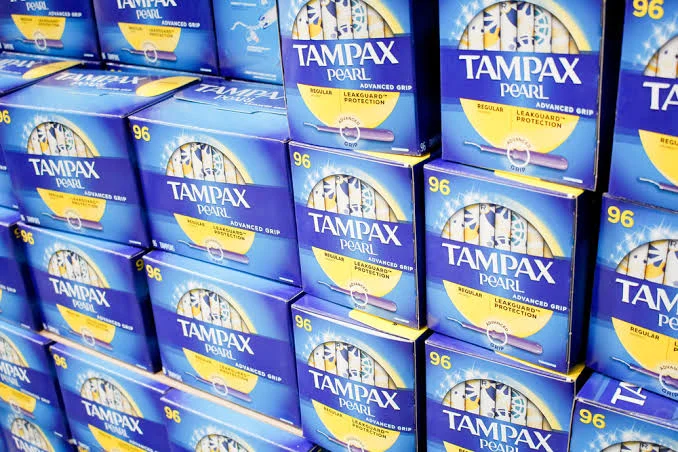
Tampax, a menstrual tampon brand manufactured by Procter & Gamble (P&G), has become the subject of several consumer lawsuits involving different products and labeling claims. The current Tampax lawsuit attention centers heavily on allegations that certain Tampax Pearl and Radiant tampons contained undisclosed lead.
Consumers searching this topic often want to know whether a class action exists, whether Tampax products have been found unsafe, and whether a settlement, claim form, payout, or deadline has been announced. Those questions require separating allegations from scientific findings and actual court decisions.
This guide explains the major Tampax cases, the 2024 tampon-metals research, FDA findings, class-action developments, related PFAS and labeling litigation, and what consumers should know about potential compensation.
What Is the Tampax Lawsuit?
The term “Tampax lawsuit” does not refer to one single legal dispute. Several lawsuits have challenged Tampax products or their marketing, with allegations involving lead, PFAS, titanium dioxide, and “Pure Cotton” or “Free of Dyes” representations.
The most prominent current litigation involves Barton v. The Procter & Gamble Company, filed in federal court in California. Plaintiffs Allison Barton and Jana Moreno allege that P&G violated California consumer-protection laws by failing to disclose lead in Tampax Pearl and Tampax Radiant products.
The allegations should not be confused with a judicial finding that Tampax tampons are dangerous. The plaintiffs’ claims remain allegations, and scientific evidence concerning metals in tampons has continued to develop. In 2026, FDA researchers reported that although trace metals could be detected, estimated exposure from metals released during tampon use presented negligible toxicological concern.
Tampax Lawsuit Update 2026
A major development occurred on September 29, 2026, when a federal judge certified a California consumer class in the Barton litigation involving Tampax Pearl and Radiant products. Class certification allows qualifying California purchasers to pursue specified claims collectively; it does not establish that P&G is liable or that the plaintiffs’ allegations have been proven.
Earlier in the litigation, P&G unsuccessfully sought dismissal of all claims. The court allowed portions of the case to proceed. During 2026, the parties also litigated class certification, expert evidence, and confidentiality issues surrounding evidence filed with the court.
As of October 2026, the certified California case has not produced a publicly announced settlement or consumer payout program. Consumers should therefore distinguish class certification from settlement eligibility.
Tampax Class Action Lawsuit Explained
A class action allows one or more named plaintiffs to pursue claims on behalf of a larger group sharing legally significant circumstances.
The Barton litigation began as a proposed class action. Following litigation over the pleadings and class-certification evidence, the court certified a California purchaser class in September 2026.
Certification is procedural. It determines whether claims may proceed collectively under Rule 23 of the Federal Rules of Civil Procedure. It does not mean the court has concluded that Tampax products were unsafe, that P&G committed wrongdoing, or that class members are entitled to compensation.
Why Is Procter & Gamble Being Sued Over Tampax Tampons?
The central lead litigation alleges that P&G marketed and sold certain Tampax products without adequately disclosing the alleged presence of lead.
According to the Barton complaint, plaintiffs contend that consumers reasonably expected the products to be free from undisclosed lead based partly on labeling and marketing representations. They also allege they would not have purchased the products, or would have paid less, had they known of the alleged lead content.
P&G has contested the claims. Importantly, the litigation focuses largely on consumer-protection and economic-loss theories rather than establishing that every purchaser suffered a physical injury.
Barton v. The Procter & Gamble Company Explained
Barton v. The Procter & Gamble Company, Case No. 3:24-cv-01332, was filed in the U.S. District Court for the Southern District of California.
The lawsuit alleges violations of California consumer-protection laws involving Tampax Pearl and Tampax Radiant products. According to the plaintiffs, independent testing detected lead in certain products, while P&G allegedly failed to disclose its presence.
The litigation survived important portions of P&G’s dismissal efforts and progressed into discovery and class-certification proceedings. In September 2026, the court certified a California purchaser class.
Who Filed the Tampax Lawsuit?
The California lead lawsuit was brought by consumers Allison Barton and Jana Moreno against The Procter & Gamble Company.
They sued individually and on behalf of other consumers they contend were similarly affected by P&G’s alleged omissions and marketing practices.
When Was the Lawsuit Filed?
The original Barton complaint was filed on July 29, 2024.
The case emerged shortly after publication of a scientific study examining metal concentrations in tampons, although the researchers did not disclose individual brands in their published results.
Where Was the Lawsuit Filed?
Barton was filed in the U.S. District Court for the Southern District of California.
The case is identified as Barton v. The Procter & Gamble Company, No. 3:24-cv-01332.
Which Tampax Products Are Involved?
The current Barton pleadings concern Tampax Pearl and Tampax Radiant tampons.
Court documents state that plaintiffs challenged labeling and alleged lead content in these product lines. The litigation should not automatically be interpreted as covering every Tampax product ever sold.
What Does the Lawsuit Allege?
Plaintiffs allege P&G failed to disclose lead in the challenged products and that consumers were therefore misled when making purchasing decisions.
The complaint cites independent testing and alleges specific lead concentrations. These testing allegations are part of the plaintiffs’ case and should not be treated as independent judicial findings.
P&G disputes liability, and the litigation remains ongoing.
Tampax Pearl Lawsuit 2026
Tampax Pearl is one of the primary product lines identified in the Barton litigation.
Plaintiffs allege that testing of certain products detected lead and that labeling failed to provide consumers with information they considered material to their purchasing decisions.
The legal dispute does not establish that every Tampax Pearl tampon contains an identical concentration of lead or that using Tampax Pearl causes injury.
Tampax Pearl Regular
Regular is one of the absorbency categories within the broader Tampax Pearl line.
The litigation involves allegations concerning Pearl products, but consumers should avoid assuming that a testing result from one absorbency automatically proves the precise composition of another.
Tampax Pearl Super
The Barton pleadings specifically discuss testing performed on Super products.
According to court documents, plaintiffs alleged that Tampax Pearl Super testing produced a lead measurement of approximately 0.181 micrograms per gram. That figure is an allegation drawn from plaintiffs’ testing evidence rather than a court determination about every product.
Tampax Pearl Super Plus
Super Plus is another Tampax Pearl absorbency option.
The litigation includes broader Pearl allegations, but the presence, concentration, release, and potential absorption of a substance are separate scientific questions. Product-line allegations alone do not establish an individual user’s exposure.
Tampax Pearl Ultra
Ultra products fall within Tampax Pearl’s higher-absorbency range.
Consumers should distinguish product inclusion in litigation from scientific proof of harm. Courts determine legal claims based on evidence presented by the parties, while regulators separately evaluate product safety.
Are Tampax Radiant Tampons Part of the Lawsuit?
Yes. Tampax Radiant products are included in the Barton litigation.
The amended complaint alleges that testing of Tampax Radiant Super products detected approximately 0.123 micrograms of lead per gram. Again, this is a plaintiff allegation based on testing cited in the lawsuit rather than a final judicial finding concerning product safety.
The certified California litigation includes purchasers of qualifying Pearl and Radiant products under the class definition approved by the court.
Tampax Lawsuit Lead Allegations Explained
Lead is central to Barton because plaintiffs allege consumers were not informed that the challenged tampons contained it.
The case involves both factual and legal questions. Detecting lead in a material is different from determining how much is released during normal use, how much enters the body, and whether that exposure creates a health risk.
Those distinctions became especially significant after FDA scientists conducted additional testing and published a toxicological risk assessment in 2026.
How Was Lead Allegedly Detected in Tampax Tampons?
Barton plaintiffs cite independent laboratory testing of Tampax products.
Court records state that testing was performed on Super versions of Tampax Pearl and Radiant, after which plaintiffs used those results as part of their allegations concerning the broader products.
This testing is separate from the 2024 academic tampon study.
How Much Lead Do the Plaintiffs Allege Was Found?
The Barton complaint alleged approximately 0.181 micrograms of lead per gram in tested Tampax Pearl products and approximately 0.123 micrograms per gram in tested Tampax Radiant products.
The tested products referenced by the court were Super absorbency versions.
These numbers describe plaintiffs’ allegations and should not be interpreted as a regulatory finding applicable to every Tampax tampon.
Why Is Lead Central to the Lawsuit?
Plaintiffs contend that lead is information a reasonable consumer would consider important when deciding whether to purchase tampons.
Their consumer-protection theory therefore focuses not only on whether lead was allegedly present, but whether P&G had a legal obligation to disclose information about it.
Whether the challenged labeling was legally misleading is ultimately a matter for the litigation process.
What Does California Proposition 65 Say About Lead?
California Proposition 65 regulates exposures to chemicals listed by the state as causing cancer or reproductive toxicity.
Barton plaintiffs referenced California’s Maximum Allowable Dose Level of 0.5 micrograms per day for lead as a reproductive toxicant when framing their allegations.
However, the presence of lead measured per gram of product cannot by itself establish a consumer’s actual absorbed daily dose. Release, use conditions, and biological absorption matter when evaluating exposure.
What Did the 2024 Tampon Metals Study Find?
A peer-reviewed study published in Environment International examined 30 tampons representing 14 brands and 18 product lines.
Researchers measured 16 metals and metalloids and detected all 16 in at least one sample. The geometric mean concentrations reported included approximately 120 ng/g for lead, 6.74 ng/g for cadmium, and 2.56 ng/g for arsenic.
The study generated substantial public attention but had important limitations. It did not publicly identify individual brands and did not determine whether detected metals entered users’ bodies.
Which Metals Did Researchers Test For?
Researchers evaluated:
- Arsenic
- Barium
- Calcium
- Cadmium
- Cobalt
- Chromium
- Copper
- Iron
- Manganese
- Mercury
- Nickel
- Lead
- Selenium
- Strontium
- Vanadium
- Zinc
The researchers found measurable amounts of all 16 across the tested samples.
Was Lead Detected in the Tested Tampons?
Yes. Lead was detected in the samples examined in the 2024 study.
The researchers reported a geometric mean lead concentration of approximately 120 ng/g and noted differences between categories of products.
Detection, however, does not by itself establish the amount released during actual use or absorbed into the body.
Did the Study Identify Individual Tampon Brands?
No. The published study did not disclose which measurements corresponded to individual tampon brands.
That limitation matters when discussing Tampax specifically. The academic research cannot reasonably be cited as direct proof that a particular concentration came from a particular Tampax product.
Did the Study Prove That Metals Enter the Body?
No.
The researchers explicitly stated that additional research was needed to determine whether metals could leach from tampons and cross vaginal tissue into systemic circulation.
Later research has investigated metal release under laboratory conditions, but release from a product still does not automatically establish systemic absorption.
Did the Study Prove That Tampons Cause Health Problems?
No.
The 2024 research measured metal concentrations. It was not designed to establish that tampon use caused disease or other adverse health outcomes.
FDA subsequently conducted its own work and reported in 2026 that the amount of metals expected to be released during tampon use was too low to cause harm under its toxicological assessment.
What Does Procter & Gamble Say About the Tampax Lawsuit?
P&G has contested the plaintiffs’ claims through motions and other filings in the litigation.
Its defense has challenged the legal and factual basis of plaintiffs’ theories rather than accepting the allegation that its products were deceptively marketed.
More broadly, FDA’s independent regulatory assessment currently supports the conclusion that FDA-cleared tampons remain a safe menstrual-product option. FDA reported in 2026 that its laboratory testing found trace metals but concluded released amounts presented negligible toxicological concern.
Did the Court Dismiss the Tampax Lead Lawsuit?
No. The Barton lead litigation was not dismissed in its entirety.
In 2025, the California federal court granted P&G’s motion to dismiss in part and denied it in part, allowing significant portions of the case to continue.
The case subsequently moved into discovery and class-certification proceedings. That progression is important because online statements claiming the Tampax lead lawsuit was simply “dismissed” can confuse Barton with separate Tampax litigation.
Which Tampax Lawsuit Claims Are Still Moving Forward?
Barton has continued on consumer-protection theories involving alleged omissions and representations surrounding Pearl and Radiant products.
The precise claims and available remedies depend on the court’s orders and certified class definition.
A surviving claim does not mean plaintiffs have won on the merits. It generally means the claim has cleared a procedural stage and may continue toward later proceedings.
Foster v. The Procter & Gamble Company Explained
Another important Tampax lead case is Foster v. The Procter & Gamble Company, filed in the Northern District of Illinois.
The consolidated complaint involves multiple plaintiffs and allegations concerning Tampax Pearl and Radiant products.
On July 15, 2026, Judge Jeremy C. Daniel granted P&G’s dismissal motion as to the negligent-misrepresentation claim but denied it as to the remaining claims addressed by the order.
Why Was Another Tampax Class Action Filed?
The Foster plaintiffs pursued similar consumer-protection theories concerning allegedly undisclosed lead in Tampax products.
Separate lawsuits can arise because consumers live in different states, purchased products under different circumstances, or assert claims under different state consumer-protection statutes.
Which Tampax Products Are Involved?
The Foster court identified Tampax Pearl and Tampax Radiant as the products at issue.
The challenged labels included statements concerning perfume, elemental chlorine bleaching, dyes, and skin gentleness.
What Did Consumers Allege?
Consumers alleged that P&G marketed Tampax products in ways that led purchasers to believe they did not contain harmful or undisclosed substances while allegedly failing to disclose lead.
Those allegations remain subject to proof.
The litigation should therefore be described as a dispute over alleged omissions and marketing rather than proof that a court has declared Tampax products dangerous.
What Did the Court Decide in July 2026?
On July 15, 2026, the Northern District of Illinois granted P&G’s motion to dismiss one negligent-misrepresentation claim but denied the motion as to the other claims addressed by the order.
The court ordered P&G to answer the complaint.
This ruling allowed substantial portions of Foster to proceed but was not a final determination of liability.
How Is the Illinois Tampax Case Related to the California Lawsuit?
Foster and Barton involve overlapping allegations concerning Tampax Pearl and Radiant products, but they are separate federal cases.
Barton is proceeding in California, while Foster is in Illinois. The cases involve different plaintiffs and may involve different state-law causes of action and proposed classes.
Consumers should therefore avoid treating every procedural development in one case as automatically applying to the other.
Has a Class Been Certified in the Tampax Lawsuit?
Yes—in Barton, a California consumer class was certified on September 29, 2026.
This is a significant change from the earlier procedural posture of the litigation.
Class certification means qualifying purchasers may have their covered claims adjudicated collectively. It does not mean P&G has been found liable, nor does it mean a settlement fund or payment program currently exists.
Who Could Be Covered by the Tampax Class Action?
The certified Barton class concerns qualifying California purchasers of Tampax Pearl and Tampax Radiant products during the period defined by the court.
Public reporting on the September 29 certification describes the class as California consumers who purchased covered Pearl or Radiant products beginning July 29, 2020 and continuing through the applicable class-notice date.
The court’s official notice and class definition should control any individual determination of membership.
Can You Join the Tampax Lawsuit?
A certified class action generally does not operate like an individual lawsuit where every consumer must immediately file a separate complaint.
If court-approved class notice is issued, potential class members should read that notice carefully. It can explain who is included, whether any action is required, and whether class members have an opportunity to opt out.
Consumers considering individual personal-injury claims should seek legal advice specific to their circumstances rather than assuming a consumer class automatically covers those injuries.
Tampax Lawsuit Claim Form: Is One Available?
There is currently no verified settlement claim form associated with a final Barton settlement, because no settlement has been publicly announced.
Class certification alone does not create a claim form.
If a future settlement requires claims, the court-approved settlement process would ordinarily identify the official administrator, eligibility requirements, deadlines, and documentation needed.
Is There an Official Tampax Lawsuit Claim App?
No verified official Tampax settlement claim app has been established for the current lead litigation.
Consumers should be cautious of websites, social-media advertisements, mobile apps, or messages promising guaranteed Tampax payments.
A legitimate class-action settlement ordinarily has identifiable court documents and an authorized settlement administrator.
How to Identify a Real Tampax Settlement Claim Form
Before submitting personal information, consumers should verify:
- The exact lawsuit name and case number.
- The court handling the case.
- Whether a settlement has actually received court approval.
- The identity of the court-authorized administrator.
- The official filing deadline.
- Whether court documents reference the same settlement website.
- Whether the form requests only information reasonably necessary to process a claim.
Requests for upfront payment to receive settlement money are a major warning sign.
Tampax Lawsuit Claim Money: Is Compensation Available?
No general Tampax lead settlement fund has been publicly announced as of October 2026.
The California class certification allows covered claims to proceed collectively, but it does not itself create compensation.
Money could become available later through a settlement or judgment, but the amount and eligibility cannot be predicted reliably before such an outcome exists.
Has a Tampax Settlement Been Reached?
No confirmed settlement resolving the current Barton lead class action has been announced.
The case remains active following class certification.
Consumers should be especially cautious about webpages that present estimated settlement amounts as though they are guaranteed payments. Until a settlement agreement or judgment establishes compensation, such numbers are speculative.
Tampax Lawsuit Payout: How Much Could Consumers Receive?
There is no confirmed Tampax lawsuit payout amount at this stage.
Potential recovery could depend on the legal claims ultimately proven, damages methodology, purchase records, settlement negotiations, court rulings, and the terms of any future settlement.
Accordingly, there is currently no reliable basis for stating that consumers will receive a particular dollar amount.
Is There a Tampax Lawsuit Payout Per Person?
No official per-person payout has been established.
Class actions can distribute money in different ways. Some use fixed payments, while others depend on documented purchases, claim rates, available settlement funds, or other formulas.
None of those payment structures should be assumed until an actual settlement is proposed and approved.
Has a Tampax Settlement Payout Date Been Announced?
No.
Because there is no confirmed settlement payout program for the current lead class action, there is no official settlement payment date.
Even when class actions eventually settle, payments generally occur only after court approval, completion of the claims process, resolution of objections or appeals, and administrative review.
Is There a Tampax Lawsuit Claim Deadline?
No settlement claim deadline has been announced for the current lead litigation.
Future court-approved notices may contain deadlines relating to class rights, exclusions, objections, or settlement claims.
Consumers should rely on official court notices rather than dates appearing in unverified advertisements.
Are Personal Injury Claims Part of the Tampax Class Action?
The prominent Tampax class litigation primarily concerns consumer economic-loss and labeling theories rather than serving as a general personal-injury compensation program.
A consumer who believes a product caused an actual physical injury may face different legal issues involving causation, medical evidence, statutes of limitation, and damages.
Class membership should therefore not be assumed to resolve an individual personal-injury claim.
Have Courts Found That Tampax Tampons Are Unsafe?
No court ruling discussed here establishes that Tampax tampons are generally unsafe.
The lawsuits contain allegations concerning lead, PFAS, titanium dioxide, and labeling. Allegations are not equivalent to scientific or judicial findings of unsafe products.
FDA stated in 2026 that its research continued to support FDA-cleared tampons as a safe menstrual-product option and that the trace metals expected to be released during use were too low to cause harm under its assessment.
Can Lead in Tampons Cause Health Problems?
Lead exposure can cause serious health effects at sufficient exposure levels. However, identifying lead in a material does not establish how much a tampon user absorbs.
For tampon risk specifically, the relevant scientific questions include how much lead is present, how much is released during use, whether it crosses vaginal tissue, and what systemic dose results.
FDA’s 2026 toxicological assessment concluded that detected metals had margins of safety indicating negligible toxicological concern under the study conditions.
Is There Evidence That Lead From Tampons Enters the Bloodstream?
The original 2024 metals study did not determine whether lead or other metals crossed vaginal tissue into systemic circulation.
Researchers specifically identified that question as an area requiring further investigation.
Later laboratory work has studied metal release from tampon materials, but demonstrating release into simulated fluids is not the same as proving absorption into a human user’s bloodstream.
What Other Metals Have Been Detected in Tampons?
The 2024 Environment International study evaluated 16 metals and metalloids and found measurable amounts of each in at least one sample.
Researchers emphasized that concentrations varied across product characteristics and that additional research was needed to determine exposure implications.
Arsenic
Arsenic was among the substances detected.
The study reported a geometric mean concentration of approximately 2.56 ng/g and found arsenic concentrations differed depending on product characteristics.
Detection does not establish harmful exposure.
Cadmium
Cadmium was also detected in the tested samples.
Researchers reported a geometric mean concentration of approximately 6.74 ng/g.
As with lead and arsenic, the study measured product content rather than demonstrating disease in tampon users.
Nickel
Nickel was one of the 16 substances measured in the study.
Its presence formed part of the broader finding that tampons may contain multiple metals originating from raw materials, agricultural processes, manufacturing, or other sources.
Other Metals Tested in the 2024 Study
Researchers additionally examined barium, calcium, cobalt, chromium, copper, iron, manganese, mercury, selenium, strontium, vanadium, and zinc.
The scientific significance of detecting these substances depends on concentration, chemical form, release, exposure route, absorption, and dose—not detection alone.
Tampax Lawsuit Reddit Discussions
Reddit and other social platforms contain discussions about Tampax ingredients, the lead litigation, tampon safety, and possible settlements.
These discussions can show what consumers are worried about, but they should not be treated as authoritative sources for court status, toxicology, settlement eligibility, or medical conclusions.
Official court records, peer-reviewed research, and regulatory information provide stronger evidence.
What Are Consumers Saying About Tampax?
Online discussions commonly raise questions about metals, ingredient transparency, product labeling, alternative menstrual products, and whether consumers could eventually receive compensation.
Some users also share personal experiences or symptoms.
Those reports can reflect genuine consumer concerns, but they do not establish that Tampax caused a particular medical problem.
Are Reddit Reports Evidence in the Tampax Lawsuit?
A Reddit post is not automatically evidence proving the plaintiffs’ allegations.
Evidence used in litigation must satisfy applicable procedural and evidentiary requirements. Courts may consider admissible documents, testimony, expert evidence, testing, business records, and other properly presented material.
Anonymous online comments generally should not be treated as established facts.
Tampax Pure Cotton PFAS Lawsuit Explained
A separate lawsuit, Bounthon v. The Procter & Gamble Company, challenged marketing surrounding Tampax Pure Cotton products.
Plaintiffs alleged that testing detecting total organic fluorine supported their contention that the products contained PFAS and that “pure” or organic representations were misleading.
This litigation was separate from Barton’s lead allegations. The federal district court ultimately dismissed the PFAS case without leave to amend in July 2025.
What Did the PFAS Lawsuit Allege?
Plaintiffs alleged that Tampax Pure Cotton marketing gave consumers an inaccurate impression about product composition.
They relied on total organic fluorine testing as support for allegations involving PFAS.
P&G challenged whether that testing adequately established the presence of the specific substances alleged.
Were PFAS Found in Tampax Pure Cotton Tampons?
The plaintiffs argued that total organic fluorine testing indicated PFAS-related contamination.
The court found deficiencies in the plaintiffs’ theory and pleadings, including their reliance on testing that did not adequately establish the particular PFAS allegations necessary to support their claims.
Therefore, it is more accurate to describe PFAS presence as an allegation in that litigation rather than a proven judicial fact.
Why Was the PFAS Lawsuit Dismissed?
The court concluded that the plaintiffs’ amended allegations did not cure deficiencies identified in previous dismissal orders.
After multiple opportunities to amend, the court determined further amendment would be futile and dismissed the third amended complaint without further leave to amend.
Was the Case Dismissed With Prejudice?
The district court dismissed the operative complaint without leave to amend, effectively terminating the district-court case.
An appeal was subsequently filed in the Ninth Circuit.
That procedural history is important when describing the litigation because district-court dismissal and appellate proceedings are separate stages.
Is the Tampax PFAS Lawsuit the Same as the Lead Lawsuit?
No.
Bounthon involved Tampax Pure Cotton marketing and PFAS-related allegations. Barton involves alleged lead in Tampax Pearl and Radiant products.
The lawsuits involve different testing theories, products, allegations, procedural histories, and courts.
Confusing the cases can lead to incorrect claims that the current lead lawsuit was dismissed when the dismissal actually concerned separate PFAS litigation.
Tampax Pure Cotton Labeling Lawsuit
Tampax Pure Cotton has also faced litigation challenging how its composition and environmental characteristics were marketed.
A 2022 case alleged that consumers could interpret “Pure Cotton,” “100% Organic Cotton Core,” “Free of Dyes,” and plant-based applicator representations more broadly than P&G intended.
The court allowed some claims to proceed while dismissing others.
What Did Consumers Allege About the “Pure Cotton” Label?
Plaintiffs alleged that “Pure Cotton” marketing could cause reasonable consumers to believe more of the product was cotton than merely the core.
They also challenged representations concerning dyes and the plant-based applicator.
P&G disputed those interpretations, and the litigation addressed whether the challenged representations could support consumer-protection claims.
Is the Pure Cotton Case Related to the Lead Litigation?
Only broadly in the sense that both involve Tampax and consumer-product representations.
The Pure Cotton litigation concerns different alleged labeling practices and ingredients. Barton’s central theory concerns allegedly undisclosed lead in Pearl and Radiant products.
They should therefore be treated as separate legal disputes.
Tampax “Free of Dyes” Lawsuit Explained
In April 2024, another proposed class action challenged P&G’s “Free of Dyes” representations for certain Tampax products.
The case alleged that products contained titanium dioxide, which plaintiffs characterized as a white pigment serving a coloring function.
The complaint reportedly identified Tampax Cardboard, Pearl, and Radiant products.
Why Was Titanium Dioxide Part of the Lawsuit?
Plaintiffs alleged that titanium dioxide functions as a white pigment and therefore conflicted with the products’ “Free of Dyes” marketing.
The legal issue concerns how a reasonable consumer would interpret the challenged representation and whether the ingredient makes that representation misleading.
The allegation itself does not establish that titanium dioxide made the products unsafe.
Which Tampax Products Were Named?
The Strano litigation identified Tampax Cardboard, Pearl, and Radiant products.
According to the complaint, those products were marketed as free of dyes despite allegedly containing titanium dioxide.
Is the Titanium Dioxide Case Related to the Lead Lawsuit?
They involve the same manufacturer and some overlapping product lines, but the claims are different.
The titanium-dioxide case concerns “Free of Dyes” marketing. Barton focuses on allegedly undisclosed lead.
Evidence proving or disproving one theory does not automatically resolve the other.
Have Tampax Tampons Been Recalled?
A 2026 FDA database entry does list certain Tampax Regular and Tampax Super products among multiple feminine-hygiene products involved in a Class II recall initiated in December 2025.
That recall should not be automatically equated with the lead class action. FDA recalls identify particular products, codes, circumstances, and corrective actions.
Consumers checking a product should compare its exact identifying information with the official recall record rather than assuming every Tampax product is recalled.
Is There a Tampax Pearl Recall in 2026?
The FDA record located for the 2026 Class II recall identifies Tampax Regular and Tampax Super among multiple products, but that record should not be interpreted as a blanket recall of every Tampax Pearl product.
Consumers concerned about a specific box should verify its product information against FDA recall records.
A lawsuit involving Tampax Pearl also does not automatically constitute a regulatory recall.
Is a Recall the Same as a Class Action Lawsuit?
No.
A recall concerns removal or correction of products in commerce and may involve a manufacturer and a regulator such as FDA.
A class action is litigation in which plaintiffs seek to pursue legal claims on behalf of a defined group.
A product can face litigation without being recalled, and a recall can occur without a class-action judgment.
Tampax Lawsuit Timeline
The Tampax litigation landscape involves several distinct cases rather than one continuous lawsuit.
Understanding the timeline helps separate Pure Cotton labeling claims, PFAS allegations, titanium-dioxide litigation, academic research, and the newer lead cases.
September 2022: Tampax Pure Cotton Labeling Lawsuit Filed
A proposed class action challenged Tampax Pure Cotton labeling in September 2022.
The complaint questioned representations concerning “Pure Cotton,” the organic cotton core, dyes, and the plant-based applicator.
February 2023: Tampax PFAS Lawsuit Filed
Bounthon v. Procter & Gamble was filed in February 2023.
The plaintiffs alleged that Tampax Pure Cotton products were misleadingly marketed in light of testing they associated with PFAS.
April 2024: Tampax “Free of Dyes” Lawsuit Filed
Strano v. The Procter & Gamble Company was filed in April 2024.
The complaint challenged “Free of Dyes” marketing based on the alleged presence and function of titanium dioxide.
July 2024: Tampon Metals Study Published
Researchers published the first peer-reviewed study specifically measuring metal concentrations across numerous tampon products.
All 16 tested metals and metalloids were detected in at least one sample, but individual brands were not disclosed and the research did not determine systemic absorption.
July 2024: Barton Tampax Lead Lawsuit Filed
Barton was filed on July 29, 2024.
Plaintiffs alleged that Tampax Pearl products contained undisclosed lead. Later pleadings also addressed Tampax Radiant products.
2025: Tampax Lead Claims Survive in Part
In 2025, the Barton court granted P&G’s dismissal request in part and denied it in part.
That ruling permitted significant portions of the lead-related consumer case to continue.
July 2025: Tampax PFAS Lawsuit Dismissed
The Bounthon court dismissed the third amended complaint without leave to amend in July 2025 after finding that plaintiffs had not cured previously identified pleading deficiencies.
An appeal followed.
2025–2026: Additional Tampax Lead Cases Filed
Additional consumers brought lead-related claims against P&G, expanding the litigation beyond the original California action.
These cases include litigation in Illinois and involve overlapping allegations concerning Pearl and Radiant products.
July 2026: Illinois Court Allows Major Claims to Proceed
On July 15, 2026, the Foster court dismissed the negligent-misrepresentation claim but declined to dismiss the other claims addressed by P&G’s motion.
P&G was directed to answer the consolidated complaint.
2026: Tampax Lead Litigation Continues
The most significant later development came on September 29, 2026, when the California court certified a purchaser class in Barton.
Meanwhile, FDA’s 2026 research concluded that metals released from tampons under its testing presented negligible toxicological concern.
Thus, the legal dispute continues alongside scientific evidence that does not necessarily support every health implication alleged or discussed online.
How to Verify a Real Tampax Class Action Settlement
Consumers should verify settlement information through court records before submitting claims.
A genuine settlement should ordinarily identify the case name, court, case number, settlement terms, administrator, eligibility requirements, and important dates.
Search advertisements can appear before any settlement exists. A webpage using phrases such as “Tampax payout” or “claim money” does not prove that a court-approved compensation program has been established.
How to Avoid Fake Tampax Lawsuit Claim Forms and Apps
Do not provide sensitive personal or financial information merely because a website claims Tampax users can receive money.
Check whether:
- A settlement actually exists.
- The court has approved or preliminarily approved it.
- The administrator is identified in court documents.
- The website uses the same contact information found in official notices.
- The stated deadline matches court records.
Consumers should also be skeptical of guaranteed payment promises when litigation is still pending.
What Could Happen Next in the Tampax Lawsuit?
Following class certification, Barton can continue through additional pretrial proceedings unless the parties reach a settlement or another ruling changes the litigation’s course.
Possible future developments include additional evidentiary motions, class notice, summary-judgment proceedings, settlement discussions, trial preparation, appellate review, or a negotiated resolution.
None of those outcomes should be assumed in advance.
Scientific evidence may also remain relevant. FDA’s 2026 assessment concluded that trace-metal release from tested tampons posed negligible toxicological concern, which differs from broader interpretations sometimes attached to the original 2024 metals study.
Read: Pruvit Lawsuit 2026
Read: Mrs. Meyers Lawsuit
Read: Oz Gentlemen’s Club Lawsuit
Read: Ensemble Health Partners Lawsuit
Read: Tend Dental Lawsuit
Read: Hairitage Shampoo Lawsuit
Read: Netflix Class Action Lawsuit
Frequently Asked Questions
Is There a Class Action Lawsuit Against Tampax?
Yes. A California federal court certified a purchaser class in Barton in September 2026 involving specified Tampax Pearl and Radiant products.
What Is the Tampax Lawsuit About?
The current lead litigation alleges P&G failed to adequately disclose lead in certain Tampax Pearl and Radiant tampons and thereby misled consumers.
Is There a Tampax Lawsuit Claim Form?
No verified settlement claim form is currently available for the lead class action because no final settlement compensation program has been announced.
Can I Claim Money From the Tampax Lawsuit?
There is currently no established settlement fund offering general consumer payments. Future eligibility would depend on a settlement, judgment, and applicable class terms.
Has a Tampax Settlement Been Reached?
No confirmed settlement resolving the current Barton lead class action has been announced as of October 2026, despite the California class-certification ruling.
Final Thoughts
The Tampax lawsuit landscape includes several separate disputes, but the most important current case is Barton v. The Procter & Gamble Company. The California litigation alleges that P&G failed to disclose lead in Tampax Pearl and Radiant products, and a California purchaser class was certified in September 2026. That ruling allows covered claims to proceed collectively; it does not establish liability or create an automatic payout.
Scientific findings also require context. The 2024 study detected metals in tampons but did not identify individual brands or establish systemic absorption or health effects. FDA’s subsequent 2026 research concluded that although trace metals were detected, the amounts expected to be released during tampon use were too low to cause harm under its toxicological assessment.
For now, consumers should distinguish allegations from proven facts and rely on court records and regulatory sources for future settlement, claim-form, deadline, or safety updates.