Chobani is one of the best-known yogurt brands in the United States, but recent consumer litigation has placed some of its product labels under legal scrutiny. The Chobani Yogurt Lawsuit discussion now involves separate disputes concerning alleged phthalates in certain plain Greek yogurts and the use of “Zero Sugar” labeling on products containing allulose.
Consumers searching the topic often want to know whether the allegations involve product safety, misleading advertising, a certified class action, an available settlement, or compensation. Those questions require separating different lawsuits rather than treating every Chobani-related claim as one case.
As of August 2026, important litigation remains active. This article explains the major cases, what plaintiffs allege, how Chobani has responded, what courts have decided, and what consumers should know before assuming they qualify for a claim.
What Is the Chobani Yogurt Lawsuit?
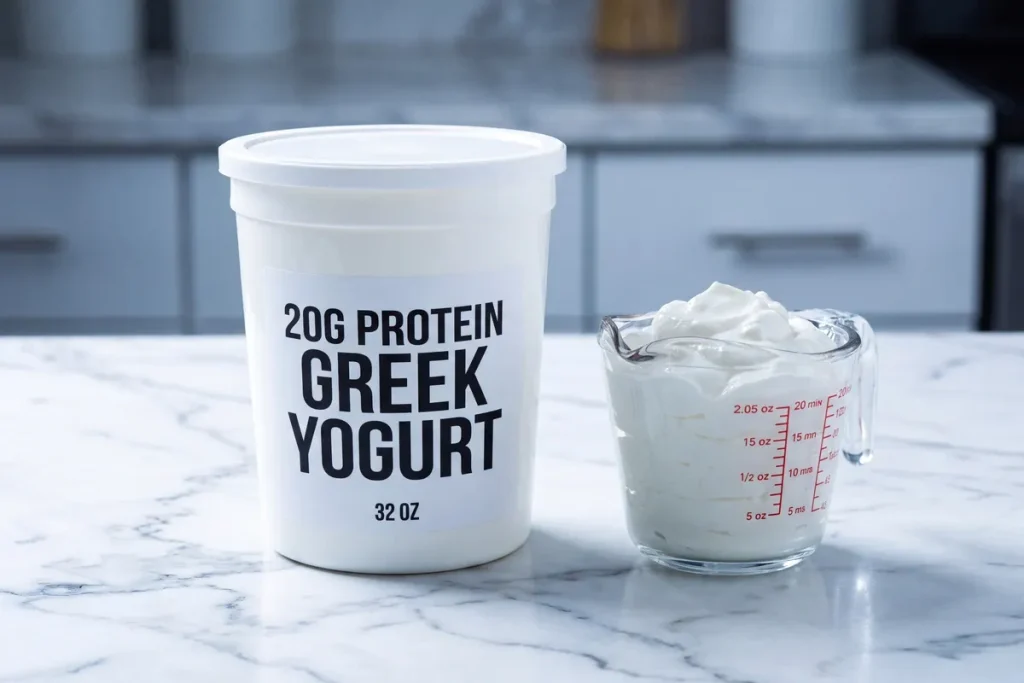
The term Chobani Yogurt Lawsuit does not refer to a single legal proceeding. At least two significant consumer cases have generated attention: Wysocki v. Chobani, LLC, involving alleged phthalates and “Only Natural Ingredients” representations, and Franco v. Chobani, LLC, involving Chobani Zero Sugar yogurt and allulose.
In Wysocki, plaintiff Amy Wysocki alleges that certain Chobani plain Greek yogurt products were marketed in a misleading manner because third-party testing reportedly detected plastic-related chemicals despite packaging representations about natural ingredients. The lawsuit is a proposed class action; the allegations have not been proven at trial.
The Zero Sugar litigation raises a different issue. Consumers allege that Chobani marketed yogurt as containing zero sugar even though it contained four grams of allulose per serving. In July 2026, the Seventh Circuit revived key claims by concluding that allulose falls within the applicable federal regulatory definition of sugar and that the plaintiffs plausibly alleged consumer deception.
These cases primarily concern labeling and consumer-protection law. A pending lawsuit should not be interpreted as a judicial finding that Chobani committed wrongdoing.
Why Has Chobani Faced Legal Action?
Chobani has faced legal challenges largely because food packaging can create enforceable consumer expectations. Statements such as “Only Natural Ingredients” and “Zero Sugar” can become legally significant when plaintiffs claim that the actual composition of a product conflicts with what a reasonable shopper would understand those statements to mean.
The phthalates case focuses on alleged chemical detection and natural-ingredient representations. Wysocki contends that she paid more than she otherwise would have because she believed the product was free from the allegedly non-natural chemicals at issue.
The Zero Sugar dispute concerns a separate regulatory question: whether allulose qualifies as sugar under federal labeling regulations. The plaintiffs contend that consumers were misled by a zero-sugar representation when the yogurt contained allulose.
Neither lawsuit automatically establishes that consumers were harmed or that Chobani violated the law. Those questions depend on the evidence, applicable labeling regulations, class-certification requirements, and further court proceedings.
Chobani Yogurt Lawsuit Update 2026
The legal picture changed materially in 2026.
On April 6, 2026, the U.S. District Court for the Southern District of California granted in part and denied in part Chobani’s motion to dismiss in Wysocki. Certain claims were dismissed with leave to amend, while other portions of the lawsuit survived the pleading-stage challenge.
The court allowed significant aspects of Wysocki’s misrepresentation theory to continue. It dismissed allegations based on DBP with leave to amend and also dismissed certain fraudulent-omission and equitable-relief theories while permitting amendment.
A second major development came on July 27, 2026. The Seventh Circuit reversed the dismissal of the Francos’ Zero Sugar case. The appellate court concluded that allulose qualifies as sugar under the federal regulation at issue and held that Jason and Abigail Franco had plausibly alleged consumer deception. The matter may therefore proceed in the district court.
| Case | 2026 Status |
|---|---|
| Wysocki v. Chobani, LLC | Motion to dismiss granted in part and denied in part |
| Phthalates claims | Significant labeling theories survived; some claims received leave to amend |
| Franco v. Chobani, LLC | District-court dismissal reversed on appeal |
| Zero Sugar claims | Returned for further district-court proceedings |
| Public settlement | No settlement established by these cited rulings |
Wysocki v. Chobani LLC Explained
Wysocki v. Chobani, LLC, Case No. 3:25-cv-00907, was filed in the U.S. District Court for the Southern District of California on April 16, 2025. It is pleaded as a putative consumer class action rather than an individual product-injury lawsuit.
The dispute centers on whether representations associated with Chobani’s plain Greek yogurts could mislead reasonable consumers in light of alleged third-party testing for phthalates.
The court’s April 2026 ruling did not determine that the plaintiff’s factual allegations were true. A motion-to-dismiss decision generally evaluates whether adequately pleaded allegations can state legally viable claims, assuming the relevant factual allegations are true for that stage of litigation.
Who Filed the Lawsuit?
Amy Wysocki filed the lawsuit individually and on behalf of other allegedly similarly situated consumers.
According to the court’s decision, Wysocki alleged that she purchased Chobani Greek Yogurt Nonfat Plain in California in 2023. She says a representation on the product led her to believe that it did not contain non-natural toxic chemicals such as phthalates.
Her complaint includes claims under California consumer-protection statutes, including the Consumers Legal Remedies Act, Unfair Competition Law, and False Advertising Law. It also asserted breach-of-express-warranty and unjust-enrichment theories.
Which Chobani Yogurts Are Involved?
The court identifies two products in the phthalates litigation:
- Chobani Greek Yogurt Nonfat Plain
- Chobani Greek Yogurt Whole Milk Plain
These are collectively described as the “Products” in the court’s April 2026 order.
That distinction matters. The existence of litigation involving these products should not be generalized to every yogurt or other product sold by Chobani.
Product size also became relevant. Chobani argued that the third-party testing cited by Wysocki involved products of a different size from the one she purchased and that this weakened the inference that her particular yogurt contained phthalates.
What Does the Lawsuit Allege?
Wysocki alleges that Chobani’s labeling created the impression that the products contained only natural ingredients and were free from the types of allegedly non-natural chemicals identified by third-party testing.
The complaint relies in part on testing reported by PlasticList. According to the court, that testing reportedly detected trace levels of DEHP, DBP, DEHT, and DEP in tested Chobani products. Wysocki alleges that she would not have purchased the product, or would have paid less, if she had known about the alleged presence or risk of such substances.
Chobani disputed several aspects of that theory, including whether the testing could establish what was present in the specific yogurt Wysocki purchased.
The allegations therefore remain disputed. The court’s refusal to dismiss several claims does not amount to a final finding that the labels were deceptive.
Who Could Be Included in the Proposed Class?
The original complaint proposed different class theories depending on the legal claim.
Wysocki asserted California statutory claims on behalf of herself and a proposed California class. The breach-of-warranty and unjust-enrichment counts were asserted on behalf of a proposed nationwide class.
However, a proposed class is not the same thing as a certified class. Before a case can proceed as a class action through judgment or settlement, plaintiffs generally must satisfy the requirements of Federal Rule of Civil Procedure 23.
Consumers therefore should not assume that purchasing Chobani yogurt automatically makes them class members. The ultimate class definition can change substantially during litigation.
Chobani Yogurt Phthalates Allegations
The phthalates allegations are among the most closely watched aspects of the litigation because they combine questions about chemical testing with consumer interpretation of food labels.
The complaint relies on testing reported by PlasticList, an organization that published results for various consumer products. PlasticList reports results for both Chobani Greek Yogurt Nonfat Plain and Whole Milk Plain, with different findings across tested samples.
Importantly, the lawsuit is not itself scientific proof that every container contains the compounds identified in particular tests. Chobani challenged the extent to which those results could be applied to Wysocki’s earlier purchase, pointing to differences in product size, timing, and test results.
The legal issue also extends beyond whether trace chemicals could be detected. The court must consider whether Chobani’s labeling could reasonably communicate something inconsistent with the alleged product composition.
What Are Phthalates?
Phthalates are a group of chemicals commonly associated with plastics and numerous industrial or consumer applications. Different compounds have different uses, exposure pathways, and regulatory treatment.
The Wysocki court noted that FDA materials describe phthalates as chemicals used in hundreds of products, including certain food-packaging applications, pharmaceuticals, blood bags and tubing, and personal-care products.
Their mere detection therefore does not, by itself, resolve whether a product is unsafe or unlawfully labeled. Concentration, exposure, regulatory status, source, testing reliability, and the particular compound all matter.
Which Phthalates Were Allegedly Detected?
The court identified four compounds in discussing the testing underlying Wysocki’s allegations:
- Di-(2-ethylhexyl) phthalate (DEHP)
- Dibutyl phthalate (DBP)
- Diethyl phthalate (DEP)
- Bis(2-ethylhexyl) terephthalate (DEHT)
PlasticList’s published results vary by product and sample. For example, its Nonfat Plain page reports detectable DEHP and DEP in some samples and DEHT among the listed phthalate substitutes, while another sample showed results below specified quantification limits.
The Whole Milk Plain results similarly varied across samples.
That variability is legally important because the litigation concerns what can reasonably be inferred from the testing, not merely whether a compound appeared in one reported sample.
Why Are Consumers Concerned About Phthalates?
Consumer concern largely arises from scientific and regulatory discussion surrounding exposure to certain phthalates. Wysocki’s complaint alleges potential health effects and characterizes the substances at issue as harmful and non-natural.
At the pleading stage, the district court concluded that the plaintiff sufficiently alleged the presence or risk of certain phthalates for purposes of allowing significant claims to move forward. That conclusion was based on the allegations before the court, not a final scientific determination about Chobani products.
Consumers should therefore distinguish between a lawsuit’s allegations, laboratory measurements, regulatory exposure limits, and an official government determination that a food is unsafe. Those are not interchangeable findings.
What Does the “Only Natural Ingredients” Label Have to Do With the Case?
The “Only Natural Ingredients” representation is central to Wysocki’s false-advertising theory.
She argues that a reasonable consumer could interpret the statement to mean the yogurt does not contain non-natural substances such as the chemicals alleged in the complaint. Chobani countered that phthalates are not ingredients and that the packaging did not specifically promise the absence of phthalates.
The district court concluded at the pleading stage that it was plausible for a reasonable consumer to understand an “only natural ingredients” statement as indicating that a product does not contain non-natural ingredients. It therefore declined to dismiss significant misrepresentation claims on that basis.
Whether Wysocki can ultimately prove deception remains a separate question.
How the Alleged Phthalates Were Identified
The allegations trace back to testing published by PlasticList. According to the court, PlasticList contracted with a third-party ISO/IEC 17025-accredited laboratory to conduct testing of products for plastic-related chemicals.
PlasticList currently publishes sample-level results for Chobani Greek Yogurt Nonfat Plain and Whole Milk Plain. Those results are not uniform. Some reported measurements are detectable, while others fall below the laboratory’s stated limit of quantification.
Chobani challenged the plaintiff’s reliance on this evidence. Among other points, the company argued that testing occurred roughly a year after Wysocki’s purchase, that the tested product differed in size, that some samples had no detectable phthalates, and that PlasticList cautioned that its findings might not represent actual product contents generally.
These evidentiary disputes could become increasingly important if the case advances through discovery, expert testimony, class certification, or trial.
Chobani’s Response to the Phthalates Lawsuit
Chobani has contested the allegations rather than accepting the plaintiff’s interpretation of the testing or labeling.
In its dismissal arguments, Chobani maintained that the packaging did not represent that the yogurt was specifically “phthalate-free.” It also argued that phthalates were not listed or used as ingredients and questioned whether the testing supported an inference that the yogurt Wysocki personally purchased contained them.
The company further emphasized differences between the tested product and Wysocki’s purchase, the time between the purchase and testing, variable results across samples, and limitations associated with extrapolating those findings.
The April 2026 court order did not completely accept either side’s position. Instead, the judge granted Chobani’s dismissal motion in part and denied it in part.
That procedural posture is important: some theories survived because they were sufficiently pleaded to continue, not because liability had already been established.
Chobani Zero Sugar Yogurt Lawsuit
The Zero Sugar litigation is a separate proposed class action and should not be confused with the phthalates dispute.
Jason Franco, Abigail Franco, Misty Lacy, and John Baker brought claims concerning Chobani Zero Sugar yogurt. The complaint alleges that consumers understood the labeling to mean the product contained no sugar, although it contained four grams of allulose per serving.
A federal district court initially dismissed the relevant claims after concluding that federal law preempted them. The court relied on FDA enforcement guidance concerning allulose and total-sugar declarations.
The Seventh Circuit reversed that decision in July 2026. This ruling represents one of the most significant developments in the broader Chobani Yogurt Lawsuit landscape because it permits the Francos’ consumer-deception theory to continue.
What Does the Zero Sugar Lawsuit Allege?
The plaintiffs allege that Chobani’s Zero Sugar labeling was deceptive because the yogurt contained four grams of allulose per serving.
Jason and Abigail Franco purchased the product at a Costco in Oak Brook, Illinois, in 2023. The district-court record states that they believed the product was sugar-free based on its labeling.
The plaintiffs sought to pursue claims under consumer-protection laws in numerous states, along with other legal theories.
Their position depends heavily on whether allulose falls within the federal regulatory definition of sugar. That issue became central because federal food-labeling law can preempt state-law claims that attempt to impose requirements different from federal standards.
Why Is Allulose Part of the Dispute?
Allulose is a monosaccharide used as a sweetener. The parties agreed that it is chemically a simple sugar, but the legal dispute concerned how federal food-labeling regulations treat it.
Federal regulations restrict use of terms such as “sugar free” and “zero sugar” based on the amount of “sugars” as defined by the applicable regulation. The FDA has also issued enforcement guidance concerning how allulose is treated in nutrition labeling.
The district court relied on that guidance when dismissing the plaintiffs’ claims. The Seventh Circuit, however, focused on the regulatory text itself.
That difference in interpretation proved decisive on appeal.
What Did the Appeals Court Decide?
On July 27, 2026, the Seventh Circuit reversed the district court’s dismissal.
The appellate court held that allulose qualifies as a sugar under the relevant federal regulation. Because Chobani Zero Sugar contained four grams of allulose per serving, the court concluded that the plaintiffs’ state-law theory was not necessarily imposing a labeling requirement different from federal law.
The court also determined that Jason and Abigail Franco plausibly alleged consumer deception. Their lawsuit can therefore proceed in the district court.
The ruling is not a final judgment that Chobani is liable. It reverses an earlier dismissal and permits further litigation over the merits of the claims.
Other Chobani False Advertising and Labeling Lawsuits
Chobani has been involved in other disputes over advertising and product labeling, illustrating how frequently terms used on food packaging can become subjects of consumer litigation.
The Wysocki decision itself references Albrigo v. Chobani, another Southern District of California matter, when discussing standing and alleged economic injury.
Separately, Chobani has faced commercial litigation involving competitors. Those cases should not automatically be grouped with consumer yogurt claims because the plaintiffs, causes of action, products, and requested remedies can be substantially different.
For SEO searches such as “Chobani lawsuit,” this distinction is particularly important. Search results may combine consumer class actions, labeling disputes, commercial litigation, and older cases even though they have no shared settlement or class.
Readers should identify the case name and docket before relying on any reported lawsuit status.
Is the Chobani Yogurt Lawsuit a Class Action?
The major consumer cases discussed here are putative or proposed class actions.
In Wysocki, the plaintiff seeks to represent similarly situated consumers. The court describes the proceeding as a putative false-advertising class action.
Likewise, the Francos seek to pursue claims on behalf of similarly situated purchasers of Chobani Zero Sugar yogurt. The underlying complaint included proposed nationwide and state-specific class theories.
However, “class action lawsuit” and “certified class action” have different meanings. Filing a complaint that proposes a class does not automatically make every purchaser a class member.
Class certification normally requires a separate judicial analysis. The court considers issues such as numerosity, commonality, typicality, adequacy of representation, predominance, and the suitability of resolving claims on a classwide basis.
Until a class is certified or a settlement class is approved, consumers should be cautious about websites suggesting that every purchaser already qualifies for compensation.
Has Any Chobani Yogurt Been Recalled?
A lawsuit and a product recall are separate legal and regulatory events.
The cases discussed above concern alleged false advertising, labeling, consumer expectations, and related economic injury. The cited court decisions do not establish that the affected Chobani yogurts were subject to a recall because of the allegations in these lawsuits.
A recall would generally involve action or an announcement from the manufacturer or an appropriate regulatory authority. Consumers should therefore avoid treating social-media posts about litigation as proof that a recall exists.
This distinction is especially important with the phthalates case. A court allowing allegations to survive a motion to dismiss does not constitute an FDA finding that the product is unsafe.
Anyone concerned about a specific product should check current FDA recall information and the manufacturer’s official notices rather than relying solely on lawsuit summaries.
What Reddit Discussions Say About the Chobani Yogurt Lawsuit
Reddit and other social platforms can provide useful insight into what consumers are worried about, but they are not reliable substitutes for court filings or laboratory evidence.
Online discussion surrounding Chobani has included questions about phthalates, plastic packaging, natural-ingredient representations, allulose, and whether consumers should continue buying particular yogurt products. Some discussions also blur the distinction between the phthalates litigation and the Zero Sugar lawsuit.
That can create misleading conclusions. A consumer comment cannot establish chemical concentration, causation, legal liability, class membership, or entitlement to compensation.
For that reason, Reddit discussions are best treated as evidence of public interest rather than evidence of what occurred legally. The controlling information comes from court orders, filed complaints, appellate opinions, regulatory materials, and properly evaluated scientific evidence.
Consumers should also be skeptical of posts claiming that payouts or claim forms are already available unless those claims can be verified through official settlement or court sources.
Has a Chobani Yogurt Lawsuit Settlement Been Reached?
The major 2026 developments reviewed here concern ongoing litigation rather than a final settlement.
In Wysocki, the April 2026 order resolved a motion to dismiss only. Some claims were dismissed with permission to amend, while significant portions survived.
In Franco, the July 2026 Seventh Circuit ruling reversed the dismissal of the Zero Sugar claims and returned the dispute for further proceedings.
Neither procedural event is equivalent to a settlement.
Consumers should therefore be cautious when searching for a “Chobani lawsuit settlement” or “Chobani claim form.” A legitimate class settlement normally produces identifiable documentation, including a settlement agreement, court approval proceedings, a class definition, deadlines, and instructions for filing claims where claims are required.
Until such documentation exists for a particular case, potential payout amounts should not be presented as established facts.
Chobani Yogurt Lawsuit Settlement Amounts
There is no verified payout figure established by the court decisions discussed above.
This means figures circulating online should not be interpreted as confirmed Chobani Yogurt Lawsuit settlement amounts unless they can be tied to an actual settlement agreement or court-approved notice.
If one of these cases eventually settles, compensation could depend on several variables, including:
- Which products are covered.
- The relevant purchase period.
- Whether proof of purchase is required.
- How many consumers submit valid claims.
- The total settlement fund.
- Attorneys’ fees and administrative expenses.
- Whether compensation is cash, vouchers, or another form of relief.
A proposed settlement would also generally require judicial review before becoming final.
At this stage, assigning a per-person payout would therefore be speculative. The current litigation record is more useful for understanding the allegations and procedural status than predicting compensation.
Can Consumers Sign Up for the Chobani Yogurt Lawsuit?
Consumers generally cannot simply “sign up” for a proposed class action in the same way they retain an attorney for an individual case.
If a class is eventually certified or a settlement receives preliminary approval, eligible consumers may receive notice explaining their rights. Depending on the case, they might need to submit a claim form, provide documentation, opt out, object, or take no action.
No consumer should provide sensitive personal or financial information merely because an unofficial website claims to offer registration for a Chobani settlement.
A legitimate claim process should identify the court, case name, settlement administrator, eligibility requirements, relevant deadlines, and court-approved settlement documents.
Consumers who believe they suffered an injury beyond an alleged economic overpayment may have legal questions different from those presented by these proposed false-advertising classes and may wish to obtain individualized legal advice.
Who May Qualify for a Chobani Yogurt Claim?
Eligibility cannot be determined definitively until a class is certified or a settlement defines who is included.
For the phthalates litigation, potential class issues concern purchasers of the specific plain Greek yogurt products covered by the case and the representations challenged by Wysocki. The original complaint asserted California statutory claims and broader theories for certain other counts.
The Zero Sugar litigation involves purchasers who allegedly bought the challenged product based on its sugar-related representations.
If compensation eventually becomes available, relevant factors could include:
- Product purchased.
- State of purchase.
- Date of purchase.
- Challenged label appearing on the product.
- Applicable class period.
- Proof-of-purchase requirements.
- Final class definition approved by the court.
Simply having purchased a Chobani product would not necessarily qualify someone. Eligibility would depend on the specific litigation or settlement terms.
What Evidence Should Consumers Keep?
Consumers who believe they may eventually fall within a proposed class can preserve ordinary purchase records without assuming that compensation will become available.
Potentially useful evidence includes:
- Store or digital receipts.
- Order histories from grocery-delivery services.
- Photographs of the product and packaging.
- UPC or product information.
- Approximate purchase dates and locations.
- Loyalty-card purchase histories.
- Communications relating to the purchase.
For labeling cases, packaging can be particularly important because formulations and marketing statements may change over time.
Consumers should preserve records in their original form where practical rather than modifying screenshots or documents.
Keeping evidence does not establish eligibility or prove a legal claim. It simply makes it easier to document a purchase if a certified class, settlement administrator, attorney, or court later requires proof.
What Could Happen Next in the Chobani Yogurt Lawsuit?
The two major disputes are on different procedural tracks.
In the phthalates litigation, future proceedings could involve amended pleadings, discovery, expert evidence, challenges to scientific testing, disputes about consumer interpretation, and eventually class-certification proceedings. Chobani may continue challenging whether the plaintiff can establish that the relevant products contained the alleged substances in a manner supporting her claims.
The Zero Sugar case has returned from a significant appellate ruling. Because the Seventh Circuit reversed the dismissal, the plaintiffs can continue pursuing their claims in the district court.
Possible future developments across the litigation include:
- Additional motions to dismiss or narrow claims.
- Discovery of company and testing records.
- Expert testimony.
- Class-certification motions.
- Summary-judgment proceedings.
- Settlement negotiations.
- Trial or further appeals.
None of these outcomes is guaranteed. Litigation can also end with claims being narrowed or dismissed even after they survive an earlier procedural challenge.
Read: Vegamour Lawsuit
Read: Streamate Lawsuit
Read: QC Kinetix Lawsuit
Read: Dwayne Johnson Energy Drink Lawsuit
Read: Monday Shampoo Lawsuit
Read: McDonald’s 100% Beef Lawsuit
Read: HexClad Lawsuit
Frequently Asked Questions
Is there currently a Chobani Yogurt Lawsuit?
Yes. Chobani has faced proposed consumer class actions concerning phthalate-related natural-ingredient allegations and Zero Sugar labeling. The cases involve different plaintiffs, products, and legal theories and should not be treated as one proceeding.
Did a court find phthalates in Chobani yogurt?
No. The court discussed allegations based on third-party testing; it did not independently test the yogurt or issue a final factual finding that every covered product contains phthalates.
Did Chobani lose the Zero Sugar lawsuit?
Not finally. In July 2026, the Seventh Circuit reversed an earlier dismissal and allowed the Francos’ claims to proceed. That appellate decision permits further litigation but does not constitute a final liability judgment.
Can I file a Chobani lawsuit claim form now?
There is no basis in the cited 2026 rulings for treating a general Chobani claim form as currently available. Any future class settlement should provide official eligibility rules, deadlines, and filing instructions.
Which Chobani products are involved in the phthalates case?
The Wysocki litigation identifies Chobani Greek Yogurt Nonfat Plain and Greek Yogurt Whole Milk Plain as the products at issue. That does not mean every Chobani product is implicated.
Final Thoughts
The Chobani Yogurt Lawsuit landscape in 2026 is best understood as multiple ongoing consumer-labeling disputes. The phthalates case challenges natural-ingredient representations based partly on third-party testing, while the Zero Sugar litigation focuses on whether yogurt containing allulose could lawfully and non-deceptively be marketed as having zero sugar.
Neither dispute should be described as a final finding of wrongdoing. The Wysocki court allowed important claims to continue while dismissing others with leave to amend, and the Seventh Circuit revived the Francos’ Zero Sugar claims in July 2026.
Consumers should rely on court records and official settlement notices for future developments, especially before submitting personal information to a purported claim website. Whether anyone ultimately receives compensation will depend on class certification, evidence, further court rulings, and any settlement that may later be negotiated and approved.