
Vegamour is a hair-wellness brand known for serums, shampoos, conditioners, supplements, and other products marketed toward people concerned about thinning, shedding, and overall hair health. Searches for the Vegamour Lawsuit have grown as consumers encounter discussions about product results, advertising claims, subscription practices, and past legal matters involving the company.
A key point is often lost in those searches: complaints, regulatory scrutiny, and an actual lawsuit are not the same thing. Vegamour has faced a federal website-accessibility lawsuit and advertising scrutiny, while consumers have separately posted complaints involving recurring orders, cancellation difficulties, product effectiveness, and hair shedding.
This article separates those issues, explains what has actually been documented, and examines what the available information means for consumers. It also covers settlement questions, compensation, hair-loss claims, Reddit discussions, subscription complaints, and the current legal status as of August 2026.
What Is Vegamour?
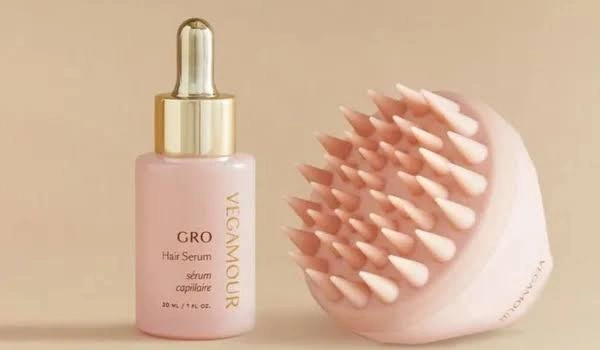
Vegamour is a beauty and hair-wellness company offering products aimed at concerns such as shedding, thinning hair, scalp health, breakage, and hair density. Its product range has included GRO Hair Serum, GRO+ Advanced Hair Serum, shampoos, conditioners, supplements, and other hair-care products.
The company currently markets its GRO Hair Serum as a plant-powered and clinically tested product intended to reduce shedding and support fuller-looking hair. Its marketing discusses ingredients such as plant exosomes, peptides, mung bean, red clover, and caffeine, while also stating that individual results may vary.
That distinction matters legally. A cosmetic or wellness company may describe the appearance and condition of hair, but stronger claims suggesting that a product treats a disease or medically reverses hair loss can create different regulatory questions. Vegamour’s own disclaimer says statements on its website have not been evaluated by the FDA and that its products are not intended to diagnose, treat, cure, or prevent diseases.
Because hair loss can have many causes—from genetics and hormonal changes to stress, medications, nutritional deficiencies, or medical conditions—individual experiences with the same cosmetic product can vary substantially.
Why Is There a Vegamour Lawsuit Discussion?
There is not one single issue behind the search phrase. Several separate developments appear to contribute to the discussion.
First, Barbara Blejewski filed a federal lawsuit against Vegamour, Inc. in Connecticut on August 24, 2020. The complaint concerned website accessibility and alleged barriers affecting users with disabilities. It was an ADA-related website case, not a lawsuit alleging that Vegamour’s hair products caused hair loss.
Second, Vegamour faced advertising scrutiny from the National Advertising Division of BBB National Programs. In 2023, NAD examined social-media posts connected to reviews of the company’s GRO Ageless Anti-Gray Hair Serum. Vegamour voluntarily discontinued the challenged advertising and made the review sites private while disclosures could be added. NAD therefore did not decide the challenged claims on their merits.
Truth in Advertising, Inc. also sent Vegamour an April 2023 letter raising concerns about hair-growth and hair-thinning marketing and influencer disclosures. That letter came from a nonprofit advertising watchdog; it was not an FTC enforcement action or a court judgment finding Vegamour liable.
Finally, consumer complaints involving subscriptions, billing, cancellation, product performance, and alleged increased shedding have added to online interest. Those complaints deserve consideration, but they should not automatically be characterized as proven legal violations.
Why Hair-Growth Products Frequently Face Lawsuits
Hair-growth and anti-thinning products operate in a legally sensitive area because marketing language can easily move from cosmetic claims toward medical or therapeutic claims.
A company might safely describe a product as helping hair look fuller or reducing the appearance of breakage when evidence supports the representation. Saying that a product treats an underlying hair-loss disorder is a materially different proposition.
Legal disputes can arise when consumers or regulators question whether advertising evidence supports claims involving:
- Increased hair density
- Reduced shedding
- New hair growth
- Treatment of thinning hair
- Prevention of hair loss
- Typical results or expected timelines
- Testimonials and before-and-after images
The evidentiary question is critical. Companies need adequate substantiation for objective advertising claims, while consumers bringing private lawsuits generally must prove the elements of the particular cause of action they assert.
A disappointing result alone normally does not establish deceptive advertising. The legal question is more likely to concern what was represented, what evidence supported that representation, whether the representation was material to a purchase, and whether the consumer suffered legally recognizable harm.
Common Allegations in Hair Product Lawsuits
Hair-care lawsuits vary considerably, but several theories appear repeatedly in consumer litigation.
One category involves false or misleading advertising. Plaintiffs may argue that statements about growth, density, shedding, ingredients, clinical evidence, or expected results created an inaccurate impression about what a product could accomplish.
Another category involves product-related injuries. Consumers may allege scalp irritation, breakage, excessive dryness, allergic reactions, or worsening shedding. Such allegations require evidence connecting the alleged injury to the product rather than another underlying cause.
Other disputes involve business practices rather than the formula itself. These may include:
- Automatic renewal disclosures
- Recurring credit-card charges
- Cancellation procedures
- Refund policies
- Influencer disclosures
- Sponsored reviews
- “Natural” or “clean” representations
These theories should not be automatically applied to Vegamour. They describe legal issues commonly encountered in the broader beauty industry.
For Vegamour specifically, the documented public record includes an accessibility lawsuit, advertising scrutiny, and consumer complaints. Each should be evaluated separately rather than combined into a generalized claim that the company’s products have been legally proven defective.
The Importance of “Before-and-After” Photos
Before-and-after photography is especially influential in hair-product advertising because consumers can immediately visualize the promised result.
Vegamour has used customer photographs and testimonials showing experiences with products such as GRO Hair Serum and GRO+ Advanced Hair Serum. Its marketing also includes qualifications indicating that individual results may vary.
From an advertising-law perspective, photographs can communicate claims even without explicit promises. Lighting, hairstyle, camera angle, wet versus dry hair, hair-part placement, extensions, styling products, and the length of time between photographs can materially affect appearance.
Testimonials introduce another consideration. If an advertiser uses exceptional results, consumers may interpret those results as representative unless the surrounding advertising provides appropriate context.
Vegamour’s current disclaimer states that individual experiences described in testimonials may not represent what another consumer will experience. It also states that some testimonial providers may have received free products or discounts.
That does not make testimonials improper. It means context, disclosure, substantiation, and the overall impression of the advertisement matter.
“Clinically Proven” Claims and Legal Risk
Terms such as “clinically tested,” “scientifically proven,” and “clinically proven” carry significant persuasive weight. Consumers may reasonably interpret them as meaning that meaningful scientific evidence supports the advertised result.
Vegamour currently describes its GRO Hair Serum using clinical and scientific terminology and publishes numerical results concerning shedding, density, and consumer perceptions. Some published figures are tied to specified studies and periods of product use.
The legal issue is not simply whether a study exists. Questions can include the study’s design, sample size, controls, endpoints, duration, statistical significance, population, and whether the advertisement accurately describes what the research measured.
For example, evidence that hair appeared denser does not necessarily establish treatment of a medical hair-loss condition. Likewise, a consumer-perception study measures what participants reported, which is different from an objective clinical measurement.
This distinction is why precise wording matters. Stronger advertising claims generally require evidence capable of supporting the stronger interpretation.
Clean Beauty and “Natural” Marketing Claims
Beauty companies increasingly use words such as “clean,” “plant-powered,” “vegan,” and “natural” to differentiate their products. Vegamour itself uses plant-focused and clean-beauty positioning in its marketing.
These descriptions can become legally significant when they communicate a specific factual message about ingredients, safety, environmental characteristics, or product composition.
“Natural,” for example, does not automatically mean a product is risk-free. Plants contain biologically active substances, and individual users can react differently to cosmetic ingredients. Similarly, a vegan formulation describes the formulation or sourcing standard; it does not by itself establish clinical effectiveness.
The legal focus usually falls on the reasonable consumer’s understanding of the representation.
If marketing creates an objectively verifiable impression, a company may need evidence supporting that impression. Broader promotional language can still become actionable when the overall context transforms it into a concrete product claim.
For consumers, ingredient lists and specific product instructions are generally more informative than assuming that a broad marketing term guarantees effectiveness or suitability.
Social Media’s Role in the Vegamour Controversy
Social media has played an important role in Vegamour’s visibility. Hair transformation content works particularly well on Instagram, TikTok, YouTube, and similar platforms because results can be presented visually.
It has also created advertising-law questions.
In 2023, NAD reviewed Vegamour Facebook and Instagram posts promoting reviews connected to the GRO Ageless Anti-Gray Hair Serum. The concern involved whether consumers could understand the relationship between the advertising and the review sites. Vegamour voluntarily discontinued the posts and made the review sites private pending appropriate disclosures. NAD consequently did not rule on the underlying claims’ merits.
Truth in Advertising separately raised influencer-disclosure and hair-growth substantiation concerns in its April 2023 letter to Vegamour.
This episode illustrates an important distinction: advertising scrutiny is not the same as a court finding of deceptive conduct.
Influencers and testimonials can be lawful marketing tools. Problems arise when material relationships are inadequately disclosed or when advertising communicates objective claims that lack sufficient support.
What Reddit Discussions Say About the Vegamour Lawsuit
Reddit discussions show why consumers may encounter sharply conflicting impressions of Vegamour.
Some users in hair-loss communities report that they saw little or no improvement after months of use. Others have alleged that their hair seemed worse, while some users report reduced shedding or noticeable improvements.
Importantly, these posts are anecdotal experiences, not clinical findings or verified evidence in a lawsuit.
One Reddit discussion, for example, included a user who said the product reduced fallout substantially but did not produce new growth. Another user reported favorable results after continued use. Other commenters said several months of treatment made no meaningful difference.
Reddit is therefore useful for identifying recurring consumer questions, but it should not be used to determine whether a product legally caused an injury or whether advertising violated the law.
What Consumers Say About Vegamour and Hair Fall
Hair fall is one of the more sensitive issues appearing in online discussions.
Some consumers have claimed that shedding or thinning became worse while they were using Vegamour products. Similar experiences appear in Reddit posts and third-party review platforms.
Other consumers report the opposite. Some say they experienced reduced shedding, healthier-looking hair, or better density. Recent third-party reviews continue to include both highly positive and highly negative experiences.
This mixed evidence is important.
A report that hair loss occurred while someone was using a product does not prove that the product caused the hair loss. Hair shedding can result from numerous medical, hormonal, nutritional, genetic, medication-related, and stress-related factors.
Establishing causation in litigation would generally require considerably more than online reviews. Medical records, timing, alternative causes, expert evidence, product composition, and potentially scientific research could all become relevant.
Subscription Billing Complaints
Subscription practices are one of the clearest recurring themes in publicly available consumer complaints about Vegamour.
BBB complaints include allegations from consumers who said they were enrolled in recurring shipments unexpectedly, continued to receive orders after attempting cancellation, or experienced charges they believed were unauthorized. BBB specifically warns that it does not verify the accuracy of third-party complaint allegations, so these reports should not be treated as established facts.
Vegamour’s current subscription materials state that customers receive shipment reminders and can change, skip, or cancel subscriptions. Current product terms also state that subscriptions continue until canceled and that cancellation should occur at least five business days before renewal to avoid a future charge.
The company has responded to some BBB complaints by explaining its subscription procedures, confirming cancellations, or offering refunds or returns.
Legally, recurring billing disputes can involve questions about whether consumers clearly agreed to automatic renewal, whether recurring terms were adequately disclosed, and whether cancellation procedures complied with applicable federal and state consumer-protection requirements.
Why Consumer Protection Laws Matter
Consumer-protection laws generally prohibit deceptive or unfair commercial practices. They are particularly relevant when businesses sell products online using subscriptions, testimonials, performance claims, discounts, or automatic renewal arrangements.
The Federal Trade Commission Act is one major federal framework governing deceptive advertising. States also have their own consumer-protection statutes, which can provide additional remedies.
For a hair-wellness company, potentially relevant issues can include whether:
- Objective product claims have adequate substantiation.
- Material subscription terms are clearly disclosed.
- Consumers knowingly authorize recurring payments.
- Sponsored endorsements are properly disclosed.
- Refund and cancellation representations are accurate.
- Advertisements create a misleading overall impression.
The 2023 Truth in Advertising letter specifically raised questions about scientific substantiation and influencer marketing, although the letter itself did not constitute a government enforcement action.
Likewise, consumer complaints do not establish a violation. They can identify patterns worth examining, but legal liability requires applying the relevant law to evidence.
The Challenge of Proving Hair-Growth Claims
Hair-growth disputes are difficult because hair biology is complex.
People naturally experience different growth cycles, rates of shedding, density, strand thickness, and responses to products. Age, genetics, hormones, stress, pregnancy, illness, medications, diet, styling practices, and underlying medical conditions can also influence results.
This creates challenges for both sides of a legal dispute.
A consumer alleging that a product worsened hair loss may need evidence demonstrating causation. The manufacturer, meanwhile, may need sufficient substantiation for measurable performance claims used in its advertising.
The wording of the claim becomes particularly important.
“Hair looks fuller” is not necessarily equivalent to “this product regrows lost hair.” “Reduces signs of shedding” may also communicate something different from a representation that a product treats alopecia.
Vegamour currently uses qualifications such as “individual results may vary” and publishes information about study conditions alongside certain performance claims.
Ultimately, courts and regulators evaluate evidence and the actual advertising context rather than assuming that every reference to growth, density, or shedding has the same meaning.
Lawsuits Do Not Automatically Mean Products Are Unsafe
The existence of a lawsuit should never be treated as automatic proof that a product is dangerous.
This is particularly important with Vegamour because its documented 2020 federal lawsuit involved website accessibility, not allegations that a hair serum was physically unsafe.
Similarly, the 2023 NAD proceeding concerned advertising associated with an anti-gray serum and disclosure issues surrounding linked review sites. It did not establish that Vegamour’s products caused hair loss or other physical injuries.
Consumer reports of adverse experiences are a different category again.
They can be relevant signals, particularly when similar reports recur, but individual reviews do not prove product defect or causation.
Consumers experiencing sudden or substantial hair loss should also recognize that cosmetic products may not be the only possible explanation. Hair loss can have underlying causes that require professional evaluation.
Separating product safety, advertising practices, subscription disputes, and formal litigation produces a much more accurate understanding of the controversy.
Why Beauty and Wellness Lawsuits Are Increasing
Beauty and wellness marketing has changed significantly with the growth of direct-to-consumer brands, subscriptions, influencers, personalized products, and social-media advertising.
Companies can now reach millions of consumers quickly. That scale also means questionable wording or inadequate disclosures can affect a large audience almost immediately.
Hair wellness is particularly vulnerable to disputes because consumers often purchase products while dealing with emotionally significant concerns such as thinning, shedding, postpartum changes, or aging.
At the same time, advertising increasingly incorporates scientific terminology.
Terms involving peptides, clinical studies, biotechnology, follicle health, density, or cellular processes can sound authoritative. When those terms communicate measurable claims, regulators and competitors may examine whether appropriate evidence supports them.
Subscription commerce adds another layer. Automatic renewals can generate disputes when consumers believe the recurring nature of an order was unclear or when cancellation does not work as expected.
The result is an environment where cosmetic-product controversies can involve advertising law, consumer-protection law, subscription regulation, product liability, and even accessibility law—sometimes simultaneously, but legally as distinct issues.
Could Consumers Receive Compensation?
Compensation depends on the existence and outcome of a valid legal claim. There is no automatic payment simply because a consumer purchased Vegamour products or had an unsatisfactory experience.
As of August 2026, the reliable public materials reviewed for this article do not establish a broad consumer class-action settlement providing Vegamour purchasers with a general claim form or standardized payout.
The documented 2020 accessibility lawsuit was unrelated to allegations that purchasers received ineffective or harmful hair products. Public reporting indicates that matter reached a settlement process, but the terms were not publicly disclosed.
Potential consumer remedies in an individual dispute can instead include a refund, charge reversal, contractual remedy, or damages where legally available and supported by evidence.
Consumers should therefore be cautious of websites implying that everyone who bought Vegamour automatically qualifies for lawsuit compensation.
Before submitting personal information to any purported settlement website, verify that an actual case exists and that the claims administrator or court records support the settlement.
How Companies Usually Defend These Cases
Companies facing beauty-product litigation have several possible defenses depending on the claims.
In an advertising case, a defendant may argue that the challenged statement was accurate, adequately qualified, supported by reliable evidence, or unlikely to mislead a reasonable consumer.
A company may also distinguish between cosmetic and medical representations. For example, describing visibly fuller-looking hair may be defended differently from an alleged promise to cure a diagnosed hair-loss disorder.
In product-injury cases, causation is often central. A defendant may argue that an alleged injury resulted from another medical condition, hormonal changes, genetics, medication, stress, styling practices, or another product.
Subscription cases create different defenses. Businesses may rely on checkout records, consent language, renewal notices, cancellation records, and transaction histories to show that a customer accepted recurring terms.
None of those defenses automatically succeeds. Their strength depends on the specific facts, applicable law, contractual language, and available evidence.
That is another reason broad statements about a “Vegamour case” can be misleading: different legal disputes require completely different evidence.
Common Misconceptions About Beauty Lawsuits
Online discussions often collapse several distinct concepts into the word “lawsuit.”
A negative review is not a lawsuit. A BBB complaint is not a court judgment. A watchdog letter is not an FTC enforcement proceeding. An NAD advertising challenge is not a product-liability verdict.
Similarly, the filing of an actual lawsuit does not mean the plaintiff’s allegations have been proven.
Another misconception is that a settlement necessarily establishes wrongdoing. Companies can settle disputes for many reasons, including litigation cost, uncertainty, or business considerations. Settlement agreements frequently contain no admission of liability.
Consumers should therefore ask four basic questions when reading any beauty-lawsuit article:
- Who actually filed the case?
- In which court or regulatory forum?
- What specific conduct was challenged?
- What was the final outcome?
Applying those questions to Vegamour produces a more nuanced picture than simply stating that the company “was sued.”
What Consumers Should Know Before Buying Hair-Growth Products
Consumers should evaluate hair-growth and hair-wellness products based on specific evidence rather than dramatic transformations or isolated testimonials.
Start by identifying exactly what the product promises. “Supports fuller-looking hair” and “treats hair loss” are not interchangeable claims.
Next, examine the supporting research. Determine whether percentages come from clinical measurements, consumer questionnaires, ingredient studies, or controlled trials. Sample size and study duration can also matter.
Consumers should additionally:
- Read the complete ingredient list.
- Review recurring-order terms before checkout.
- Save screenshots of subscription terms.
- Keep cancellation confirmations.
- Compare independent and brand-hosted reviews.
- Photograph hair consistently when tracking changes.
- Seek medical advice for unexplained or severe hair loss.
These precautions are useful regardless of brand.
A product may work well for one consumer and poorly for another without either experience proving what will happen to everyone else.
Vegamour Shampoo
Vegamour sells shampoos as part of its broader hair-wellness product line. Online experiences are mixed, as would be expected with many cosmetic products.
Some consumers report positive experiences involving hair texture, shedding, or scalp condition. Others complain about dryness, lack of results, or increased hair fall. Third-party reviews contain examples from both sides.
Consumers should avoid assuming that shampoo alone can address every form of hair loss. A cleansing product may influence scalp condition, breakage, texture, or the appearance of hair, but underlying hair loss can have causes unrelated to shampoo.
Anyone who notices significant irritation, unusual shedding, or another persistent reaction after introducing a new product should stop relying solely on online testimonials and consider obtaining appropriate professional advice.
Vegamour Ingredients
Ingredients vary across Vegamour’s product range, so consumers should check the specific formulation rather than treating “Vegamour ingredients” as one universal list.
The company’s current GRO Hair Serum marketing highlights plant exosomes, oligopeptide-2 and glycoproteins, along with mung bean, red clover, and caffeine.
Ingredient evidence also needs careful interpretation.
Research concerning an individual ingredient does not necessarily establish that every finished product containing that ingredient will produce the same result. Concentration, formulation, delivery method, frequency of application, study population, and other ingredients can affect performance.
Consumers with allergies or sensitive scalps should review full ingredient labels rather than relying on broad descriptions such as “plant-powered” or “clean.”
Vegamour also states that its website information is not intended to replace conventional medical care and that people with physical or medical conditions should seek professional advice.
Vegamour Lawsuit Update
As of August 2026, the Vegamour Lawsuit topic is best understood as a combination of documented legal history, advertising scrutiny, and ongoing consumer complaints—not as one major hair-loss class action with an announced nationwide payout.
A federal website-accessibility lawsuit was filed against Vegamour in Connecticut in August 2020. The allegations concerned accessibility barriers affecting the company’s website rather than hair-product safety.
In 2023, NAD examined advertising involving the GRO Ageless Anti-Gray Hair Serum. Vegamour voluntarily discontinued the relevant social-media advertising and made the associated review sites private while disclosures were addressed; NAD did not reach the merits of the advertising claims.
Truth in Advertising also sent the company a 2023 letter concerning hair-growth marketing substantiation and influencer disclosures. The letter warned about potential FTC and FDA compliance issues but was not itself a government enforcement action.
Meanwhile, BBB records continue to contain consumer complaints, including subscription and order-related allegations. Vegamour’s current subscription pages state that customers can manage or cancel subscriptions and describe recurring-payment terms.
No reliable source reviewed for this update establishes a currently available nationwide Vegamour settlement claim form for hair-product purchasers.
Why the Vegamour Lawsuit Discussion Matters
The controversy matters because it demonstrates how easily several separate consumer issues can become merged into one online narrative.
Vegamour has been involved in real legal and advertising matters. But the documented accessibility lawsuit should not be presented as a hair-loss injury case, and NAD’s advertising inquiry should not be described as a judicial finding that Vegamour’s products do not work.
At the same time, recurring consumer complaints about subscription management, product performance, and customer experiences should not simply be ignored. They provide useful context, particularly for prospective purchasers reviewing recurring-payment terms.
The appropriate approach is evidence-based.
Court filings establish lawsuits. Regulatory or self-regulatory records establish advertising proceedings. Consumer reviews establish that particular consumers reported particular experiences. Clinical research addresses efficacy under defined conditions.
Keeping those categories separate gives consumers a much more reliable picture of what has—and has not—been proven.
Read: Monday Shampoo Lawsuit
Read: McDonald’s 100% Beef Lawsuit
Read: HexClad Lawsuit
Read: Manny Khoshbin Lawsuit
Read: Blind Frog Ranch Lawsuit
Read: Sierra Mist Lawsuit
Read: 100 Day Dream Home Lawsuit
Read: Breo Ellipta Lawsuit
FAQs About Vegamour
Is there a lawsuit against Vegamour?
Yes. Vegamour has faced a documented federal website-accessibility lawsuit. However, that case was related to ADA website accessibility, not allegations that its hair products caused hair loss.
Is there a Vegamour hair-loss class action lawsuit?
As of August 2026, there is no widely confirmed nationwide class action settlement specifically alleging that Vegamour products caused hair loss. Online complaints should not be confused with an active class action.
Did Vegamour reach a settlement?
The earlier website-accessibility case reportedly moved toward settlement, but publicly available details are limited. It was not a settlement involving claims about the safety or effectiveness of Vegamour hair products.
Has Vegamour faced advertising complaints?
Yes. Vegamour has faced advertising scrutiny involving certain product claims and social-media marketing. These matters involved advertising practices and disclosures rather than a court finding that the products were unsafe.
Does Vegamour cause hair loss?
There is no confirmed evidence establishing that Vegamour products generally cause hair loss. Some users report increased shedding, while others report positive results, making individual experiences highly variable.
Final Thoughts
The Vegamour Lawsuit search can be misleading because it brings together several different issues. Vegamour has faced a documented website-accessibility lawsuit, advertising scrutiny concerning certain social-media marketing, a consumer-watchdog letter about advertising practices, and continuing online complaints involving subscriptions and product experiences. Those developments are real, but they do not collectively prove that Vegamour hair products are defective or that the company has been found liable for causing hair loss.
Consumers should distinguish court records from allegations, and allegations from individual reviews. Anyone dealing with disputed recurring charges should preserve order and cancellation records. Anyone experiencing significant hair loss or scalp problems should consider professional medical guidance rather than relying solely on product testimonials.
Legal status can also change. Any future class action, settlement, regulatory proceeding, or court ruling should be evaluated through the actual filing or other authoritative record before conclusions are drawn.