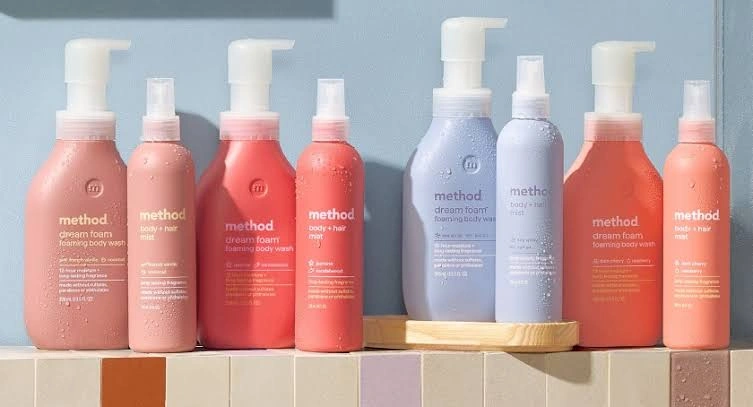
Method Body Wash is a personal care line known for body cleansers sold in a range of scents and formulations. Searches for a Method Body Wash Lawsuit have grown as consumers try to understand online complaints, ingredient discussions, skin-reaction reports, and whether those concerns have resulted in formal legal action.
Much of the search interest centers on whether a lawsuit has actually been filed, whether any products were recalled, and whether a settlement or compensation program exists. Some consumers are also looking for information about fragrance, preservatives, sensitive-skin reactions, and discontinued Method products.
This article separates consumer reports from established legal facts. It explains the lawsuit status, common product concerns, potential product-liability theories, ingredients consumers research, and the type of evidence generally needed before complaints develop into viable legal claims.
Why Are People Searching for a Method Body Wash Lawsuit?
People often search for lawsuits after encountering negative product reviews, social media posts, or reports describing an unwanted reaction. Personal care products are particularly likely to generate questions because they come into direct contact with the skin and may contain fragrances, preservatives, surfactants, or botanical ingredients.
A search for a Method Body Wash Lawsuit does not necessarily mean a major lawsuit exists. Search trends can develop from consumer complaints, confusion involving another product made by the same company, discontinued items, or discussions that repeat claims without linking to an actual court case.
Consumers generally want answers to several questions:
- Has Method been sued over its body wash?
- Have users reported irritation or allergic reactions?
- Has a body wash product been recalled?
- Is there a class action or settlement?
- Can consumers submit claims for compensation?
- Are particular ingredients considered problematic?
These questions need to be evaluated separately. A consumer complaint can be relevant to product safety discussions, but it is not equivalent to a lawsuit, regulatory finding, recall, or judicial determination.
Has a Method Body Wash Lawsuit Actually Been Filed?
There does not appear to be a widely established nationwide Method body wash class action or major product-liability proceeding matching the broad lawsuit narrative sometimes implied by online searches.
That distinction matters. A formal lawsuit normally produces identifiable information such as a plaintiff, defendant, court, case number, filing date, and specific causes of action. A class action may additionally involve motions concerning class certification and, if resolved, court documents addressing settlement terms.
| Question | Current General Status |
|---|---|
| Major nationwide body wash class action | No widely established case identified |
| Confirmed body wash settlement | No broadly established settlement |
| Public claim form | No established nationwide claim process |
| Consumer complaints | Possible individual reports and reviews |
| Legal liability | Cannot be established from reviews alone |
The legal landscape can change as new cases are filed. Consumers should therefore distinguish current court records and regulatory notices from posts that simply use terms such as “lawsuit,” “recall,” or “settlement.”
What Sparked Consumer Concerns?
Interest appears to be driven largely by the same issues that commonly generate questions about cosmetics and personal care products: skin reactions, fragrance sensitivity, and increased scrutiny of ingredient labels.
None of these concerns independently establishes that Method manufactured a defective product. They instead explain why some consumers may investigate a product more closely after an unpleasant experience.
Skin Sensitivity Reports
Body washes contain cleansing agents designed to remove oils and debris from the skin. For some individuals, a particular formulation may cause dryness, redness, itching, or other irritation.
Individual experiences can differ considerably. A product tolerated by most users can still cause an adverse reaction in someone who is sensitive to a particular ingredient.
From a legal perspective, a reported reaction becomes more significant when there is reliable evidence connecting the product to the injury. Medical records, photographs, purchase documentation, product samples, and professional evaluation may all become relevant if a consumer later pursues a claim.
Fragrance Questions
Fragrance is another frequent subject of personal care product discussions. Some consumers actively avoid scented products because they have sensitive skin or have previously reacted to fragranced cosmetics.
The presence of fragrance does not itself establish that a product is unsafe or defective. Legal questions generally focus on matters such as formulation, labeling, foreseeable risks, applicable regulatory requirements, and whether consumers received legally adequate information.
Consumers with known sensitivities may prefer fragrance-free products, but labels should still be reviewed carefully because formulations vary between products.
Ingredient Awareness
Consumers increasingly research ingredient lists before purchasing shampoos, lotions, body washes, deodorants, and other cosmetics. Online databases and social media have made technical ingredient names more visible to ordinary shoppers.
However, an unfamiliar chemical name should not automatically be interpreted as evidence of danger. Safety can depend on concentration, formulation, exposure, and intended use.
In litigation, the relevant issue is not simply whether an ingredient sounds concerning. Plaintiffs generally need evidence showing that a product was legally defective, inadequately labeled, misleadingly marketed, contaminated, or otherwise connected to a compensable injury.
Were There Any Method Body Wash Lawsuits in 2022?
Searches specifically mentioning “Method body wash lawsuit 2022” can create the impression that a major case occurred during that year. A year appearing in a search suggestion, however, is not proof that litigation was filed or resolved during that period.
Consumers may encounter older reviews, discussions about Method products generally, or legal disputes involving companies operating in the broader consumer-products market. Those references can become mixed together as information is reposted.
A legitimate 2022 lawsuit should normally be traceable to a court filing or another reliable legal source. Important details would include the parties, jurisdiction, allegations, and procedural history.
Without those details, claims about a specific 2022 Method body wash case should be treated cautiously. Readers should avoid assuming that an online post describing a “lawsuit” represents a class action, successful product-liability claim, or settlement.
Have There Been Any Product Recalls?
A product recall and a lawsuit are separate events. Recalls may be initiated voluntarily by manufacturers or occur in response to regulatory concerns, while lawsuits are legal proceedings brought before courts.
Consumers researching Method products should also be careful not to confuse cleaning-product notices with personal care products. Method sells products across different categories, and a notice involving one formulation does not automatically apply to Method body wash.
When evaluating a possible recall, the important details include:
- Exact product name
- Package or container size
- Lot or batch number
- Manufacturing date, when provided
- Reason for the recall
- Official instructions for consumers
Recall information should be verified through authoritative regulatory notices or official manufacturer communications rather than relying exclusively on social media posts.
What Types of Claims Could Lead to a Cosmetic Lawsuit?
Cosmetic and personal care lawsuits can arise under several legal theories. The appropriate theory depends on the alleged defect, the consumer’s injury, applicable state law, and the evidence connecting the product to the claimed harm.
A complaint about a product does not automatically satisfy these legal requirements.
Product Safety
A product-liability plaintiff may allege that a personal care product was defectively designed or otherwise unreasonably dangerous when used as intended or in a reasonably foreseeable manner.
The precise legal standard differs by jurisdiction. Courts may examine the formulation, known risks, scientific evidence, alternative designs, warnings, and circumstances surrounding the alleged injury.
Establishing that an individual experienced irritation is generally not enough by itself. Causation and the existence of a legally recognized defect remain central questions.
Failure to Warn
Failure-to-warn claims generally argue that a manufacturer knew or should have known about a material risk but failed to provide an adequate warning.
Whether a warning was legally required depends on the nature of the risk and governing law. Courts can consider whether the danger was foreseeable, whether the warning was clear, and whether a different warning would have affected the consumer’s behavior.
These claims are highly fact-specific and cannot be established merely because a product caused an unexpected reaction.
False Advertising
False-advertising cases focus primarily on marketing representations rather than physical product defects.
A plaintiff might allege that packaging, advertising, or other promotional material contained a materially false or misleading representation. The exact requirements vary under federal and state consumer-protection laws.
Not every broad marketing phrase creates legal liability. Courts may examine the wording, context, reasonable consumer expectations, materiality, and whether purchasers suffered a legally recognized economic injury.
Ingredient Disclosure
Personal care labels are subject to regulatory requirements governing how ingredients and other information must be presented.
A potential dispute could arise if legally required information were omitted, inaccurate, or presented in a manner prohibited by applicable law. That would require analysis of the actual label and the rules governing the particular product.
Ingredient disclosure claims should therefore be based on labeling evidence rather than assumptions drawn from unfamiliar ingredient names.
Manufacturing Problems
Even a properly designed product can potentially create legal issues if something goes wrong during manufacturing.
Examples could include contamination, an incorrect concentration of an ingredient, packaging failures, or a batch that does not meet the manufacturer’s specifications.
Batch-specific evidence becomes particularly important in such cases. Product samples, lot numbers, manufacturing records, testing results, and similar complaints involving the same production run may help investigators determine whether a manufacturing defect occurred.
Understanding Consumer Reviews
Consumer reviews can identify patterns worth investigating, but they have significant limitations as legal evidence.
Reviews are usually written without medical verification, laboratory testing, or access to manufacturing information. Different users may also have different allergies, skin conditions, routines, or exposure to other products.
A collection of similar reports can nevertheless become relevant if it reveals a consistent pattern. Regulators, manufacturers, lawyers, and researchers may examine complaint data when investigating a potential problem.
Readers should therefore avoid two extremes. Negative reviews should not automatically be dismissed, but they also should not be treated as proof that a company violated the law.
Do Individual Allergic Reactions Mean a Product Is Defective?
No. An allergic or sensitivity reaction does not automatically establish a product defect.
People can react differently to ingredients that are otherwise commonly used in cosmetics and personal care products. A person’s individual sensitivity may be relevant medically without demonstrating that the product was legally defective for ordinary consumers.
Product-liability analysis usually requires additional questions. Was the product manufactured correctly? Was there a dangerous defect? Was an important warning legally required? Did the product actually cause the claimed injury?
The distinction between temporal association and legal causation is important. Developing irritation after using a product can justify stopping use and seeking appropriate medical guidance, but proving liability generally requires considerably more evidence.
What Ingredients Do Consumers Commonly Research?
Ingredient lists are one of the first places consumers look when evaluating personal care products. Body wash formulations commonly contain several functional categories of ingredients rather than one single cleansing substance.
Understanding those categories can make labels easier to interpret.
Surfactants
Surfactants are cleansing ingredients that help water interact with oils and dirt so they can be rinsed from the skin.
Different surfactants have different properties, and manufacturers often combine them to achieve desired cleansing and foaming characteristics.
Some users may find certain formulations more drying or irritating than others. That experience does not independently prove the surfactant is unsafe; concentration, formulation, frequency of use, and individual sensitivity can influence how the skin responds.
Preservatives
Products containing water generally need protection against microbial growth during their expected shelf life and use.
Preservatives serve that function. Without adequate preservation, microorganisms can potentially grow in cosmetic products and create separate safety concerns.
Consumers sometimes research preservatives because particular substances have generated broader cosmetic-safety discussions. Their presence should be evaluated in context, including concentration and applicable safety standards, rather than assuming that any preservative automatically makes a formulation dangerous.
Fragrance Components
Fragrance can involve individual aromatic substances or mixtures used to create a product’s scent.
For consumers with known fragrance sensitivity, the presence of fragrance may influence purchasing decisions. Others may use scented personal care products without experiencing problems.
In legal disputes, the relevant questions could include labeling, warnings, product formulation, and evidence connecting a specific component to an alleged injury. General concern about fragrance is different from proof of a legally actionable defect.
Botanical Extracts
Botanical ingredients are commonly used in products marketed around plant-derived or naturally inspired formulations.
“Natural,” however, does not mean that every person will tolerate an ingredient. Plant extracts can contain biologically active compounds, and individual sensitivity is possible.
Consumers should evaluate botanical ingredients using the same evidence-based approach applied to synthetic ingredients. The source of an ingredient alone does not determine whether the finished formulation is safe, irritating, or legally defective.
Moisturizing Agents
Body washes may contain humectants, emollients, and other conditioning ingredients intended to reduce the drying effects associated with cleansing.
Their presence can influence how a formulation feels during and after washing. Different skin types may respond differently to the same combination.
Ingredient analysis should therefore focus on the complete formulation rather than isolating one component. In product litigation, the finished product and circumstances of use are generally more important than assumptions based solely on an individual ingredient.
How Product Liability Cases Usually Develop
A genuine product-liability case typically develops through several stages. Online complaints may be an early signal, but significant legal proceedings require substantially more information.
The progression is not automatic. Many complaints never become lawsuits.
Consumer Complaints
The process may begin when consumers report similar adverse experiences to a manufacturer, retailer, regulator, healthcare professional, or online platform.
Complaints can provide useful signals when they contain specific information such as dates, product names, lot numbers, symptoms, and medical outcomes.
A small number of reports does not prove causation. Investigators generally look for patterns and supporting evidence before drawing broader conclusions.
Investigation
An investigation may examine product samples, manufacturing records, complaint histories, ingredient specifications, and other relevant information.
Manufacturers can conduct internal investigations, while government agencies may investigate matters falling within their regulatory authority. Attorneys considering litigation may separately collect information from potential clients.
The purpose is to determine whether the reported incidents share a common explanation and whether credible evidence supports further action.
Scientific Review
Scientific evidence can become critical when plaintiffs claim that exposure to a product caused physical injury.
Experts may evaluate toxicology, dermatology, chemistry, exposure levels, medical histories, and alternative explanations. The required analysis depends heavily on the alleged harm.
A temporal connection alone—using a product and later experiencing symptoms—does not necessarily establish causation. Courts often require stronger evidence when causation involves complex scientific questions.
Filing of Claims
If sufficient facts support recognized legal theories, an individual or group of plaintiffs may file a complaint in court.
The complaint identifies the parties, factual allegations, causes of action, and requested relief. The defendant then has an opportunity to respond and challenge the claims.
Filing does not mean the allegations have been proven. It begins a legal process in which the parties may dispute both the facts and applicable law.
Court Proceedings
Litigation can involve motions, discovery, expert testimony, depositions, class-certification proceedings, settlement negotiations, and potentially trial.
Some cases are dismissed early. Others settle without any admission of wrongdoing, while a smaller number proceed to verdict.
This procedural history is why consumers should be cautious about headlines announcing that a company “faces a lawsuit.” The existence of a complaint and a final judicial finding are very different stages of a case.
Is There a Method Body Wash Settlement or Payout?
There is no broadly established Method Body Wash Lawsuit settlement or nationwide compensation program tied to the general concerns discussed above.
That means consumers should be skeptical of pages suggesting that everyone who purchased Method body wash can automatically receive a payout. A legitimate class action settlement normally has identifiable court documents, eligibility criteria, deadlines, and an authorized settlement administrator or claims process.
A settlement also does not necessarily mean a defendant admitted liability. Companies sometimes resolve litigation to avoid the cost and uncertainty of continued proceedings.
Anyone encountering a purported Method body wash claim form should verify the underlying case before submitting personal information. Look for the case name, court, settlement documents, administrator information, and official deadlines rather than relying on an advertisement or social media post.
How Do Method Cleaning Products Relate to Body Wash?
Method is associated with more than one consumer product category. That can cause confusion when someone encounters information about a Method cleaning product and assumes it applies to Method body wash.
Household cleaners and personal care products have different intended uses, formulations, exposure patterns, and regulatory considerations. A complaint, recall, or controversy involving one category should not automatically be attributed to another.
This distinction becomes especially important in search results. Pages may use the Method brand name without clearly identifying the specific product involved.
Consumers investigating a legal or safety issue should confirm the exact product name before relying on the information. Packaging photographs, product identifiers, lot numbers, and official notices can help prevent unrelated products from being mistakenly grouped together.
Why Do Searches Mention Discontinued Method Products?
Discontinued products frequently generate speculation because consumers may assume that an item disappeared from stores due to a safety issue.
In reality, companies discontinue products for many reasons. Sales performance, supply-chain changes, reformulation, packaging updates, shifting consumer demand, or changes in a company’s product strategy can all lead to discontinuation.
Discontinuation alone is therefore not evidence of a lawsuit or recall.
The strongest evidence of a safety-related withdrawal would come from an official recall notice, regulatory action, or company communication specifically identifying the product and explaining why it was removed. Without such evidence, claims linking discontinuation to alleged legal problems should be treated as unverified.
What Should Consumers Do Before Purchasing Personal Care Products?
Consumers can reduce uncertainty by examining a product rather than relying entirely on marketing language or online discussions.
Practical steps include:
- Read the complete ingredient list.
- Check whether the formulation contains known personal allergens.
- Follow the manufacturer’s directions for use.
- Consider patch testing when appropriate for sensitive skin.
- Stop using a product if significant irritation develops.
- Preserve packaging and lot information after a serious reaction.
- Verify recall information through authoritative sources.
Consumers with known allergies or significant skin sensitivities may also benefit from discussing product selection with an appropriate healthcare professional.
Online ingredient discussions can be useful starting points, but they should not replace individualized medical advice or reliable safety information.
What Evidence Would Be Needed for a Successful Lawsuit?
A successful product case generally requires more than proof that someone purchased a product and later experienced a problem.
Depending on the legal theory and jurisdiction, evidence could include:
- Proof of purchase or product use
- The original container and lot information
- Photographs documenting the reaction
- Medical records and diagnosis
- Expert analysis
- Laboratory or product testing
- Evidence of a design, manufacturing, or warning defect
- Documentation connecting the defect to the injury
Causation is often one of the most contested issues. Defendants may argue that another product, underlying condition, environmental exposure, or individual sensitivity caused the symptoms.
The required proof varies substantially from case to case. A consumer considering legal action should therefore evaluate the specific facts rather than assuming that similar online complaints establish liability.
How Consumers Can Separate Facts From Online Rumors
Legal misinformation can spread quickly when search results, social posts, advertisements, and consumer complaints repeat the same unverified statement.
Start by asking whether the claim can be connected to an identifiable source. A genuine lawsuit should normally have a court, parties, filing information, and allegations that can be independently checked. A recall should identify the affected product and come from an authoritative source.
Pay particular attention to the difference between these terms:
- Complaint: A consumer reports a problem.
- Lawsuit: A legal claim has been filed in court.
- Allegation: A claim that has not necessarily been proven.
- Recall: A product is removed or corrected because of an identified issue.
- Settlement: Parties resolve a legal dispute under agreed terms.
- Payout: Compensation is distributed to eligible claimants under defined conditions.
Keeping those categories separate makes it much easier to evaluate Method body wash claims without turning speculation into established fact.
Read: Mallinckrodt Adderall Lawsuit
Read: Kindig-It Lawsuit
Read: What Does Sustained Mean in Court?
Read: Emuaid Lawsuit
Read: Bravenly Global Lawsuit
Read: Cora Tampons Lawsuit
Read: Exploring CNLawBlog
FAQs
Is there currently a Method Body Wash Lawsuit?
No major nationwide case matching the commonly searched Method Body Wash Lawsuit appears to be broadly established. Individual disputes can exist, so current court records should be checked for case-specific information.
Was Method body wash recalled?
A recall should be verified using the exact product name, lot information, and an authoritative recall notice. Information involving another Method product category should not automatically be applied to body wash.
Is there a Method body wash settlement?
No broadly established nationwide settlement or compensation program has been identified for the general body wash concerns discussed here. Legitimate settlements normally provide court documents, eligibility rules, deadlines, and administrator information.
Can I sue if Method body wash caused a skin reaction?
Potentially, but experiencing a reaction alone does not establish liability. A viable claim generally requires evidence of injury, causation, a recognized legal theory, and facts showing a defect or other actionable conduct.
Does a negative Method body wash review prove the product is unsafe?
No. Reviews describe individual experiences and can help identify possible patterns, but they generally lack the testing, medical evidence, manufacturing data, and causation analysis required to establish product liability.
Final Thoughts
Search interest in the Method Body Wash Lawsuit appears to combine several different concerns, including consumer reviews, skin sensitivity, ingredient questions, recalls, discontinued products, and speculation about possible legal claims. These subjects should not be treated as interchangeable.
Consumer complaints can deserve attention, particularly when similar reports form a consistent pattern. They do not, however, prove that a product is defective or that a manufacturer has violated the law. A successful product-liability case normally depends on evidence establishing a recognized defect, injury, causation, and the other requirements imposed by applicable law.
Consumers should verify lawsuit claims through court records and recall claims through authoritative notices. Anyone who experiences a significant reaction should preserve relevant product information and seek appropriate professional guidance rather than relying solely on online discussions.