
Kindig-It Design is widely known for high-end custom vehicles and the television series Bitchin’ Rides. That visibility has also generated searches about the Kindig-It Lawsuit, with readers trying to determine whether the company or its founder, Dave Kindig, has faced significant legal action.
Search interest covers several different issues, including past litigation, customer complaints, possible settlements, alleged payouts, and claims circulating on websites and social media. The problem is that these subjects are sometimes presented together even when they concern very different events.
Public court records do confirm litigation involving Kindig-It Design, most notably a federal intellectual-property dispute filed in 2014. However, that should not be confused with an established mass consumer lawsuit or a confirmed class-action settlement. This article separates documented legal history from broader online speculation.
Why Are People Searching for the Kindig-It Lawsuit?
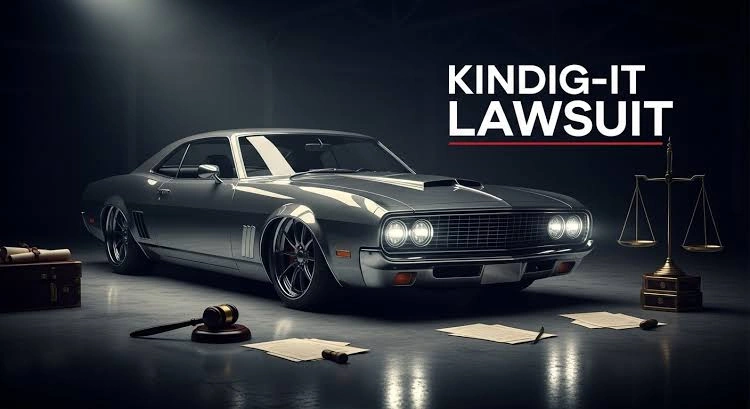
Interest in the Kindig-It Lawsuit appears to come from a combination of the company’s public profile, its expensive custom-car projects, online complaints, and documented litigation.
Because Kindig-It Design appears on television and works on highly customized vehicles, disagreements involving the company can attract considerably more attention than a routine commercial dispute involving a lesser-known automotive shop.
Another source of confusion is the phrase “Kindig-It lawsuit” itself. It can suggest that there is one major case in which customers collectively sued the shop. The public record is more nuanced. Kindig-It Design was itself the plaintiff in a documented federal lawsuit against Creative Controls, Speedway Motors, and Rutter’s Rod Shop. That action was filed in the U.S. District Court for the District of Utah in November 2014 and concerned intellectual-property claims.
Consumers should therefore distinguish among three categories: documented court proceedings, individual complaints or disputes, and unsupported online claims. They do not carry the same legal significance.
What Is Kindig-It Design?
Kindig-It Design is a Utah-based custom automotive company founded by Dave and Charity Kindig. According to the company’s history, the business began in 1999 and developed from a relatively small operation into a large custom-car facility.
Its work includes custom vehicle design, fabrication, bodywork, paint, assembly, restoration, and coach-built automobiles. The company has become particularly recognizable through Bitchin’ Rides, which follows the process of designing and building elaborate custom vehicles.
Kindig-It also has a significant intellectual-property component to its business. Its company history states that it patented its Smooth Door Handles in 2010. Intellectual property later became central to the federal litigation involving Creative Controls.
The company remains operational. Its current website displays completed and ongoing vehicle projects, merchandise, events, shop tours, and custom-build information.
Who Is Dave Kindig?
Dave Kindig is the president, owner, and principal designer associated with Kindig-It Design. The company’s official profile describes him as responsible for the concepts and design vision behind its custom vehicles.
He and Charity Kindig developed the business from a home-garage operation. Over time, Dave became a recognizable figure within the custom automotive industry, particularly after Bitchin’ Rides began airing in 2014.
His public reputation is tied to highly customized vehicles rather than conventional collision repair or ordinary automotive maintenance. That distinction matters because elaborate one-off projects involve design changes, fabrication, specialized components, engineering, paint, upholstery, and substantial labor.
Dave’s celebrity status also means that searches about Kindig-It frequently include unrelated questions about his personal wealth, cars, employees, and television career alongside genuine legal questions.
Has There Been a Major Kindig-It Lawsuit?
Yes. There has been documented federal litigation involving Kindig-It Design, although the best-established case is different from the type of consumer class action that some searches may imply.
In Kindig-It Design v. Creative Controls, Kindig-It filed suit in the U.S. District Court for the District of Utah on November 25, 2014. The defendants included Creative Controls, Speedway Motors, and Rutter’s Rod Shop. The docket categorized the matter as a patent case.
Kindig-It alleged, among other things, infringement of its intellectual property. A January 2016 federal decision addressed patent and copyright-related claims as well as jurisdictional questions. The court granted Creative Controls’ motion to dismiss in part and denied it in part.
The procedural history also included a counterclaim from Speedway Motors seeking costs, expenses, and attorneys’ fees. In June 2016, the court granted Kindig-It Design’s motion to dismiss that counterclaim.
This history demonstrates why descriptions of the case should be precise: Kindig-It was a plaintiff asserting its own rights, rather than simply a company defending itself against consumer claims.
What Do Public Records Suggest?
Public records establish that Kindig-It Design has participated in genuine federal litigation. They do not, however, support treating every online reference to a “Kindig-It lawsuit” as evidence of a single large customer action.
A useful summary of the documented federal matter is:
| Question | Publicly Documented Information |
|---|---|
| Was a federal case filed? | Yes |
| Case | Kindig-It Design v. Creative Controls |
| Filing date | November 25, 2014 |
| Court | U.S. District Court, District of Utah |
| Primary case classification | Patent |
| Was Kindig-It the plaintiff? | Yes |
| Were other claims involved? | Yes, including copyright-related allegations |
| Was there a major public consumer class settlement? | Not established by the reviewed records |
The 2016 court opinion shows that jurisdiction and pleading issues were significant parts of the litigation. Some claims survived the challenged motion while others did not.
The docket also records subsequent proceedings into 2017. For example, the court denied a motion to compel in April 2017.
These records provide considerably stronger evidence than unsourced posts or articles that do not identify a court, case number, parties, or filing.
Was There a Kindig-It Lawsuit Settlement or Payout?
There is an important distinction between a lawsuit being resolved and a company operating a compensation program for consumers.
The public sources reviewed for this article do not establish a broad Kindig-It consumer settlement, class-action payout, claim form, or compensation fund associated with the commonly searched phrase “Kindig-It lawsuit.”
The documented Creative Controls litigation was an intellectual-property dispute in which Kindig-It was the plaintiff. It should not be presented as evidence that ordinary Kindig-It customers became eligible for compensation.
Settlement details can also sometimes remain confidential in private commercial disputes. Therefore, the absence of publicly reported payment information does not prove that no private agreement has ever existed.
For SEO queries involving “settlement” or “payout,” readers should look for a specific case name, settlement agreement, court approval order, administrator, eligibility criteria, and claim deadline. Without those elements, claims about a large public payout should be treated cautiously.
Did Anything Significant Happen in 2022?
Some search variations connect Kindig-It with “lawsuit 2022,” but a year appearing in a search suggestion is not evidence that a lawsuit was filed or resolved during that year.
The major federal case readily identifiable in public records began in 2014, with important federal rulings appearing in 2016 and 2017.
The company’s own published history highlights business milestones in 2020, 2021, 2023, and 2024, but does not identify 2022 as the year of a major company lawsuit.
Readers encountering a claim that a significant Kindig-It legal event occurred in 2022 should therefore ask for the underlying documentation. Useful identifiers include a case number, court, plaintiff and defendant names, filing date, or judicial order.
Without that information, attaching the year 2022 to the broader lawsuit keyword can create a misleading impression of a verified event.
Common Types of Complaints About Custom Car Shops
Custom automotive projects can be complicated transactions. Unlike buying a finished vehicle from a dealer, a major custom build may require months of fabrication, changing specifications, specialized parts, subcontracted work, and repeated design decisions.
Disagreements in the industry commonly concern schedules, invoices, modifications to the original scope, and communication. These general risks should not be interpreted as proof that Kindig-It committed any particular wrongdoing.
Project Timelines
A full custom build can take significantly longer than ordinary automotive repair. Fabrication may uncover structural problems, parts can become unavailable, and customers may request modifications after work begins.
A delay does not automatically amount to breach of contract or negligence. Legal responsibility generally depends on the agreement between the parties, representations that were made, subsequent modifications, and the reason for the delay.
Consumers considering a major build can reduce uncertainty by obtaining written estimates of major project phases and documenting material changes.
Cost Expectations
Costs can also change during a custom automotive project.
One-off fabrication is difficult to price in exactly the same way as standardized repair work. Additional labor, newly discovered problems, premium components, design revisions, or customer-requested upgrades may increase the final bill.
A higher-than-expected invoice is not automatically unlawful. The relevant questions may include what the contract authorized, whether additional work was approved, how estimates were described, and whether applicable consumer-protection requirements were followed.
Clear written change orders can reduce disputes about what was requested and what additional charges were accepted.
Communication
Communication problems can turn manageable project issues into significant disputes.
Customers investing substantial sums in custom vehicles generally want updates about progress, costs, parts, delays, and design decisions. Shops, meanwhile, may need timely customer approval before moving into the next phase of fabrication.
If a dispute develops, written communications can become important evidence. Emails, invoices, text messages, estimates, contracts, photographs, and change orders may help establish what each side represented and agreed to.
Good recordkeeping is therefore useful even when a project never develops into litigation.
Do Customer Complaints Automatically Mean Legal Liability?
No. A customer complaint and a legally established violation are fundamentally different.
Reviews, forum posts, and social-media comments describe an individual’s experience or allegation. They may deserve attention, but they do not by themselves establish breach of contract, fraud, negligence, deceptive practices, or another legal cause of action.
A legal claim generally requires facts satisfying specific elements. Depending on the dispute, relevant evidence could include:
- signed contracts and estimates;
- invoices and payment records;
- representations made before the agreement;
- approved changes to the project;
- photographs and inspection reports;
- communications between the parties; and
- evidence of actual financial loss.
Even filing a lawsuit does not prove the allegations. A complaint contains claims that may later be disputed, dismissed, settled, or adjudicated.
That distinction is especially important when researching businesses online, where the words “complaint,” “lawsuit,” and “scam” are sometimes used interchangeably despite having very different meanings.
How Should Consumers Evaluate Online Lawsuit Claims?
Start by determining whether the source identifies an actual legal proceeding.
A credible lawsuit report should normally provide enough information to independently verify the matter. Look for the names of the parties, court, case number, filing date, and description of the causes of action.
Court dockets and written judicial decisions deserve substantially more weight than anonymous comments or articles that simply repeat another site’s allegations.
Readers should also check the procedural posture. A plaintiff filing an allegation does not mean a judge ruled that the allegation was true. Likewise, dismissal of one claim does not necessarily mean every other claim in the litigation was rejected.
Finally, pay attention to dates. Older disputes can resurface in search results and appear current. In the documented Kindig-It federal case, for example, the original filing dates to 2014 rather than a newly filed 2026 consumer action.
Has the Lawsuit Affected Kindig-It Design’s Business?
There is no clear evidence from the reviewed public information that the documented federal litigation caused Kindig-It Design to cease operating or substantially withdraw from the custom automotive market.
The company’s current website remains active and displays numerous custom projects, including CF1 vehicles and other builds. It also continues to advertise merchandise, appearances, events, and shop tours.
Kindig-It also reports several significant developments after its earlier litigation. Its company history says it received a manufacturing license from the National Highway Traffic Safety Administration in 2023 and won major awards in 2024, including the Ridler Award for TwelveAir.
Those facts do not determine the merits of any past dispute. They simply show that Kindig-It continued operating and developing its brand well after the federal case began.
How Does the Custom Automotive Industry Handle Legal Disputes?
Legal disputes involving custom automotive businesses can arise from several different areas of law.
Contract disputes may concern pricing, project scope, deadlines, deposits, or authorization for additional work. Intellectual-property cases can involve patented components, copyrighted images, trademarks, proprietary designs, or unauthorized reproduction.
Other disputes can involve warranties, workmanship, payment, ownership of parts, insurance, or consumer-protection statutes.
The Kindig-It federal case illustrates the intellectual-property side of the industry. Kindig-It alleged infringement involving patents and copyrights, while the litigation also required the court to address questions about jurisdiction and the sufficiency of particular claims.
Many commercial disputes never result in a trial. Depending on the facts and contractual terms, parties may resolve disagreements through negotiation, mediation, arbitration, settlement, dismissal, or court judgment.
Dave Kindig’s Public Reputation
Dave Kindig has developed a strong public identity as a custom automotive designer and television personality.
Kindig-It credits its history with numerous industry achievements, including design awards and major show-car honors. Its official history says Dave was named Builder of the Year at the Grand National Roadster Show in 2020, while TwelveAir received the Ridler Award in 2024.
His television exposure through Bitchin’ Rides has also introduced Kindig-It Design to an audience extending well beyond the traditional hot-rod and custom-car community.
Reputation, however, should remain separate from legal analysis. Awards and popularity do not prove that every customer interaction was satisfactory, just as a negative review does not establish legal wrongdoing.
When assessing a legal controversy, court records and verifiable evidence are more informative than either celebrity reputation or isolated criticism.
Dave Kindig Net Worth
Searches about the lawsuit frequently appear alongside questions about Dave Kindig’s net worth.
There is no authoritative public financial disclosure establishing a precise figure for his personal net worth. Kindig-It Design is privately held, and estimates published by entertainment or celebrity-wealth websites should not be treated as audited financial information.
Dave has several visible business interests connected to the automotive brand, including custom builds, television exposure, branded products, appearances, and related automotive ventures. Those activities may indicate commercial success but are insufficient to calculate his assets, liabilities, ownership interests, taxes, or personal wealth accurately.
For that reason, specific online net-worth figures should generally be described as estimates, not confirmed facts.
His presumed wealth also has little relevance to whether any particular legal claim is valid or what a court might award in a dispute.
Will Lockwood and Salary Questions
Will Lockwood is associated with Kindig-It Design as an engineer. According to the company’s official team profile, he met Dave Kindig while working at HPC and joined Kindig-It in 2003 after Dave asked him to help translate designs into working vehicles.
Online searches sometimes ask about Will Lockwood’s salary or how much individual Bitchin’ Rides team members earn.
Reliable public salary information for Lockwood is not readily established. Kindig-It is a private employer and does not generally have the same public compensation-disclosure obligations that apply to certain government entities or publicly traded corporations.
Salary figures published without payroll records, direct statements, employment documents, or another reliable source should therefore be treated as estimates or speculation.
Lockwood’s employment role should also not be confused with the company’s litigation history.
Are Dave Kindig Cars Available for Sale?
Yes, Kindig-related vehicles and products can become available, although availability depends on the type of vehicle and current inventory.
Kindig-It builds highly customized cars rather than maintaining a conventional mass-market dealership inventory. Its website displays a gallery of completed builds and promotes the Kindig CF1, a coach-built vehicle inspired by the 1953 Chevrolet Corvette.
The company’s FAQ directs prospective CF1 customers to inquire about pricing and availability. It also accepts applications for certain custom projects, although the company states that not every project or budget will be accepted.
Previously built Kindig vehicles may also change hands privately or appear through specialty automotive sales channels.
Anyone purchasing a high-value custom vehicle should independently verify ownership, specifications, condition, build documentation, and title status before completing a transaction.
What Does Dave Kindig’s Wikipedia Page Cover?
Searchers looking for “Dave Kindig Wikipedia” are often seeking a quick biography covering his career, company, television work, and notable vehicles.
Public encyclopedia coverage is more readily associated with Bitchin’ Rides, which identifies the program as a reality television series featuring Dave Kindig’s Salt Lake City-based custom shop and its vehicle restoration and rebuilding process.
For detailed information about Dave’s professional history, the company’s official materials provide additional context about Kindig-It Design’s launch in 1999, awards, expansion, CF1 development, and later manufacturing activities.
Wikipedia and similar reference pages can be useful starting points, but they should not serve as primary evidence for legal claims. Court filings and judicial opinions are preferable when determining what happened in litigation.
How to Separate Fact From Speculation
The easiest way to understand the Kindig-It Lawsuit is to classify information according to the strength of its evidence.
Confirmed facts include the 2014 federal filing, the identities of the parties, the patent nature of the action, and published court decisions. These details can be verified through federal docket information and written opinions.
Allegations include claims asserted by litigants before those claims have been adjudicated. They should always be described as allegations unless a court has made findings establishing them.
Consumer reports may describe genuine experiences but require independent verification before being presented as evidence of widespread misconduct.
Speculation includes unsupported settlement figures, employee salaries, net-worth calculations, or claims about new lawsuits without identifiable court records.
Keeping these categories separate prevents an old intellectual-property case, an online complaint, and a rumored settlement from being incorrectly presented as parts of the same legal proceeding.
Key Takeaways
The Kindig-It legal history is more specific than many broad online searches suggest.
- Kindig-It Design filed a documented federal lawsuit in 2014.
- The case involved Creative Controls, Speedway Motors, Rutter’s Rod Shop, and intellectual-property claims.
- A 2016 federal decision granted and denied portions of a motion to dismiss.
- Speedway Motors’ counterclaim was dismissed in 2016.
- The reviewed records do not establish a broad consumer class-action settlement or public compensation program.
- Online complaints should not be treated as findings of legal liability.
- Claims about a major 2022 lawsuit require supporting court documentation.
- Kindig-It Design remains active and continues to promote vehicles, events, and custom automotive work.
For readers researching any newer claim, the safest approach is to verify the court, case number, parties, and current procedural status before relying on summaries posted elsewhere online.
Read: Cora Tampons Lawsuit
Read: Dr. Kevin Sadati Lawsuit
Read: The Wellness Company Lawsuit
Read: Generational Equity Lawsuit
Read: Trellis Law
Read: Fischer Homes Lawsuit
Read: Venmo Class Action Lawsuit
Read: Exploring CNLawBlog
FAQs
Is there a real Kindig-It lawsuit?
Yes. Kindig-It Design filed documented federal litigation against Creative Controls and other defendants in 2014 involving intellectual-property claims. That case should not be confused with an unverified mass consumer class action.
What was the Kindig-It lawsuit about?
The best-documented federal case concerned patent and copyright-related allegations involving Kindig-It Design’s intellectual property. The court addressed jurisdiction and the legal sufficiency of various claims.
Was there a major Kindig-It lawsuit in 2022?
No major 2022 case was identified in the reviewed sources comparable to the documented federal litigation that began in 2014. Claims about a 2022 proceeding should be checked against actual court records.
Is Kindig-It Design still in business?
Yes. Its current website remains active with custom vehicles, CF1 projects, merchandise, events, and shop tours, indicating continuing automotive and commercial operations.
Was there a Kindig-It lawsuit settlement?
The reviewed public information does not establish a broad consumer settlement, public payout program, or class-action compensation fund connected with the commonly searched Kindig-It lawsuit.
Final Thoughts
The Kindig-It Lawsuit is a legitimate search topic, but it requires careful separation of documented litigation from rumors, customer commentary, and unrelated questions about Dave Kindig or his employees.
Public court records confirm that Kindig-It Design brought federal litigation beginning in 2014 involving patent and other intellectual-property claims. Court decisions from that matter are publicly available and provide a much stronger factual foundation than unsourced online summaries.
What should not be assumed is the existence of a broad consumer class action, guaranteed payout, or compensation program without supporting court documentation. Anyone evaluating a newer allegation should verify the parties, case number, court, filing date, and procedural status. Legal outcomes depend on the evidence, applicable law, and decisions reached by the court or the parties through settlement.