

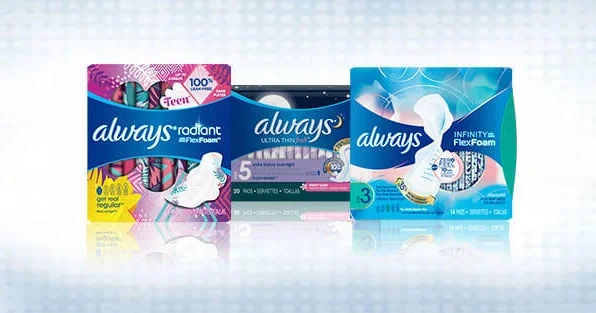
Always is one of the best-known menstrual pad brands sold by Procter & Gamble, and the Always pads lawsuit has drawn increased attention in 2026. The clearest current case is a proposed consumer class action challenging advertising that allegedly promises “100% leak-free” or similar protection. A separate product-liability case filed later in 2026 also names Always among several feminine-care brands in broader chemical-exposure allegations.
Consumers searching this topic are encountering several issues at once: leak-related marketing claims, PFAS concerns, reports of irritation or burning, questions about class-action eligibility, and speculation about settlement payments. These issues should not be treated as one lawsuit.
This article separates the confirmed court cases from consumer reports and unproven online claims. It also explains where the litigation stands, whether a settlement or claim form exists, and what consumers should know before relying on payout or eligibility information.
Always Pads Lawsuit 2026: What’s Happening Right Now
Two different legal developments are especially relevant in 2026.
Ruffina Yuryeva filed Yuryeva v. The Procter & Gamble Company, Case No. 2:26-cv-05821, on May 29, 2026, in the U.S. District Court for the Central District of California. The case challenges advertising associated with Always pads, particularly claims suggesting complete or near-complete leak protection.
A separate product-liability action, Franco Lopez et al. v. The Procter & Gamble Company et al., was removed to the same federal district on July 9, 2026. Seven plaintiffs make broader allegations involving PFAS and other substances in menstrual, intimate-care and incontinence products sold by multiple manufacturers. Always is among the brands identified in reporting about that litigation.
| Question | Current Status |
|---|---|
| Advertising lawsuit filed? | Yes |
| Proposed class action? | Yes |
| Class certified? | No confirmed certification |
| Separate chemical-exposure litigation? | Yes |
| Always settlement announced? | No |
| Official claim form available? | No |
| Confirmed payout amount? | No |
The distinction between these proceedings is critical. The advertising case is not proof that Always pads contain dangerous chemicals, while the separate product-liability complaint contains allegations that have not been established as facts.
What Is the Always Pads Lawsuit?
The main consumer case associated specifically with Always pads in 2026 concerns how the products are advertised.
Plaintiff Ruffina Yuryeva alleges that Procter & Gamble marketed Always products using leak-protection language that could lead reasonable consumers to believe the products provide complete protection against leakage. The lawsuit challenges whether those representations accurately communicate the limitations of the products.
This is primarily an advertising and consumer-protection dispute. It should not automatically be described as a personal-injury, cancer, or PFAS lawsuit.
At the same time, the later Franco Lopez litigation has expanded public discussion because it names P&G alongside several other manufacturers in a product-liability action involving alleged exposure to PFAS and other substances. That lawsuit is legally separate from Yuryeva.
Yuryeva v. Procter & Gamble Explained
Yuryeva v. Procter & Gamble is the federal case at the center of searches concerning Always pad leak-protection advertising.
The federal docket identifies Ruffina Yuryeva as plaintiff and The Procter & Gamble Company as defendant. The case is categorized as “Other Fraud,” with diversity jurisdiction listed under 28 U.S.C. § 1332.
The filing of a complaint does not establish that P&G violated the law. The allegations must proceed through litigation, and the defendant has the opportunity to contest the plaintiff’s factual and legal theories.
Who Filed the Lawsuit?
Ruffina Yuryeva filed the complaint on May 29, 2026. The federal docket shows attorney Leon Ozeran appearing for the plaintiff.
Yuryeva seeks to pursue claims on behalf of herself and potentially similarly situated consumers. That proposed representative structure is why the matter is commonly described as a proposed class action.
Being filed as a proposed class action, however, is not the same as having a court-certified class.
What Does the Complaint Allege?
The central allegation is that Always products are promoted using language such as “100% leak-free” and “zero leaks,” which the plaintiff argues may create an unrealistic impression about product performance.
The plaintiff’s theory is essentially economic: consumers allegedly paid for products based on representations about leak protection that they would not otherwise have accepted on the same terms.
These are allegations. A court has not established that the advertising was deceptive or that consumers are entitled to refunds or damages.
Where Was the Case Filed?
The lawsuit was filed in the U.S. District Court for the Central District of California on May 29, 2026.
The docket lists the case as Ruffina Yuryeva v. The Proctor & Gamble Company, No. 2:26-cv-05821. Judge Dolly M. Gee was assigned as the district judge, with Magistrate Judge Alka Sagar also assigned.
The docket further shows that P&G was served on June 11, 2026. Those procedural events establish that the lawsuit exists, but they do not establish the truth of the underlying allegations.
What Is the “100% Leak-Free” Advertising Claim About?
The dispute focuses on the difference between marketing language and the performance a reasonable purchaser might expect.
Some Always marketing has used strong leak-protection language. The plaintiff argues that consumers may interpret those representations as meaning leakage will not occur when the product is used normally.
Actual menstrual-pad performance can depend on numerous factors, including flow, placement, fit, movement, product size and duration of wear. The legal issue is not simply whether someone has ever experienced a leak. It is whether the challenged advertising would mislead a reasonable consumer in context.
A court may therefore consider the complete packaging and surrounding qualifications rather than evaluating a few words in isolation.
“Zero Leaks” Marketing Claims
“Zero leaks” is particularly important because absolute-sounding language can carry a stronger meaning than general claims such as “helps prevent leaks.”
The plaintiff alleges that such statements communicate a level of certainty that the products cannot consistently provide.
P&G may dispute that interpretation or argue that qualifying language, product instructions and context make clear that performance can vary. Determining how a reasonable consumer would understand the representation is ultimately a legal and factual question.
Why Plaintiffs Say the Advertising May Be Misleading
The plaintiff’s position is that consumers buy menstrual pads partly because of their expected ability to prevent leaks. A representation promising complete protection could therefore influence a purchasing decision.
If consumers reasonably understood the challenged statements as an absolute performance guarantee, the plaintiff may argue that the representation affected the product’s perceived value.
But experiencing a leak by itself does not establish false advertising. The plaintiff must satisfy the applicable elements of the consumer-protection claims and overcome any defenses raised by P&G.
Which Consumer Protection Claims Could Apply?
False-advertising cases can involve state statutes prohibiting deceptive or unfair commercial practices, as well as theories based on misrepresentation, warranty or unjust enrichment depending on the complaint and jurisdiction.
Typical questions include whether:
- the representation was false or misleading;
- a reasonable consumer could be deceived;
- the representation was material to the purchase;
- the plaintiff relied on or was exposed to the challenged marketing; and
- the plaintiff suffered a legally recognized economic injury.
The precise claims and available remedies depend on applicable state law and what ultimately survives court review.
Is the Always Pads Lawsuit a Class Action?
The Yuryeva case has been brought as a proposed class action, meaning the plaintiff seeks relief not only for herself but potentially for other consumers who allegedly experienced the same type of economic harm.
That does not mean every person who purchased Always pads is automatically part of a certified class.
Before a case can proceed on a classwide basis, plaintiffs generally must satisfy Federal Rule of Civil Procedure 23 requirements, including questions of numerosity, commonality, typicality and adequacy.
Until certification occurs, references to a nationwide “Always class” should be treated cautiously.
Has the Always Pads Class Action Been Certified?
There is no confirmed public indication that the Yuryeva consumer class has been certified as of September 2026.
The case was only filed in May 2026, and the publicly accessible docket information confirms the complaint, assignment of judges, summons and service rather than a final class-certification ruling.
Certification is a major procedural stage. A judge must determine whether the proposed group can appropriately litigate common issues together.
This also explains why there is no established class membership process, settlement notice or official consumer claim form associated with the case at this stage.
Procter & Gamble Always Pads Lawsuit: What Is the Company Accused Of?
In Yuryeva, P&G is accused of using allegedly misleading advertising concerning the leak protection provided by Always products.
The basic theory is not that selling menstrual pads is unlawful or that every Always product is defective. Instead, the plaintiff challenges how the performance of the products was represented to consumers.
Separately, P&G is among multiple defendants in the Franco Lopez product-liability case. Those plaintiffs allege that feminine-care products exposed users to PFAS, endocrine-disrupting chemicals, heavy metals, fragrances, preservatives and other substances without adequate warnings. The allegations include failure-to-warn, design-defect, negligence, warranty and fraud-related theories.
Neither complaint should be described as a finding of wrongdoing.
Always Pads Lawsuit Update 2026
As of September 2026, the most important update is that the litigation remains unresolved.
Yuryeva was filed May 29, while the separate Franco Lopez product-liability matter reached federal court through removal on July 9. The Franco Lopez docket lists P&G, Kimberly-Clark, Edgewell, Essity, Prestige Consumer Healthcare, The Honey Pot Company and other entities as defendants.
No publicly verified nationwide Always settlement fund has been established. There is also no official Always payout schedule or consumer claim deadline.
That makes articles or social posts quoting specific payment amounts premature unless they point to a later court-approved settlement notice.
Is the Always Pads Lawsuit About PFAS?
The answer depends on which lawsuit is being discussed.
The Yuryeva lawsuit is about allegedly misleading leak-protection advertising. It is not a PFAS case.
The separate Franco Lopez product-liability litigation does make broader chemical-exposure allegations involving feminine-care products and identifies Always among the brands used by plaintiffs. The complaint alleges exposure to PFAS and other substances.
Keeping these cases separate prevents a significant factual error: allegations made in the later multi-defendant product-liability action should not be attributed to the leak-free advertising complaint.
Separate PFAS Lawsuit Naming Always Products
Franco Lopez et al. v. The Procter & Gamble Company et al. is a separate proceeding involving seven California women.
The case originated in Los Angeles Superior Court and was removed to federal court on July 9, 2026. The federal docket identifies it as a personal-injury product-liability action.
The plaintiffs allege repeated use of menstrual and intimate-care products exposed them to PFAS and other potentially harmful substances and contributed to reproductive and gynecological injuries.
Those causation allegations are disputed legal claims, not established medical findings. The complaint itself does not prove that a specific Always product contained a particular chemical at a harmful dose or caused an individual plaintiff’s medical condition.
Which Always Products Are Named?
Public reporting on the Franco Lopez complaint identifies Always and Always Discreet among the brands implicated in the plaintiffs’ product-use allegations. Other brands named across the broader case include Tampax, L. Organic, Carefree, Summer’s Eve, Honey Pot and Playtex products.
The litigation involves numerous categories, including pads, tampons, feminine washes, wipes, menstrual underwear, sprays and women’s incontinence products.
Readers should therefore avoid assuming that every Always pad variety is individually alleged to contain the same substances.
What Chemicals Are Alleged?
The plaintiffs broadly allege exposure to substances including:
- PFAS;
- endocrine-disrupting chemicals;
- certain heavy metals;
- potentially carcinogenic substances;
- fragrances;
- preservatives; and
- volatile organic compounds.
The complaint does not itself establish that every named product contained every alleged substance. Regulatory analysis of the filing has similarly noted that evidence concerning product composition, exposure, dose and medical causation would be required.
How Is the PFAS Case Different From the Advertising Case?
The two cases involve substantially different theories.
Yuryeva focuses on what P&G allegedly told consumers about leak protection. The claimed injury is principally related to allegedly misleading purchasing representations.
Franco Lopez, by contrast, is a multi-defendant product-liability action involving alleged chemical exposure and physical injuries.
The evidence required is therefore different. A chemical-injury claim may require product testing, exposure evidence, toxicology and expert medical causation testimony. A false-advertising claim focuses more heavily on representations, consumer understanding, purchasing decisions and economic injury.
Always Pads Toxic Chemicals: What Has Been Alleged?
Concern about chemicals in menstrual products predates the 2026 lawsuits.
Independent testing reported in 2022 detected fluorine, which can be used as an indicator warranting further investigation for PFAS, in certain Always-branded products. Reported results included Always No Feel Protection Thin Liners, Always Discreet 360 Form Fit Maximum Underwear and Always Anti-Bunch Xtra Protection Liners.
A fluorine screening result, however, should not automatically be described as proof that a particular harmful PFAS compound was present at a medically dangerous exposure level.
The 2026 Franco Lopez complaint makes substantially broader chemical allegations. Those allegations will require evidence concerning specific products, substances, exposure pathways, doses and causation.
Always Pads Cancer Lawsuit: Are Cancer Claims Part of the Current Case?
There is no basis for describing Yuryeva as an Always pads cancer lawsuit. It concerns advertising about leak protection.
PFAS have been studied in connection with various health outcomes, and some individual PFAS have been classified or evaluated for carcinogenic hazards. But general scientific evidence about a chemical does not establish that an Always product caused cancer in a particular person.
The Franco Lopez litigation alleges exposure to PFAS, carcinogens and other substances, but the reported injuries focus heavily on reproductive and gynecological conditions.
Consumers should therefore be cautious with websites suggesting that a proven Always cancer settlement already exists. No such nationwide settlement has been publicly confirmed.
Always Pads Health Risks: What Does the Evidence Actually Show?
Three different types of evidence need to be separated: scientific research about chemicals generally, testing of menstrual products, and proof that a specific product caused an individual injury.
Research into PFAS and endocrine-disrupting substances has generated legitimate public-health concern. Research has also identified chemicals of interest across portions of the menstrual-product market.
That does not establish product-specific medical causation. As an analysis of the Franco Lopez complaint notes, proving liability would require evidence about composition, exposure, dose, warnings and causation.
Consumers experiencing persistent burning, rash, pain or other symptoms should seek appropriate medical advice rather than attempting to diagnose the cause based on lawsuit allegations.
Always Pads Burning and Irritation Complaints
Burning and irritation reports involving Always products are documented in the FDA’s MAUDE adverse-event database.
For example, a 2025 report concerning Always Infinity Flex Foam described burning, raw skin, itching, dryness, blistering, peeling and irritation. Earlier reports also describe burning, itching, rash and discomfort associated by reporters with Always products.
These reports are important safety signals, but they have limitations. An adverse-event report does not establish that the product caused the reported condition.
FDA Adverse Event Reports
FDA MAUDE records include voluntary reports involving menstrual pads.
One 2017 Always report lists burning and itching among the reported effects. Another report concerning Always Ultra Thin describes rash, burning and itching.
A 2022 report involving Always Ultra Thin Unscented Size 1 states that the consumer attributed what she described as a chemical burn to the pads.
MAUDE reports should be interpreted as reports of events, not FDA determinations that a device caused an injury.
Burning Sensation and Irritation Complaints
Consumers have reported burning sensations and irritation in connection with different Always products over multiple years.
A 2025 Always Infinity Flex Foam report described symptoms beginning during menstrual use and continuing afterward. The listed clinical codes included skin burning, irritation, blistering and peeling.
Another older report involving a scented Always product described vaginal irritation, pain and burning.
These individual reports cannot establish how common such reactions are or identify their cause.
Rash and Skin Reaction Reports
Rash and skin-reaction complaints also appear in FDA records.
One Always Ultra Thin report describes a spotted genital rash together with itching and burning. The manufacturer’s investigation stated that retained samples showed no visible defects and that no definitive root cause for the reported problem could be determined.
That illustrates why complaint data requires careful interpretation. A reported reaction may justify investigation without proving a manufacturing defect or establishing legal liability.
Always Pads Reviews and Consumer Complaints
Online reviews can help identify recurring consumer experiences, but they should not be treated as clinical or legal evidence.
Some users report positive experiences with Always products, while others complain about leakage, fit, adhesive performance, scent, irritation, rash or burning. Individual reactions and product performance can vary considerably.
For lawsuit purposes, a review becomes relevant only when it helps establish facts connected to a legal claim. A collection of negative reviews does not independently prove deceptive advertising, chemical contamination or causation.
Official court filings, regulatory records, scientifically reliable testing and expert evidence carry considerably more evidentiary weight.
What Reddit Users Are Saying About the Always Pads Lawsuit
Reddit and other social platforms contain discussions about irritation, alleged chemical exposure, leaks and the 2026 lawsuits. These conversations can reveal what consumers are concerned about, but they are not verified evidence.
Posts may also combine unrelated events. Discussions about the Always advertising case sometimes become mixed with PFAS litigation, the Carefree case, Tampax litigation and older chemical-testing reports.
That creates a misleading impression that one enormous class action covers every allegation.
Consumers researching the litigation should use social-media discussions as anecdotal context and verify legal claims against court dockets and official settlement notices.
Always Pads Controversy: Lawsuit Facts vs. Online Claims
Several important distinctions can prevent misinformation.
Confirmed: Yuryeva filed a federal lawsuit on May 29, 2026 challenging Always leak-protection advertising.
Confirmed: A separate multi-defendant product-liability case involving Alassandra Franco Lopez and six other plaintiffs was removed to federal court in July 2026 and includes broader chemical-exposure allegations.
Not confirmed: a nationwide Always settlement fund, predetermined payout amount, open claim form, certified nationwide purchaser class or established finding that Always pads cause cancer.
Headlines that collapse all these issues into a single “Always toxic pads settlement” leave out critical legal distinctions.
What Happened With Always Pads Lawsuit Claims in 2022?
Some searches connect 2022 with the current litigation, but there was no equivalent 2022 version of the Yuryeva leak-advertising case.
What did occur was increased attention to chemical testing of menstrual products. Testing reported in 2022 found detectable fluorine in several Always-branded products, contributing to later discussion about potential PFAS exposure.
FDA records from 2022 also include an adverse-event report in which a consumer alleged that Always Ultra Thin Unscented pads caused a burn-like reaction.
Those developments should not be rewritten retrospectively as a finalized 2022 Always class action settlement. They are separate pieces of the broader consumer-safety history.
How the Always Pads Lawsuit Differs From the Tampax Lawsuit
Tampax litigation involves different products and allegations.
In Barton v. The Procter & Gamble Company, plaintiffs challenged P&G over Tampax Pearl and Tampax Radiant tampons, alleging that consumers were misled regarding the presence of lead. A federal judge granted some dismissal arguments while allowing other aspects of the dispute to continue.
The Always Yuryeva case concerns leak-protection advertising for pads, not lead in tampons.
Although P&G is involved in both matters, they should not be combined when discussing eligibility, evidence, class status or potential settlement.
How the Always Pads Lawsuit Differs From the Carefree Pads Lawsuit
The Carefree case involved a different manufacturer and a different legal theory.
In 2024, Ecological Alliance filed a California Proposition 65 action against Edgewell Personal Care concerning alleged PFOA in Carefree menstrual liners. Reporting stated that the group sought warnings or changes relating to alleged PFAS exposure.
That is not Yuryeva v. P&G.
Carefree and Always do appear within the broader 2026 Franco Lopez product-liability litigation, but that does not transform the earlier Carefree action into an Always lawsuit. Each proceeding has its own parties, claims and procedural history.
Always Pads Lawsuit Eligibility: Who Could Potentially Qualify?
There is currently no court-approved Always settlement class with finalized eligibility rules.
For the Yuryeva advertising case, any eventual class definition would likely depend on factors such as the product purchased, location, purchase period and exposure to the challenged representations. Those details must come from court orders or an approved settlement—not estimates published online.
Potentially relevant records could include:
- purchase receipts;
- retailer order histories;
- photographs of packaging;
- dates and locations of purchases; and
- copies of advertisements seen before purchase.
For personal-injury allegations, medical and product-use documentation may become important, but eligibility rules in the separate litigation have not been established.
Purchasers of Products With Challenged Leak-Free Claims
The most relevant consumers to the Yuryeva theory would generally be purchasers of Always products carrying the specific advertising challenged in the complaint.
Buying any P&G product would not necessarily qualify someone.
If a class is eventually certified, the court-approved definition will specify which products, purchasers, jurisdictions and time periods are covered. Consumers should rely on that language rather than self-declared eligibility websites.
Consumers in Covered States
Consumer-protection statutes vary by state, which can significantly affect class-action scope.
A plaintiff attempting to represent consumers across multiple states may face questions about differences in state law, reliance requirements, available damages and limitation periods.
For that reason, it is too early to say that every U.S. purchaser automatically qualifies. Any certified class or settlement notice would identify the relevant geographic scope.
What Proof of Purchase May Matter
No official proof requirements have been announced.
If the advertising dispute eventually settles, documentation could potentially include receipts, retailer purchase histories or other records showing purchases of covered products. Some consumer settlements allow claims without receipts up to a limited amount, but there is no basis for assuming that will happen here.
Consumers interested in preserving potential rights can retain existing purchase documentation without treating it as proof that compensation is guaranteed.
How to Join the Always Pads Lawsuit
There is currently no official process through which ordinary purchasers can submit a settlement claim in Yuryeva.
In a class action, consumers generally do not “join” simply by filling out a law-firm marketing form. If a class is certified or a settlement receives preliminary approval, eligible consumers may receive notice explaining their rights.
Those rights can include remaining in the class, excluding themselves, objecting to a proposed settlement or submitting a claim if a claims process is established.
Anyone considering an individual legal claim should obtain advice from a qualified attorney about their circumstances.
Can You Join the Always Pads Lawsuit Online?
Not through an official settlement portal at this time.
Websites may collect information from people interested in potential litigation, but completing such a questionnaire is not the same as filing an official court-approved claim.
Before submitting sensitive personal information, verify who operates the website and whether it represents a law firm, claims administrator or unrelated lead-generation business.
If a settlement eventually creates an online claims process, the official notice should identify the authorized settlement administrator and website.
Is There an Always Pads Lawsuit Claim Form?
No verified court-approved claim form for the Yuryeva Always pads case has been announced.
That follows from the current procedural status: there is no confirmed approved settlement from which a settlement claim form would arise.
A genuine claim form normally appears after settlement negotiations, preliminary court approval and appointment of a settlement administrator.
Consumers should be skeptical of pages that request banking details, payment or extensive personal information while claiming to provide an “official Always settlement claim form” without identifying the court and case.
Always Pads Lawsuit Deadline 2026: Is There a Claim Deadline?
There is no confirmed settlement claim deadline because there is no approved settlement claims process.
A claim deadline normally applies only after a settlement has been approved sufficiently for class members to receive notice and submit claims.
Different deadlines may apply to individual lawsuits because statutes of limitation depend on the type of claim and jurisdiction.
Consumers considering an individual injury or consumer claim should not interpret the absence of a class-action claim deadline as meaning there are no legal time limits whatsoever.
Has an Always Pads Settlement Been Reached?
No publicly verified settlement has been announced in the Yuryeva case as of September 2026.
The case was filed only in May, and publicly accessible docket information establishes the early procedural history rather than a settlement approval.
The separate Franco Lopez litigation also should not be described as an established Always settlement.
Settlement negotiations can occur at many stages of litigation, but negotiations or speculation are not equivalent to a court-approved agreement.
Always Pads Settlement Amount: Has Any Amount Been Announced?
No confirmed Always pads settlement amount has been announced.
Any figures currently presented as guaranteed compensation should therefore be viewed skeptically unless they come from a court-approved settlement agreement or authorized claims administrator.
Settlement value can depend on the strength of the claims, number of eligible consumers, available defenses, litigation costs, damages theories and negotiated relief.
Previous settlements involving other menstrual-product companies do not establish what P&G would pay in this litigation.
Always Pads Lawsuit Payout: Is Compensation Available Yet?
There is no verified payout program currently available to ordinary Always purchasers under the Yuryeva litigation.
No approved settlement fund means there is no legitimate per-person payment amount to calculate.
Even if a settlement eventually occurs, compensation might take different forms, including cash payments, refunds, vouchers, injunctive changes or combinations of relief.
Until official documents establish those terms, estimates such as “$500 per person” or “thousands for every purchaser” are speculation rather than confirmed payout information.
What Could Affect Any Future Always Pads Settlement Payment?
If a settlement eventually occurs, individual payments could depend on the structure negotiated by the parties and approved by the court.
Relevant factors might include:
- number of valid claimants;
- products covered;
- purchase period;
- number of documented purchases;
- whether proof is required;
- total settlement fund;
- attorneys’ fees and administration costs; and
- whether different categories of claims receive different relief.
None of those payment rules has been established for Yuryeva.
Personal-injury claims in separate product-liability litigation would also involve very different damages considerations from an economic-loss advertising claim.
Did Procter & Gamble Admit Wrongdoing?
There is no confirmed admission of liability arising from the filing of these lawsuits.
A complaint states the plaintiffs’ allegations. It is not a court finding and does not constitute an admission by the defendant.
P&G has the right to challenge factual allegations, legal theories, class certification and causation.
Even if litigation later settles, settlement agreements frequently contain provisions stating that defendants deny liability. Consumers should therefore distinguish between a company agreeing to resolve litigation and a company admitting that the allegations were true.
What Should Consumers Do If They Believe They Were Misled?
Consumers concerned about the advertising can preserve information connected to their purchases.
Useful steps may include:
- keeping receipts or online order records;
- photographing relevant packaging;
- saving advertisements or product listings;
- recording when and where products were purchased;
- retaining communications with the manufacturer or retailer; and
- monitoring the actual court case for material developments.
Consumers who experienced physical symptoms should prioritize appropriate medical evaluation.
Those considering legal action can also speak with a licensed attorney about individual rights, applicable limitation periods and whether their circumstances relate to any existing litigation.
How to Verify an Always Pads Settlement or Claim Website
A legitimate class-action settlement should be traceable to a real court case.
Check the case name, court, docket number and settlement administrator before providing personal information. For the advertising case, the relevant federal docket is Yuryeva v. The Procter & Gamble Company, No. 2:26-cv-05821, Central District of California.
Be cautious if a website:
- promises guaranteed compensation;
- gives a payout without supporting court documents;
- demands payment to submit a claim;
- provides no case number;
- hides the administrator’s identity; or
- claims an urgent deadline that cannot be verified.
Official settlement notices normally explain eligibility, deadlines, proof requirements and class members’ legal rights in detail.
What Could Happen Next in the Always Pads Lawsuit?
The Yuryeva case could move through motions challenging the complaint, discovery, class-certification proceedings, settlement discussions or eventually trial.
P&G may dispute whether the challenged advertising is misleading, whether the named plaintiff suffered a legally compensable injury, or whether the requirements for class treatment are satisfied.
The separate Franco Lopez product-liability case could involve substantially more technical disputes. Product composition, exposure, dose, medical causation, warnings and expert testimony may become central issues.
Either lawsuit could also narrow substantially, settle, be dismissed in whole or part, or continue for an extended period. The existence of a complaint alone does not predict the final outcome.
Read: Exploring CNLawBlog
Read: Native Hair Loss Lawsuit
Read: BSA Lawsuit Settlement
Read: SheaMoisture Lawsuit
Read: NetVideoGirls Lawsuit
Read: Vital Proteins Lawsuit
Frequently Asked Questions
Is there an Always pads lawsuit in 2026?
Yes. Yuryeva v. Procter & Gamble was filed in May 2026 over alleged leak-protection advertising, with separate product-liability litigation filed later.
Is the Always pads lawsuit a class action?
Yuryeva is a proposed class action, but no publicly confirmed court order has established a certified purchaser class yet.
Is there an Always pads settlement?
No verified court-approved settlement has been announced, so consumers should be cautious about websites advertising settlement payments.
Can I file an Always pads claim online?
There is currently no verified official settlement claim form or court-authorized claims portal for the Yuryeva case.
Does the lawsuit claim Always pads contain PFAS?
Not Yuryeva. A separate 2026 multi-defendant product-liability lawsuit alleges exposure to PFAS and other substances and identifies Always among relevant brands.
Do Always pads cause cancer?
No court has established that Always pads cause cancer. General chemical-risk research should not be confused with proof of product-specific medical causation.
Final Thoughts
The Always pads lawsuit landscape in 2026 involves more than one legal dispute, and separating them is essential. Yuryeva v. Procter & Gamble challenges allegedly misleading leak-protection advertising, while the later Franco Lopez product-liability case makes broader allegations involving PFAS and other substances across products sold by several manufacturers.
Neither case currently supports claims that every Always purchaser is entitled to compensation. There is no verified nationwide settlement amount, official claim form or established payout schedule.
Consumers should rely on court records and authorized settlement notices rather than social-media payout claims. Reports of burning, irritation and other reactions also deserve to be distinguished from proven causation. Ultimately, liability, class eligibility and compensation will depend on evidence, applicable law, court rulings and any settlement terms that may emerge as the litigation develops.