
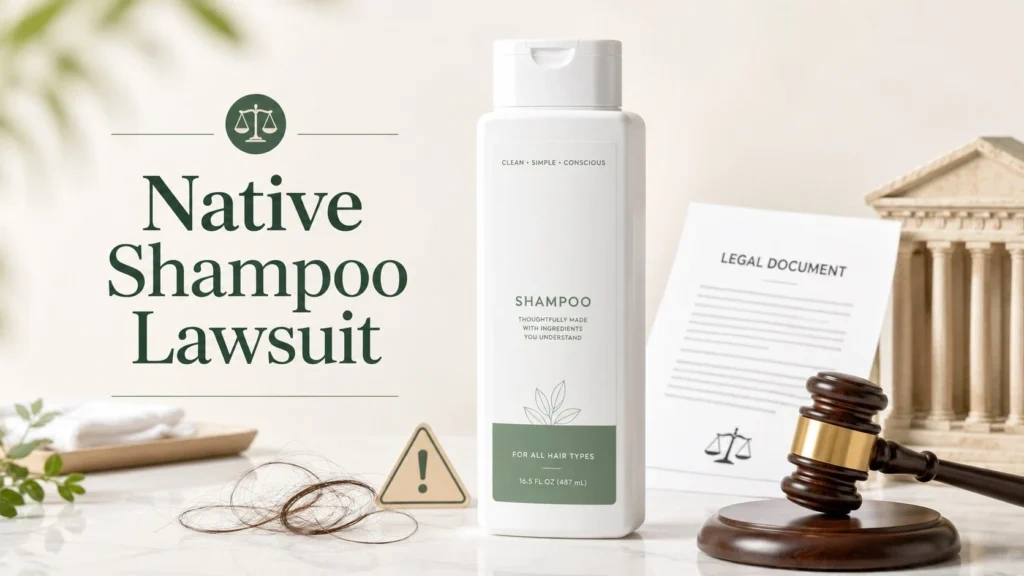
Native hair-care products have drawn significant online attention after some consumers reported shedding, thinning, scalp irritation, dryness, and other problems they associated with shampoo or conditioner use. Those reports have helped drive searches for a Native Hair Loss Lawsuit, but consumer complaints and an actual filed lawsuit are not the same thing.
Many consumers want to know whether Native faces a hair-loss class action, whether a settlement exists, who might qualify, and whether an official claim form or payout deadline has been announced. The legal picture is more limited than some online discussions suggest.
As of September 2026, the earlier attorney investigation involving possible PFAS and Native product marketing is marked complete. It covered certain shampoos and conditioners, but there is no publicly announced hair-loss settlement or official compensation program resulting from that investigation.
Native Hair Loss Lawsuit: What Is This Case Really About?
The phrase “Native Hair Loss Lawsuit” can create the impression that consumers are already participating in a certified class action over shampoo-induced hair loss. The verified public record is more complicated.
Attorneys previously investigated whether certain Native personal-care products could contain PFAS while being marketed using terms such as “naturally derived” and “simple” ingredients. Products examined during that inquiry included multiple Native shampoos and conditioners. The investigation is now identified as complete rather than an active lawsuit recruitment effort.
Separately, consumers have posted accounts online alleging increased shedding, thinning, scalp itching, dryness, bumps, or irritation after using Native hair products. These reports explain much of the public interest surrounding the hair-loss issue, but they do not establish medical causation or legal liability.
The current distinction can be summarized this way:
| Question | Current Status |
|---|---|
| Consumer hair-loss complaints reported online? | Yes |
| Native shampoos investigated in PFAS inquiry? | Yes |
| Investigation currently recruiting consumers? | No, marked complete |
| Certified hair-loss class action confirmed? | No |
| Hair-loss settlement announced? | No |
| Official hair-loss claim form available? | No |
| Confirmed hair-loss payout? | No |
That distinction matters because an attorney investigation, consumer complaint, filed lawsuit, certified class action, and approved settlement are separate legal stages.
Native Shampoo Hair Loss Lawsuit: What Plaintiffs Are Claiming
Strictly speaking, it is misleading to describe consumers discussing Native shampoo hair loss as “plaintiffs” in a confirmed hair-loss case when no such class action has been established in the sources reviewed.
What does exist is a substantial body of consumer allegations. Some users say they experienced unusually heavy shedding after introducing Native shampoo or shampoo-and-conditioner combinations into their routines. Others describe itching, dryness, scalp discomfort, or noticeable changes in hair density.
Reddit discussions provide examples of these experiences. Users have described shedding during washing and brushing, scalp irritation, thinning, and in some cases improvement after changing products. Other users have reported satisfactory experiences, and individual online accounts cannot determine whether the product caused a medical condition.
Any future plaintiff pursuing a product-related injury claim would generally need considerably more than an online complaint. The case would need evidence connecting product use to the alleged injury, along with a viable legal theory and proof of damages.
Native Lawsuit Hair Loss: The Legal Foundation Behind These Claims
Several different legal theories could potentially arise when consumers believe a personal-care product harmed them. Which theory applies depends on what evidence exists and what representations were made about the product.
A personal-injury or product-liability claim could involve allegations concerning a defective formulation, inadequate warnings, or another unreasonable safety issue. A consumer-protection case could instead focus on allegedly misleading marketing, labeling, or ingredient representations.
The earlier Native investigation primarily examined a different question: whether certain personal-care products might contain PFAS despite marketing emphasizing naturally derived or simple ingredients. The investigation page stated that a potential class action could seek refunds and changes to advertising or product practices. It is now marked complete.
Hair-loss allegations would raise an additional evidentiary issue: causation. A consumer would generally need evidence showing that the product, rather than another medical, hormonal, environmental, genetic, nutritional, or stress-related factor, caused or materially contributed to the claimed injury.
That causation question is one reason consumer reports should not be treated as equivalent to a court finding.
Native Shampoo Lawsuit 2026: The Key Developments This Year
The most important 2026 development is actually the absence of a confirmed shampoo hair-loss settlement or certified class action.
The ClassAction.org page concerning Native products currently states that the investigation is complete. The historical inquiry included Coconut & Vanilla, Cucumber & Mint, Almond & Shea Butter, and Citrus & Herbal Musk shampoos, along with corresponding conditioners and other personal-care products.
That page should not be confused with an official settlement website. It does not announce a settlement fund, court-approved class, claims administrator, payout amount, or filing deadline.
Another important development involves Native deodorant rather than shampoo. A previously filed case challenging Native whole-body deodorant’s “72-hour odor protection” advertising was dismissed by a federal judge on April 9, 2025.
A separate proposed class action concerning Native Unscented Deodorant was then reported as filed in August 2026. That newer dispute concerns allegedly misleading “unscented” labeling and ginger root extract—not shampoo-related hair loss.
Native Lawsuit Update 2026: What Has Changed and What to Watch
For consumers following the Native lawsuit update in 2026, the central issue is separating several different stories that frequently become mixed together online.
The PFAS investigation involved multiple Native personal-care products, including shampoos and conditioners. It is no longer an open investigation soliciting potential participants.
The 2024 deodorant case, Hernandez v. Zenlen, Inc., concerned allegedly misleading claims that Native whole-body deodorant provided “clinically proven 72-hour odor protection.” The federal court granted the defendant’s motion to dismiss the amended complaint and directed that the case be closed in April 2025.
The newer 2026 deodorant dispute is different again. It reportedly challenges the labeling of Native Unscented Deodorant and does not allege that Native shampoo causes hair loss.
For the hair-care issue, the developments worth watching are any newly filed complaint specifically naming Native shampoo or conditioner, class-certification proceedings, verified scientific evidence, regulatory action, or a court-approved settlement.
Is Native Shampoo Causing Hair Loss? What the Science Suggests
There is not enough verified evidence to state that Native shampoo generally causes hair loss.
Hair shedding can have many causes. Stress, hormonal changes, postpartum changes, nutritional deficiencies, genetics, illness, medication, inflammatory scalp conditions, chemical treatments, and physical breakage can all affect how much hair a person appears to lose.
At the same time, individual reactions to cosmetic ingredients can occur. Irritation or allergic contact dermatitis may affect the scalp in susceptible individuals. That makes a temporal relationship—such as shedding beginning after a new shampoo—worth investigating, but timing alone does not establish causation.
Native currently lists several surfactants, fragrance, preservatives, conditioning agents, and pH-adjusting ingredients in its Coconut & Vanilla Moisturizing Shampoo. The company describes the formula as free of sulfates, parabens, and dyes.
Native’s own FAQ also states that its hair-care products are not intended to prevent balding or hair thinning.
Consumers experiencing persistent or substantial hair loss should therefore avoid assuming a single cause without appropriate medical evaluation.
Native Shampoo Ingredients Hair Loss: Which Compounds Are Being Blamed?
Online discussions sometimes identify individual shampoo ingredients as possible causes of hair shedding. That does not mean those ingredients have been proven to cause hair loss in Native users.
The current Coconut & Vanilla Moisturizing Shampoo ingredient list includes water, sodium cocoyl isethionate, lauramidopropyl betaine, cocamidopropyl betaine, sodium lauroyl sarcosinate, fragrance, sodium benzoate, sodium salicylate, polyquaternium-10, sodium citrate, and citric acid.
Some consumers focus on fragrance or cleansing agents when they experience irritation. A reaction that inflames or dries the scalp could theoretically contribute to discomfort, scratching, breakage, or changes that consumers perceive as shedding. Individual sensitivity, however, varies substantially.
PFAS concerns should also be kept separate from the ingredient-list discussion. The earlier legal investigation questioned whether certain Native products could contain PFAS despite the brand’s marketing. That investigation did not itself prove that PFAS were responsible for consumers’ reported hair loss.
It is therefore inaccurate to identify one Native ingredient as the proven cause of widespread hair loss without stronger clinical evidence.
Native Shampoo Side Effects Lawsuit: Beyond Just Hair Loss
Hair loss is not the only issue consumers discuss online.
Reported experiences include:
- increased shedding or apparent thinning;
- itchy or irritated scalp;
- dryness;
- scalp bumps or sore areas;
- changes in oiliness;
- hair breakage; and
- changes in texture or manageability.
For example, Reddit users have described itching, painful scalp bumps, dryness, and shedding while discussing their experiences with Native shampoo or shampoo-and-conditioner combinations.
These remain individual consumer reports. They should not be presented as established side effects affecting all Native users.
Legally, the distinction matters because a claimant would generally need to document the specific injury alleged. Someone claiming temporary irritation presents a different damages question from someone alleging medically documented hair loss requiring treatment.
Evidence concerning duration, diagnosis, treatment expenses, product usage, and alternative causes could therefore become important if an individual claim were ever pursued.
Native Conditioner Hair Loss Lawsuit: Are Conditioners Also Named?
Yes, Native conditioners were included in the earlier PFAS-related investigation, but that does not mean a court found that those conditioners caused hair loss.
The products identified included Coconut & Vanilla Conditioner, Cucumber & Mint Conditioner, Almond & Shea Butter Conditioner, and Citrus & Herbal Musk Daily Conditioner.
Consumers discussing hair loss online also frequently mention using shampoo and conditioner together. That presents a practical causation problem: if multiple products were used simultaneously, determining which product or ingredient allegedly caused a reaction becomes more difficult.
A formal case would require more than identifying a product used before symptoms appeared. Attorneys would examine formulation information, frequency and duration of use, medical records, alternative causes, expert evidence, and whether similarly situated consumers experienced a sufficiently common problem.
As of September 2026, there is no announced Native conditioner hair-loss settlement or official claims process identified in the sources reviewed.
Native Products Hair Loss Class Action: How This Case Is Structured
There is currently no confirmed certified Native products hair-loss class action to describe as an established case.
A class action normally begins when one or more named plaintiffs file a complaint and propose to represent other consumers with sufficiently similar claims. Filing the complaint does not automatically create a class.
Later, plaintiffs generally must seek class certification. The court considers requirements such as numerosity, commonality, typicality, and adequacy of representation under the applicable procedural rules.
Hair-loss cases can present additional challenges because causation and damages may differ substantially between consumers. One person’s shedding might involve a product reaction, while another person’s hair loss could have a completely different explanation.
For that reason, readers should distinguish among four stages:
- Attorney investigation: lawyers evaluate whether claims may be viable.
- Filed lawsuit: a complaint has actually been submitted to a court.
- Certified class action: a judge has permitted claims to proceed on a class basis.
- Settlement: parties reach an agreement, generally requiring court approval in a class case.
The previous Native PFAS matter reached the investigation stage but is now marked complete.
What Reddit Users Are Saying About the Native Hair Loss Lawsuit
Reddit has played a major role in keeping the Native hair-loss discussion visible.
Some users describe unusually heavy shedding after starting Native shampoo or conditioner. Others report scalp itching, dryness, thinning, or hair appearing less dense. Several commenters say they noticed improvement after discontinuing the products, although experiences differ substantially.
Not every account is negative. Some users report liking how Native products make their hair feel, while others remain uncertain whether shedding is related to Native or another factor.
These posts can help identify patterns worth investigating, but Reddit is not clinical evidence and is not a substitute for court records.
A particularly important problem is that social-media threads sometimes repeat claims that a lawsuit already proves Native products contain PFAS or cause hair loss. The earlier PFAS matter was an attorney investigation, and its page is now marked complete.
Consumers should therefore treat Reddit as a source of personal experiences—not proof of causation, liability, or settlement eligibility.
Who Qualifies for the Native Hair Loss Lawsuit?
There is currently no confirmed hair-loss settlement class with court-approved eligibility requirements.
Accordingly, no responsible source can presently say that buying Native shampoo, experiencing shedding, or retaining a receipt automatically makes someone eligible for compensation.
If a hair-loss lawsuit or settlement eventually develops, potential eligibility could depend on factors such as:
- the exact Native product purchased;
- purchase date and location;
- duration and frequency of use;
- when symptoms began;
- medical documentation;
- proof of purchase;
- photographs documenting changes;
- treatment expenses; and
- whether other causes of hair loss were identified.
Class-action eligibility would ultimately be determined by the class definition approved by a court or included in an approved settlement.
Consumers should be particularly cautious of websites claiming that everyone who purchased Native shampoo already “qualifies.” Without an identified case, settlement administrator, class definition, and court-approved process, such statements can be misleading.
Native Hair Care Lawsuit Settlement: Where Things Stand in 2026
No confirmed Native hair-care settlement resolving shampoo-related hair-loss claims has been announced in the sources reviewed as of September 2026.
That means there is currently no verified settlement fund, settlement administrator, court-approved notice program, or official Native shampoo hair-loss claim form arising from the prior PFAS investigation.
The earlier investigation has been completed. Its archived information explains that attorneys had been examining whether a class action could be brought over possible PFAS and marketing representations involving several Native products.
This distinction is critical for consumers arriving from search results. A law firm or legal website asking people to provide information during an investigation is not necessarily operating a settlement claims portal.
An authentic class-action settlement generally identifies the court, case name, settlement administrator, eligibility definition, deadlines, and documentation requirements.
Until those elements exist for a Native hair-loss case, references to a guaranteed 2026 Native hair-care settlement should be treated cautiously.
Native Hair Loss Lawsuit Payout: What Could Consumers Potentially Receive?
There is no confirmed Native Hair Loss Lawsuit payout amount because no hair-loss settlement fund has been announced.
Any dollar figures currently presented online as guaranteed or established Native shampoo compensation should therefore be viewed skeptically unless supported by an actual court filing or settlement agreement.
If litigation eventually resulted in compensation, the form of recovery would depend heavily on the legal claims involved.
A consumer economic-loss class action might seek reimbursement or a portion of the purchase price. A personal-injury claim involving documented physical harm could involve different categories of damages, potentially including medical expenses or other provable losses.
The available evidence would matter substantially. A claimant with purchase records, medical documentation, photographs, and a clear timeline could present a different damages profile from someone who simply remembers using the product several years earlier.
For now, however, assigning an estimated dollar payout would be speculation rather than reliable legal information.
Native Hair Loss Lawsuit Compensation Amount: Factors That Could Affect Payment
If compensation ever becomes available, there is no reason to assume every consumer would receive the same amount.
Potential payment calculations could depend on the structure of the case. A settlement focused primarily on allegedly misleading marketing could provide purchase-based compensation, while individually litigated injury claims could involve more individualized evidence.
Factors that might affect compensation include:
- number of qualifying products purchased;
- proof of purchase;
- severity and duration of the alleged injury;
- medical treatment received;
- documented expenses;
- evidence supporting causation;
- settlement fund size;
- number of valid claimants; and
- limits established by a settlement agreement.
These are general considerations rather than current Native settlement rules.
No court-approved compensation schedule for Native shampoo hair-loss claims has been announced. Consumers should therefore avoid relying on websites publishing specific “average settlement” figures without identifying the underlying settlement documents.
Native Lawsuit Payout Date: Has a Payment Timeline Been Announced?
No Native shampoo hair-loss payout date has been announced because there is no confirmed settlement requiring such payments.
In a typical class-action settlement, payments occur only after several steps. The parties first reach an agreement, the court reviews it, notice is distributed to potential class members, claims are processed, and final approval is considered.
Appeals can delay distribution further.
None of those settlement stages currently establishes a Native shampoo hair-loss payment timeline.
The previous Native PFAS investigation is marked complete rather than showing an approved settlement.
Consumers who encounter a webpage promising payment on a particular 2026 date should verify whether it identifies an actual court case and official settlement administrator. Without those details, the date should not be treated as authoritative.
How to File a Native Hair Loss Claim
There is currently no official Native hair-loss settlement claim form to file.
Consumers should distinguish between submitting information to a lawyer and submitting a claim to a court-approved settlement administrator. The first may involve a potential legal consultation; the second exists only after an actual settlement establishes a claims process.
If someone believes Native hair products caused significant injury, reasonable steps include preserving the product and packaging, documenting purchases, recording when use began and ended, photographing relevant changes, and keeping medical records.
An individual considering litigation can also consult a qualified attorney in the appropriate jurisdiction. Statutes of limitation can restrict how long a person has to bring certain claims.
Most importantly, consumers should not provide sensitive information or pay money merely because a website labels itself a Native lawsuit “claim center.”
Documents and Purchase Records to Keep
Useful records may include store receipts, online order confirmations, retailer loyalty-account histories, photographs of bottles, product labels, UPC information, lot numbers, and records showing approximately when the product was purchased.
Consumers can also preserve photographs showing their hair before and after the period of alleged shedding when such images already exist.
A simple written timeline can be valuable. Record when Native products were first used, when symptoms appeared, when use stopped, whether symptoms continued, and what other hair-care products were being used.
These materials do not prove causation, but they can help an attorney or medical professional understand the chronology.
Medical Evidence That May Support a Claim
Medical documentation can become particularly important when a consumer alleges actual physical injury rather than merely economic loss.
Relevant records might include dermatologist visits, primary-care records, laboratory testing, diagnoses, prescriptions, treatment recommendations, photographs taken by healthcare professionals, and invoices for medical care.
A medical evaluation can also identify alternative explanations for hair loss. That is important legally because proving that symptoms followed product use is different from proving that the product caused those symptoms.
Consumers should describe their symptoms and product-use history accurately rather than asking a healthcare provider to reach a predetermined conclusion.
How to Verify an Official Claim Form
A legitimate settlement claim form should be traceable to a real court proceeding.
Before submitting information, verify:
- the case name and docket number;
- the court handling the lawsuit;
- whether settlement approval documents exist;
- the name of the claims administrator;
- the official settlement website;
- filing and objection deadlines; and
- contact information matching court-approved notices.
Be cautious when a page promises guaranteed compensation, requests upfront payment, or provides no identifiable case information.
There is presently no verified Native shampoo hair-loss settlement claim form resulting from the prior PFAS investigation.
Native Hair Loss Lawsuit Filing Deadline: Is There a Deadline in 2026?
There is no announced 2026 settlement claim deadline for Native shampoo hair-loss compensation because no such settlement claims process has been confirmed.
This should not be confused with statutes of limitation.
Statutes of limitation are legal deadlines governing how long an individual generally has to bring certain types of lawsuits. They vary by state, claim type, facts, and sometimes when an injury was or reasonably should have been discovered.
A settlement claim deadline is different. It applies after a settlement has been reached and eligible class members are given a defined period to submit claims.
Anyone considering an individual legal claim should not assume that the absence of a class-action deadline means there is unlimited time to act. A licensed attorney can assess which limitation period may apply to a specific situation.
Is There a Separate Native Deodorant Lawsuit?
Yes. Native deodorant has been involved in litigation separate from the shampoo hair-loss discussion.
In Hernandez v. Zenlen, Inc., the plaintiff challenged advertising that Native whole-body deodorant provided “clinically proven 72-hour odor protection.” U.S. District Judge Denise Cote granted Zenlen’s motion to dismiss the amended complaint on April 9, 2025, and directed the clerk to enter judgment for the defendant and close the case.
There is also a newer proposed class action reported in August 2026 involving Native Unscented Deodorant. The complaint alleges that labeling the product “unscented” is misleading because its ingredient list includes ginger root extract, which the plaintiff characterizes as a fragrance ingredient.
That newer case is reportedly Chiaravalloti v. The Procter & Gamble Company, No. 1:26-cv-06902 in the Southern District of New York. It remains an allegation-stage dispute, not a finding of liability or settlement.
How the Native Deodorant Lawsuit Differs From Hair Loss Claims
The deodorant litigation and Native hair-loss complaints involve fundamentally different factual and legal questions.
The dismissed Hernandez case centered on advertising about odor protection and clinical testing. It did not determine whether Native shampoo causes hair loss.
The newer 2026 deodorant complaint concerns the meaning of “unscented” on a particular deodorant product and the presence of ginger root extract. According to reporting on the complaint, the theory is primarily economic and labeling-based rather than a claim that the product caused physical injury.
Hair-loss allegations would instead require examination of shampoo or conditioner formulations, individual product use, symptoms, medical causation, and potentially product-liability or consumer-protection theories.
Consumers should therefore avoid using the existence of a Native deodorant lawsuit as evidence that a Native shampoo hair-loss lawsuit has been established. One case does not legally prove the allegations involved in another product controversy.
What Should Consumers Do If They Experience Hair Loss After Using Native Products?
Consumers experiencing unusual hair loss should prioritize documenting the issue and determining its cause rather than assuming the product is responsible.
Practical steps may include:
- stop using a product if it appears to be causing irritation;
- keep the bottle and packaging rather than immediately discarding them;
- photograph the ingredient label and lot information;
- preserve receipts or digital purchase records;
- document when symptoms began;
- record other medications and hair products being used;
- seek medical evaluation for significant or persistent shedding.
Hair loss can have many potential causes, so professional evaluation can be useful when symptoms are substantial, sudden, painful, or persistent.
Consumers who believe they suffered a significant injury can also discuss the circumstances with a licensed attorney. That consultation is different from joining a settlement because no official Native shampoo hair-loss settlement program is currently identified.
What Could Happen Next in the Native Hair Loss Lawsuit?
The next meaningful development would need to involve something more concrete than additional social-media complaints.
Attorneys could potentially investigate new evidence, consumers could file individual lawsuits, or plaintiffs could attempt to bring a proposed class action if they believe the evidence supports common legal claims. Regulators could also become involved if a product issue falls within their jurisdiction.
If a proposed class action were filed, several stages could follow:
- A complaint would identify plaintiffs, defendants, factual allegations, and legal claims.
- The defendant could answer or seek dismissal.
- Discovery could produce internal records, expert evidence, testing, and other information.
- Plaintiffs could seek class certification.
- The case could proceed toward trial, dismissal, or settlement.
None of those future possibilities should be presented as inevitable.
For now, the strongest verified statement is narrower: consumers have reported hair and scalp concerns, certain Native shampoos and conditioners were included in an earlier PFAS-related attorney investigation, and that investigation is currently marked complete without an announced hair-loss settlement.
Read: SheaMoisture Lawsuit
Read: NetVideoGirls Lawsuit
Read: Vital Proteins Lawsuit
Read: Prose Hair Lawsuit
Read: Vegamour Lawsuit
Read: Streamate Lawsuit
Read: QC Kinetix Lawsuit
Read: HexClad Lawsuit
Frequently Asked Questions
Is there really a Native Hair Loss Lawsuit in 2026?
No certified Native hair-loss class action or court-approved settlement is currently confirmed. An earlier PFAS-related attorney investigation covered Native shampoos and conditioners but is now marked complete.
Does Native shampoo cause hair loss?
It has not been established that Native shampoo generally causes hair loss. Consumers have reported shedding and scalp problems, but individual reports cannot prove medical causation.
Has Native agreed to a hair-loss settlement?
No confirmed Native shampoo hair-loss settlement has been announced. There is currently no verified settlement fund, claims administrator, or court-approved compensation program for these allegations.
Can I file a Native shampoo claim right now?
There is no official settlement claim form currently available. Consumers considering individual legal action can preserve relevant evidence and consult a qualified attorney about their circumstances.
How much is the Native hair-loss lawsuit payout?
No payout amount has been established because there is no confirmed hair-loss settlement. Specific compensation figures circulating online should not be treated as reliable without supporting court documents.
Final Thoughts
The Native Hair Loss Lawsuit remains a topic where online terminology can run ahead of the verified legal record. Consumers have reported shedding, thinning, irritation, and other hair or scalp concerns, and certain Native shampoos and conditioners were previously included in an attorney investigation concerning possible PFAS and product marketing. That investigation is now marked complete.
What has not been established is equally important. There is no confirmed court-approved Native shampoo hair-loss settlement, official payout schedule, or settlement claim deadline identified in the current sources. Consumer reports also do not by themselves prove that Native products caused an individual’s hair loss.
Affected consumers can preserve purchase and medical evidence, seek appropriate medical evaluation, and verify legal information against actual court records. Any future liability or compensation would depend on evidence, applicable law, and decisions made through the legal process.