


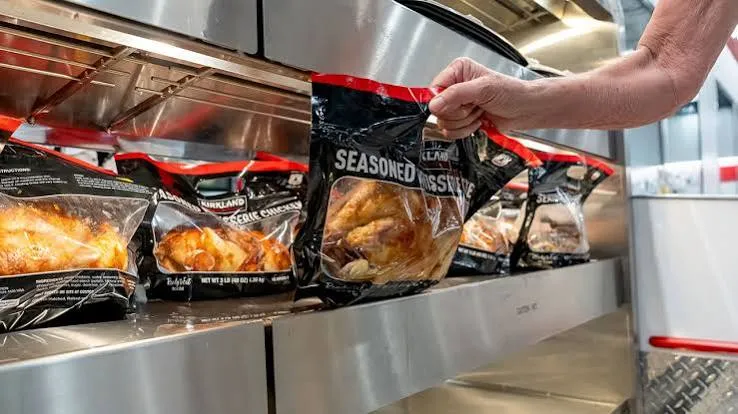
Costco’s popular Kirkland Signature rotisserie chicken is facing legal scrutiny in two separate federal cases. The Costco rotisserie chicken lawsuit story involves allegations about “no preservatives” advertising in one case and alleged Salmonella-related risks within the poultry supply chain in another. Neither allegation should be treated as a finding that Costco violated the law.
Consumers are understandably searching for the latest lawsuit status, possible settlement payments, claim forms, recalls, class-action eligibility, and whether the chicken has actually been found unsafe.
This guide explains both proposed class actions, Costco’s responses, the available court record, and what customers should know before submitting information to any website claiming to offer settlement registration.
What Is the Costco Rotisserie Chicken Lawsuit?
The term “Costco rotisserie chicken lawsuit” currently refers to two separate proposed federal class actions filed in early 2026. They involve different plaintiffs, courts, allegations, and legal theories.
The first is Johnston et al. v. Costco Wholesale Corporation, filed January 22, 2026, in the U.S. District Court for the Southern District of California. Plaintiffs Bianca Johnston and Anastasia Chernov allege Costco misleadingly marketed Kirkland Signature Seasoned Rotisserie Chicken as containing “no preservatives” even though its ingredient list included sodium phosphate and carrageenan.
The second is Taylor v. Costco Wholesale Corporation, filed February 12, 2026, in the Western District of Washington. That litigation alleges consumers were exposed to an undisclosed Salmonella risk connected to chicken processed at Lincoln Premium Poultry in Nebraska. Costco disputes those allegations.
Neither lawsuit, simply by being filed, establishes wrongdoing.
Costco Rotisserie Chicken Lawsuit Update 2026
As of the latest publicly available information reviewed for this update, both matters remain litigation rather than completed settlement programs.
In the preservatives case, Costco moved to dismiss the plaintiffs’ claims. The company disputes the allegation that sodium phosphate and carrageenan make its prior “no preservatives” marketing unlawful. Recent reporting has not identified a final merits determination establishing Costco’s liability.
The Salmonella litigation has also faced dismissal motions. The docket shows Costco filed a renewed motion to dismiss after an amended complaint, with briefing continuing through July 2026.
Most importantly for consumers, there is currently no confirmed settlement fund, approved claim form, established payout date, or certified nationwide class identified in the reviewed records.
Why Is Costco Being Sued Over Its Rotisserie Chicken?
The answer depends on which lawsuit is being discussed.
In Johnston, consumers allege Costco’s advertising created the impression that its rotisserie chicken contained no ingredients functioning as preservatives. They point specifically to sodium phosphate and carrageenan and claim they would not have purchased the chicken, or would have paid less, if the product had been marketed differently.
The separate Salmonella case alleges Costco sold rotisserie and raw chicken products without adequately disclosing an elevated contamination risk allegedly associated with its Nebraska poultry operation.
Costco disputes these theories. In particular, it has argued that rotisserie chickens are fully cooked and that the plaintiffs have not shown their purchased chickens actually contained Salmonella or caused illness.
Are There Two Costco Rotisserie Chicken Class Action Lawsuits?
Yes. There are two distinct proposed class actions relevant to the current controversy.
| Case | Main Issue | Court | Status |
|---|---|---|---|
| Johnston v. Costco | Allegedly misleading “no preservatives” advertising | Southern District of California | Proposed class action; contested |
| Taylor v. Costco | Alleged undisclosed Salmonella contamination risk | Western District of Washington | Proposed class action; contested |
They should not be confused with each other. The first centers primarily on advertising and ingredient representations. The second focuses on alleged food-safety risk and Costco’s poultry supply chain.
Johnston v. Costco Wholesale Corporation Explained
Johnston et al. v. Costco Wholesale Corporation is the preservatives-related case. It was assigned case number 3:26-cv-00403 in the Southern District of California.
The plaintiffs contend that Costco prominently represented its Kirkland Signature Seasoned Rotisserie Chicken as having “no preservatives” while listing sodium phosphate and carrageenan among its ingredients.
Costco rejects the plaintiffs’ interpretation of those ingredients and has sought dismissal.
Who Filed the Costco Preservatives Lawsuit?
The original complaint identifies Bianca Johnston and Anastasia Chernov, two California consumers, as plaintiffs.
They allege they considered the absence of preservatives important when purchasing food and relied on Costco’s representations when buying rotisserie chicken.
Their allegations remain claims being litigated rather than findings by a court.
When and Where Was the Lawsuit Filed?
The lawsuit was filed on January 22, 2026, in the U.S. District Court for the Southern District of California.
The federal case is Johnston et al. v. Costco Wholesale Corporation et al., case number 3:26-cv-00403-AJB-AHG.
Which Costco Chicken Product Is Involved?
The preservatives allegations focus on Costco’s Kirkland Signature Seasoned Rotisserie Chicken.
The complaint includes examples of in-store and online representations stating “No Preservatives.” It alleges consumers saw those representations when making purchasing decisions.
What Does the Lawsuit Allege?
The plaintiffs allege Costco’s marketing was false or misleading because the chicken contains sodium phosphate and carrageenan.
According to the complaint, those ingredients can perform functions the plaintiffs characterize as preservative functions, including maintaining texture or slowing deterioration.
Costco disputes that characterization. The central legal question is therefore not simply whether the ingredients exist in the product, but whether the challenged advertising would mislead a reasonable consumer.
Costco “No Preservatives” Lawsuit
The “no preservatives” lawsuit is fundamentally a consumer-advertising dispute.
The plaintiffs do not merely allege that Costco failed to disclose ingredients. Sodium phosphate and carrageenan appeared on the ingredient information. Their argument is that prominently advertising “no preservatives” was inconsistent with what they claim those ingredients actually do.
Costco has responded that both ingredients are permitted food ingredients and serve functions such as moisture retention, texture, and product consistency rather than acting as preservatives in the manner alleged by plaintiffs.
That disagreement is central to the litigation.
How Did Costco Advertise Its Rotisserie Chicken?
The complaint cites in-store signage and Costco’s online product presentation describing Kirkland Signature Rotisserie Chicken with statements including “No Preservatives.”
Screenshots included with the complaint show the representation appearing alongside other product characteristics.
The plaintiffs argue this wording would reasonably communicate that the chicken contained no additives functioning as preservatives.
Why Do Plaintiffs Challenge the “No Preservatives” Claim?
Plaintiffs contend that consumers attach value to preservative-free foods and that the representation could influence purchasing decisions.
They argue sodium phosphate and carrageenan can perform functions associated with preservation and therefore conflict with the broader impression allegedly created by Costco’s advertising.
Whether that interpretation is legally sufficient is disputed. Costco has argued that regulatory treatment and the actual technical functions of the ingredients undermine the plaintiffs’ theory.
What Is Sodium Phosphate?
Sodium phosphates are food additives used for several technological purposes. In processed meat and poultry products, phosphate compounds can help with moisture retention, texture, consistency, and other characteristics.
The lawsuit focuses not simply on whether sodium phosphate is permitted in food, but on whether its functional properties make Costco’s former “no preservatives” representation misleading.
Costco maintains that its use of the ingredient does not support the plaintiffs’ advertising theory.
What Is Carrageenan?
Carrageenan is an ingredient derived from red seaweed and commonly used in foods for thickening, stabilization, texture, and moisture-related functions.
Its presence in Costco chicken is not itself the central dispute. Instead, plaintiffs argue that its functional characteristics are inconsistent with advertising the product as containing no preservatives.
Costco disputes that carrageenan should be treated as a preservative for purposes of the challenged representation.
Why Are Sodium Phosphate and Carrageenan Part of the Lawsuit?
These ingredients matter because they form the factual basis of the plaintiffs’ false-advertising theory.
Plaintiffs say the additives can preserve characteristics such as texture and product stability. Costco says they are used for moisture retention, texture, and consistency and are approved by food-safety authorities.
A court must evaluate the actual legal claims and evidence. The mere presence of either ingredient does not independently establish false advertising.
Did Costco Remove Its “No Preservatives” Advertising?
Yes. Costco removed statements concerning preservatives from its rotisserie-chicken signage and online presentation after the dispute emerged.
Costco explained that the change was intended to maintain consistency between the chicken’s labeling and its warehouse and online presentations.
The plaintiffs have pointed to the change in discussing their case. However, removing or changing advertising does not, by itself, amount to a judicial finding that the previous representation was unlawful.
What Does Costco Say About the Preservatives Lawsuit?
Costco has contested the lawsuit and sought dismissal.
The company argues that the plaintiffs have not established that the ingredients at issue should be considered preservatives in the way alleged. It also disputes theories concerning consumer injury and alleged overpayment.
Costco has emphasized that sodium phosphate and carrageenan are approved food ingredients and says they are used for legitimate product-quality functions.
Does Costco Consider Sodium Phosphate a Preservative?
Costco’s litigation position disputes the plaintiffs’ characterization of sodium phosphate as a preservative that renders the advertising deceptive.
The company has described the ingredient as serving functions such as moisture retention and product consistency.
The parties therefore disagree over how the ingredient’s function should be characterized and how a reasonable consumer would interpret the advertising.
Does Costco Consider Carrageenan a Preservative?
Costco similarly disputes the characterization of carrageenan underlying the plaintiffs’ case.
The company maintains that the ingredient is used for qualities such as texture and moisture management rather than as the type of preservative allegedly implied by the complaint.
This distinction is important because the lawsuit concerns the meaning and consumer impact of the marketing representation, not simply whether carrageenan appeared on the ingredient list.
Why Did Costco Ask the Court to Dismiss the Lawsuit?
Costco has argued that the plaintiffs’ claims are legally deficient.
Among other points, the company disputes the classification of sodium phosphate and carrageenan as preservatives and challenges the allegation that consumers suffered a legally cognizable economic injury from the representation.
The plaintiffs oppose dismissal and maintain that consumer understanding—not simply a narrow regulatory classification—should determine whether the advertising was misleading.
What Is the Current Status of Johnston v. Costco?
The case remains a contested proposed class action based on the latest public information reviewed.
Costco filed a motion seeking dismissal, and the plaintiffs opposed that effort. Recent September reporting still described the dismissal issue as unresolved and identified no settlement or class-certification ruling.
That means consumers should not interpret online references to a “Costco settlement” as evidence that compensation has already been approved.
Taylor v. Costco Wholesale Corporation Explained
The second case is Taylor v. Costco Wholesale Corporation, case number 2:26-cv-00528, filed in the Western District of Washington on February 12, 2026.
It focuses on alleged Salmonella risks associated with poultry processed at Lincoln Premium Poultry in Fremont, Nebraska.
The complaint relies partly on USDA testing and inspection information to allege Costco failed to adequately disclose contamination risks to customers. Costco disputes the claims and argues that the rotisserie product is fully cooked before sale.
Who Filed the Costco Salmonella Lawsuit?
The original complaint was filed by Lisa Taylor, a Missouri consumer, individually and on behalf of a proposed class.
The litigation subsequently changed. The federal docket shows an amended complaint filed May 22, 2026, identifying additional plaintiffs including Sharon Sugar, Delores I. Miller, Kevin Reneau, Annalisa Sambuceto, and Patrick L. Gray.
That procedural development is important when comparing newer information with articles describing only the original filing.
When and Where Was the Lawsuit Filed?
The original action was filed on February 12, 2026, in the U.S. District Court for the Western District of Washington.
The case number is 2:26-cv-00528. The matter is assigned to U.S. District Judge Tana Lin according to the current docket information.
Which Costco Chicken Products Are Covered by the Allegations?
The allegations extend beyond ready-to-eat rotisserie chicken.
The complaint discusses Kirkland Signature rotisserie chicken and related raw Kirkland Signature chicken products allegedly supplied through Costco’s vertically integrated poultry operation.
The proposed class definition in the original complaint therefore reaches more broadly than customers who purchased only the famous ready-to-eat chicken.
What Does the Lawsuit Allege?
The lawsuit alleges that Costco failed to adequately disclose an elevated Salmonella contamination risk associated with its poultry supply.
The complaint cites USDA-related performance information concerning Lincoln Premium Poultry and alleges the facility repeatedly received Category 3 classifications.
Those statements are allegations presented by the plaintiffs. They do not establish that every Costco chicken contained Salmonella or that Costco has been found to have sold contaminated cooked chicken.
Costco Rotisserie Chicken Salmonella Lawsuit
The Salmonella lawsuit focuses heavily on the distinction between contamination at the processing level and the condition of a finished product when purchased by a consumer.
Plaintiffs argue that alleged contamination patterns within Costco’s poultry supply were material information that customers should have known.
Costco argues that the complaint fails to show the named plaintiffs purchased chicken that actually contained Salmonella, and it emphasizes that its rotisserie chicken undergoes cooking before being sold.
That distinction is likely to remain important when courts evaluate injury, standing, warranty, and consumer-protection theories.
What Does the Lawsuit Allege About Salmonella Contamination?
The complaint alleges that the Nebraska poultry operation experienced recurring Salmonella performance problems.
It claims Lincoln Premium Poultry received USDA Category 3 classifications during a substantial proportion of reporting periods and alleges monthly testing from late 2023 through mid-2025 showed particularly poor results.
Those statistics come through the plaintiffs’ allegations and supporting materials. They should not be interpreted as proof that every Costco chicken was contaminated.
What Is Lincoln Premium Poultry?
Lincoln Premium Poultry is the Nebraska poultry operation associated with Costco’s vertically integrated chicken supply.
The Fremont facility was developed to give Costco greater control over poultry production and supply for its stores. The lawsuit identifies it as an important source of chicken used for Kirkland Signature products.
Its USDA performance history is a central component of the plaintiffs’ Salmonella allegations.
Where Is Costco’s Chicken Processing Facility Located?
The facility discussed in the lawsuit is located in Fremont, Nebraska.
The complaint describes the operation as a major part of Costco’s vertically integrated poultry system and states that it supplies chicken used in Costco’s rotisserie and raw-chicken offerings.
What Do USDA Inspection Records Allegedly Show?
According to the complaint, USDA performance data showed repeated Category 3 results for the Nebraska facility.
The plaintiffs allege that the plant received the lowest performance category in roughly 92% of reporting periods since 2019 and that its results worsened during a later period.
These figures form part of the complaint’s factual theory. The lawsuit still requires the plaintiffs to establish the legal significance of those results.
What Does a USDA Category 3 Rating Mean?
In the context cited by the lawsuit, Category 3 represents the least favorable Salmonella performance category under the applicable USDA testing framework.
The complaint describes a Category 3 result as indicating that an establishment exceeded the relevant performance standard or allowable contamination threshold.
A Category 3 classification is significant regulatory performance information, but it does not automatically prove that a particular retail chicken purchased by a specific customer contained Salmonella.
Does the Salmonella Lawsuit Include Costco Raw Chicken?
Yes. The original proposed class was broader than rotisserie chicken alone.
It included allegations concerning consumers who purchased certain Kirkland Signature rotisserie or raw chicken products, with the complaint tying both categories to the Nebraska poultry operation.
The precise scope of any eventual class could change as litigation progresses. Proposed class definitions are not final until a court certifies them.
Has Costco Rotisserie Chicken Tested Positive for Salmonella?
The 2026 lawsuit should not be read as proof that finished Costco rotisserie chickens sold to consumers have been judicially established to contain Salmonella.
The complaint relies substantially on processing-facility testing and USDA performance information. Costco, meanwhile, argues that its ready-to-eat rotisserie chickens are fully cooked, which it says addresses Salmonella risk.
The distinction between raw processing data and contamination of an individual finished product is central to understanding the case.
Did the Plaintiff Claim She Became Sick From Costco Chicken?
The original Salmonella complaint was not primarily framed as a personal-injury food-poisoning lawsuit alleging that Lisa Taylor became ill after eating a specific contaminated rotisserie chicken.
Costco specifically argued that the plaintiff had not alleged illness or physical injury from her chicken purchase.
Instead, the litigation advances consumer-economic and warranty-related theories based on the alleged undisclosed contamination risk.
What Does Costco Say About the Salmonella Lawsuit?
Costco disputes the lawsuit and has sought dismissal.
Its arguments include the position that plaintiffs have not adequately alleged that their purchased chicken was actually contaminated or unsafe.
Costco has also emphasized the cooking process for its rotisserie chicken, arguing that full cooking kills Salmonella and undermines claims that the ready-to-eat product presented the alleged health risk.
Why Does Costco Say Its Rotisserie Chicken Is Safe?
Costco argues that its rotisserie chickens are fully cooked before sale.
That matters because proper cooking is a recognized control against Salmonella. Costco therefore contends that contamination allegations involving raw poultry or processing conditions do not automatically establish that the cooked retail product was unsafe when sold.
The plaintiffs dispute the broader implications of Costco’s argument.
What Does Costco Say About Fully Cooking the Chicken?
Costco has argued in court that its preparation process eliminates the alleged Salmonella concern because rotisserie chicken is cooked before customers purchase it.
Reporting on its dismissal motion states that Costco emphasized that the plaintiff did not allege the chicken was improperly cooked and did not allege resulting illness or injury.
That is Costco’s defense position, not a final judicial determination.
Why Did Costco Ask the Court to Dismiss the Salmonella Case?
Costco argues the plaintiffs have not adequately connected facility-level Salmonella data to an actual defective product or legally recognized consumer injury.
It has also challenged whether the allegations support the asserted consumer-protection, warranty, and restitution theories.
The docket shows Costco filed an initial dismissal motion in April and another motion following the amended complaint in June 2026. Briefing on the renewed motion continued into July.
Has Costco Been Found Liable for Salmonella Contamination?
No reviewed court record establishes that Costco has been found liable for the Salmonella allegations in this proposed class action.
A complaint contains one side’s allegations. A motion to dismiss tests whether claims can proceed under applicable legal standards; it does not itself establish liability either.
Consumers should therefore avoid treating headlines about the lawsuit as equivalent to a court finding that Costco knowingly sold Salmonella-contaminated rotisserie chickens.
Is Costco Rotisserie Chicken Being Recalled?
The 2026 lawsuits do not, by themselves, constitute a product recall.
A lawsuit is a civil legal proceeding. A recall or public-health alert is a separate food-safety action that may involve a manufacturer, retailer, USDA, FDA, or another regulator.
Historical Costco chicken-salad incidents have generated public-health actions, but those should not be confused with the current proposed class actions.
Is There a Costco Rotisserie Chicken Recall in 2026?
The reviewed records concerning these two lawsuits do not establish a nationwide 2026 recall of Costco’s standard rotisserie chicken arising from either case.
The Salmonella complaint raises allegations about contamination risk, but filing those allegations is not equivalent to USDA ordering or announcing a recall.
Consumers concerned about a current food-safety event should verify recall information through official government recall databases rather than relying on lawsuit advertisements or social-media posts.
Is the Salmonella Lawsuit the Same as a Costco Chicken Recall?
No.
The Salmonella lawsuit is a private civil action in federal court. Its plaintiffs seek legal remedies based on alleged consumer harm and undisclosed food-safety risks.
A recall or USDA public-health alert is a regulatory or product-safety measure. One can exist without the other.
This distinction is especially important because older Costco chicken-salad incidents sometimes appear in search results alongside coverage of the 2026 lawsuit.
Previous Costco Chicken Salmonella Incidents
Costco has previously faced a separate Salmonella-related public-health event involving rotisserie chicken salad, but it occurred years before the current lawsuit.
In October 2016, USDA’s Food Safety and Inspection Service issued a public-health alert concerning chicken salad sold at Costco Store #1190 in Lynnwood, Washington.
Epidemiological evidence identified four Salmonella cases, with three patients reporting consumption of the implicated chicken salad. FSIS nevertheless stated that no product tested positive for the outbreak strain.
That historical incident is distinct from the allegations now being litigated.
What Happened With Costco Rotisserie Chicken Salad in 2016?
FSIS issued a public-health alert on October 9, 2016, concerning varying weights of Costco Rotisserie Chicken Salad sold from one Costco location in Lynnwood, Washington.
The product had been produced from August 26 through September 2, 2016. Investigators identified epidemiological links between several illnesses and chicken salad purchased from that location.
Importantly, FSIS reported that no tested product was confirmed positive for the outbreak strain.
Was the 2016 Incident Connected to the 2026 Lawsuit?
Not as the same legal proceeding or the same alleged event.
The 2016 matter involved a specific public-health investigation and chicken-salad product associated with one Washington Costco location.
The 2026 case concerns broader allegations about Costco’s poultry supply and USDA performance information involving the Nebraska processing operation.
The historical incident may provide background on food-safety concerns, but it should not be represented as proof of the current plaintiffs’ allegations.
Is the Costco Rotisserie Chicken Lawsuit a Class Action?
Both current cases were filed as proposed class actions.
That terminology matters. Filing a complaint on behalf of a proposed class does not automatically create a certified class.
The court generally must determine whether the requirements of Federal Rule of Civil Procedure 23 are satisfied before claims can proceed on behalf of a defined class.
Has Either Costco Chicken Class Been Certified?
No class-certification order was identified in the latest reviewed information for either case.
Both proceedings have been dealing with preliminary litigation issues, including motions to dismiss.
Until certification occurs, references to a “nationwide class” describe what plaintiffs are asking the court to approve—not a final determination that every qualifying Costco customer is formally part of the litigation.
Who Could Potentially Be Included in the Costco Chicken Lawsuit?
Potential class membership depends on which case ultimately survives and what class definition, if any, a court approves.
The proposed definitions are broader than the individual named plaintiffs but remain subject to modification, challenge, and judicial approval.
Consumers therefore should not assume they are automatically entitled to compensation simply because they purchased Costco chicken.
Costco Rotisserie Chicken Buyers
The preservatives complaint proposed a nationwide class covering people who purchased Costco’s rotisserie chicken, along with a California subclass.
If a class were eventually certified, the court could approve, narrow, modify, or otherwise define the eligible group.
At present, purchasing the product does not guarantee a payment.
Kirkland Signature Raw Chicken Buyers
The Salmonella litigation also reaches allegations involving Kirkland Signature raw chicken products.
The original proposed class included consumers who purchased qualifying rotisserie or raw chicken products during the period described in the complaint.
Final eligibility would depend on future court rulings or any settlement agreement.
Proposed Nationwide Class
In Johnston, the complaint proposed a nationwide class consisting generally of U.S. consumers who purchased Costco’s rotisserie chicken.
The Salmonella litigation also seeks class-wide relief for purchasers under its own definitions.
Neither proposed nationwide group should be treated as finally certified unless and until the relevant court issues an appropriate order.
Proposed State Subclasses
The preservatives case specifically proposed a California subclass in addition to its nationwide class.
State subclasses can matter because consumer-protection laws and available remedies vary among jurisdictions.
The exact scope of any subclass may change during litigation, particularly if the court addresses standing, choice-of-law questions, or class certification.
Costco Rotisserie Chicken Lawsuit: How to Join
There is currently no general court-approved process requiring Costco customers to “join” either lawsuit by filling out an online settlement form.
In a certified Rule 23 class action, qualifying consumers are often automatically included unless they opt out, depending on the type of class and court-approved notice.
If a settlement eventually occurs, an administrator may establish a claims process. Until that happens, consumers should be cautious about websites asking for sensitive information in exchange for a supposed Costco payout.
Can Costco Customers Join the Lawsuit Right Now?
There is no reviewed court-approved settlement claims process that ordinary customers need to complete right now.
Consumers interested in their individual legal rights can monitor the federal court docket or speak with a qualified attorney.
Submitting information to an unofficial settlement website does not make someone a member of a court-certified class and does not guarantee compensation.
Costco Chicken Lawsuit Sign Up Online
Searches for “Costco chicken lawsuit sign up” can lead to law-firm advertisements, lawsuit-information websites, lead-generation pages, and settlement trackers.
Those pages should not automatically be confused with an official court-authorized claims portal.
A legitimate settlement website normally identifies the case, court, settlement administrator, important deadlines, relevant court documents, and contact information.
No such court-approved claims process has been established in the reviewed records for these cases.
Is There an Official Costco Chicken Lawsuit Sign-Up Website?
No official court-approved settlement registration website was identified for either lawsuit in the latest reviewed information.
That is consistent with the procedural status of the cases: no settlement has been confirmed and no class-wide claims administration process has been announced.
Consumers should be especially cautious if a website promises guaranteed Costco compensation or asks for unnecessary financial credentials.
Costco Rotisserie Chicken Lawsuit Claim Form
There is currently no verified court-approved Costco rotisserie chicken settlement claim form associated with these two proposed class actions.
A claim form generally becomes relevant after a settlement has been reached and approved sufficiently for a formal notice and claims process to begin.
That stage has not been reached based on the reviewed case information.
Is an Official Claim Form Available?
No official settlement claim form has been identified.
Websites describing the litigation or allowing users to register for updates are not necessarily settlement administrators.
Before submitting a claim, consumers should verify that the form is connected to a court-approved settlement and that the case details match the relevant federal litigation.
Do Costco Members Need to Submit Receipts?
There is currently no approved settlement, so no final proof-of-purchase rules have been established.
Some consumer class-action settlements require receipts, while others permit alternative proof or limited claims without documentation. The requirements depend entirely on the eventual settlement terms.
For now, customers who are concerned may simply preserve receipts or purchase records if they already have them.
Should Consumers Submit Their Costco Membership Number?
Consumers should not provide a Costco membership number merely because an unofficial website claims it is needed for a lawsuit payment.
If a legitimate settlement eventually requires membership or purchase information, the court-approved notice and administrator should explain exactly what information is necessary.
Avoid providing passwords, payment-card credentials, Social Security numbers, or unrelated personal information to unverified claim sites.
Has the Costco Rotisserie Chicken Lawsuit Settled?
No confirmed settlement has been identified for either of the two 2026 proposed class actions in the latest reviewed sources.
Both cases have involved active litigation, including dismissal motions. Recent information still describes the matters as pending rather than resolved through class settlements.
Therefore, references to a guaranteed Costco chicken settlement payment should be treated cautiously.
Costco Rotisserie Chicken Lawsuit Settlement
A settlement remains possible in the future, but litigation can also end through dismissal, summary judgment, trial, individual resolution, or other procedural outcomes.
No one can responsibly predict that Costco will necessarily establish a consumer settlement fund.
Any genuine class settlement would normally require formal documentation and judicial review before consumers receive payments.
Has a Settlement Amount Been Announced?
No verified settlement amount has been announced for these two cases.
The complaints seek monetary and other forms of relief, but damages requested by plaintiffs are not the same as money actually awarded or agreed to in a settlement.
Until a court-approved agreement exists, there is no reliable per-person compensation figure.
Is There a Settlement Fund?
No court-approved Costco rotisserie chicken settlement fund has been identified.
A settlement fund would generally be established through an agreement specifying the total amount, eligible class members, administrative expenses, attorneys’ fees, claim procedures, and distribution rules.
Those details do not currently exist for these cases.
Has a Settlement Administrator Been Appointed?
No settlement administrator has been identified because there is no confirmed class settlement requiring administration.
Consumers should therefore be skeptical of websites presenting themselves as though they are already processing official Costco chicken settlement claims.
Is There a Settlement Payout Date?
No.
Without a settlement agreement, court approval, claims deadline, and distribution process, there can be no legitimate settlement payout date.
Any website or social-media post giving a guaranteed Costco chicken payout date should be independently verified against court records before being trusted.
How Much Could Costco Customers Receive?
There is currently no reliable amount.
Potential recovery depends on whether plaintiffs succeed, whether a class is certified, whether the parties settle, what damages are legally recoverable, and how an eventual settlement is structured.
Even when a class-action settlement creates a large fund, individual payments can vary significantly based on the number of valid claims and the allocation formula.
Is There a Guaranteed Costco Rotisserie Chicken Payout Per Person?
No guaranteed payout exists.
Figures circulating online should not be treated as established compensation unless they come from an approved settlement agreement or court-authorized notice.
At this stage, predicting a specific payment per Costco customer would be speculative.
What Damages Are the Plaintiffs Seeking?
The lawsuits seek different forms of relief based on their respective legal theories.
Depending on the case and claim, requested remedies include consumer damages, restitution or refunds, disgorgement, statutory remedies, attorneys’ fees, and injunctive relief.
Requested relief is not the same as an award. Plaintiffs must first establish that their claims are legally viable and ultimately prove entitlement to relief.
Refunds and Consumer Damages
Plaintiffs generally contend consumers suffered economic harm because they bought products they allegedly would not have purchased, or would have valued differently, if the disputed information had been disclosed accurately.
Such damages theories remain contested.
The court has not established a universal refund amount for Costco chicken purchasers.
Disgorgement
Disgorgement generally refers to requiring a defendant to surrender certain gains allegedly obtained through unlawful conduct.
Plaintiffs may request this type of remedy where permitted, but requesting disgorgement does not mean the court will order it.
Availability depends on the causes of action, evidence, and applicable law.
Statutory Damages
Certain consumer-protection laws can provide statutory remedies under specified circumstances.
The Salmonella complaint, for example, asserts claims under Washington consumer law and seeks monetary relief alongside other remedies.
Any statutory recovery would depend on whether the plaintiffs satisfy the relevant legal requirements.
Injunctive Relief
Injunctive relief is aimed at changing future conduct rather than simply awarding money.
The plaintiffs have sought forms of prospective relief relating to advertising, disclosure, or poultry-safety practices.
A court would need to determine whether the legal requirements for such an injunction have been met.
Costco Rotisserie Chicken Lawsuit Canada
Canadian consumers may encounter coverage of the Costco chicken lawsuits because Costco operates extensively in Canada and the rotisserie chicken is a widely recognized product.
However, the two cases discussed here were filed in United States federal courts.
That distinction matters when considering potential class membership and compensation.
Is the 2026 Lawsuit a Canadian Class Action?
No. The two cases covered here are U.S. federal lawsuits.
Johnston was filed in California federal court, while Taylor was filed in Washington federal court.
They should not be described as Canadian class actions.
Are Canadian Costco Customers Included?
The proposed classes described in the reviewed U.S. complaints do not establish a court-certified Canadian consumer class.
Canadian customers should therefore not assume that purchasing Costco rotisserie chicken in Canada makes them eligible for any eventual U.S. recovery.
Any future notice would define geographic and purchase requirements.
Why Are Canadian News Outlets Reporting on the U.S. Lawsuit?
Costco is a major retailer in Canada, and its rotisserie chicken has significant consumer recognition across North America.
That makes a U.S. lawsuit involving the product newsworthy to Canadian audiences.
Media coverage in Canada, however, does not transform a U.S. federal case into Canadian litigation or automatically extend a proposed U.S. class to Canadian shoppers.
Costco Rotisserie Chicken Lawsuit Reddit Discussions
Reddit and other social platforms contain extensive discussion about Costco chicken, its ingredients, taste, food-safety concerns, and the lawsuits.
These discussions can illustrate what consumers are talking about, but they are not substitutes for court records, USDA information, laboratory testing, or verified settlement notices.
Legal and safety claims should be checked against primary or authoritative sources.
What Are Costco Customers Saying Online?
Online discussions include differing opinions about the preservatives controversy, the chicken’s ingredients, food quality, and Salmonella allegations.
Some users express concern, while others point out that raw poultry commonly requires careful handling and that rotisserie chicken undergoes cooking.
These anecdotes can show consumer sentiment but cannot determine whether Costco violated consumer-protection or food-safety law.
Are Reddit Reports Evidence of Salmonella Contamination?
No. An individual Reddit post is not reliable evidence that a specific Costco product contained Salmonella.
Confirming contamination generally requires laboratory testing, epidemiological investigation, regulatory data, or other credible evidence.
Anecdotal illness reports may justify further investigation, but they should not be presented as verified proof of contamination or causation.
Costco Rotisserie Chicken Lawsuit Timeline
The two lawsuits developed quickly during 2026, but their timelines should remain separate.
The following dates summarize major publicly reported events rather than predicting future outcomes.
January 22, 2026: Preservatives Class Action Filed
Bianca Johnston and Anastasia Chernov filed the preservatives lawsuit in the Southern District of California on January 22, 2026.
The complaint challenged Costco’s “no preservatives” representations concerning Kirkland Signature Seasoned Rotisserie Chicken.
January 2026: Costco Changes “No Preservatives” Advertising
After the controversy emerged, Costco removed statements concerning preservatives from warehouse signage and online presentations.
Costco explained that the change was intended to maintain consistency in its product labeling and presentations.
The change did not itself resolve the litigation.
February 12, 2026: Salmonella Class Action Filed
The separate Salmonella-related action was filed February 12, 2026, in the Western District of Washington.
The original complaint named Lisa Taylor as plaintiff and alleged undisclosed contamination risks connected to Lincoln Premium Poultry.
April 2026: Costco Seeks Dismissal of the Salmonella Lawsuit
Costco filed a motion to dismiss in April 2026.
The company argued, among other things, that rotisserie chickens are fully cooked and that the original plaintiff did not allege she purchased chicken proven to contain Salmonella or suffered illness from it.
After an amended complaint was filed, Costco submitted another dismissal motion in June.
June 2026: Costco Seeks Dismissal of the Preservatives Lawsuit
Costco challenged the preservatives claims and sought dismissal.
The company disputed plaintiffs’ characterization of sodium phosphate and carrageenan and challenged their consumer-injury theories.
Plaintiffs opposed dismissal and argued that reasonable consumer understanding should control the false-advertising analysis.
2026: Both Cases Continue Through Pretrial Litigation
The latest information reviewed shows the cases progressing through pretrial litigation rather than a completed settlement or trial verdict.
In the Salmonella case, the docket reflects an amended complaint, renewed dismissal briefing, and subsequent case-management activity.
Recent reporting on the preservatives case likewise identifies no final settlement or liability determination.
How Are the Two Costco Chicken Lawsuits Different?
Although both involve Costco chicken, their legal theories are materially different.
One challenges product marketing. The other focuses on alleged food-safety risk and disclosure.
Keeping them separate prevents misleading conclusions about what has actually been alleged or proven.
False Advertising and Preservatives Claims
Johnston focuses on Costco’s former “no preservatives” representations.
Plaintiffs allege sodium phosphate and carrageenan perform preservative functions and make the advertising misleading.
Costco disputes that interpretation and maintains that the ingredients serve functions such as moisture retention and texture.
Salmonella and Food Safety Claims
The Taylor litigation focuses on alleged Salmonella performance problems at the Nebraska poultry facility.
Plaintiffs contend consumers were not adequately informed of an elevated contamination risk.
Costco argues that allegations concerning processing conditions do not establish that purchased rotisserie chickens were unsafe, particularly because the product is fully cooked.
Different Plaintiffs and Courts
The preservatives action began with Bianca Johnston and Anastasia Chernov in the Southern District of California.
The Salmonella action began with Lisa Taylor in the Western District of Washington and later involved an amended complaint with additional or changed named plaintiffs.
They are therefore separate federal proceedings.
Different Proposed Classes
The Johnston complaint proposed a nationwide group of rotisserie-chicken purchasers and a California subclass.
The Salmonella litigation proposed classes connected to purchases of certain Costco rotisserie and raw chicken products.
The definitions remain proposed unless and until a court certifies a class.
How to Verify a Real Costco Rotisserie Chicken Settlement
Consumers should verify any future settlement before providing personal information.
A legitimate class-action settlement will ordinarily provide:
- The exact lawsuit name and case number.
- The court handling the case.
- Court-approved settlement documents.
- Clearly defined eligibility requirements.
- A claims deadline and objection or exclusion deadlines.
- Contact information for an appointed settlement administrator.
- Explanations of payment calculations and required proof.
Court dockets and official government sources are generally more reliable than viral social posts or websites promising instant compensation.
How to Avoid Fake Costco Chicken Claim Forms
Do not assume that a page appearing in Google for “Costco chicken claim form” is an official settlement site.
Be cautious if a page promises guaranteed money, creates artificial urgency, requests payment to submit a claim, or asks for unrelated sensitive information.
A legitimate class-action claims process normally does not require consumers to pay a fee merely to file a claim.
Until an actual settlement exists, there is also no legitimate reason for a website to promise a specific payout from these cases.
What Could Happen Next in the Costco Rotisserie Chicken Lawsuits?
Several outcomes remain possible.
The courts could grant all or part of Costco’s dismissal requests, allow claims to proceed, permit further amendments, or eventually address class certification.
If claims survive, the parties could move into broader discovery and later seek summary judgment. Settlement discussions are also possible, although there is no guarantee that either case will settle.
If a class settlement eventually occurs, the court would typically review the agreement and a formal notice process could follow.
For consumers, the key point is that the cases remain subject to litigation and their ultimate outcomes cannot yet be predicted with confidence.
Read: Tampax Lawsuit
Read: Slip and Fall Lawsuit
Read: Hello Toothpaste Lawsuit
Read: Turbo Tax Class Action Lawsuit
Read: Hernia Mesh Lawsuit Update
Read: Pruvit Lawsuit 2026
Read: Mrs. Meyers Lawsuit
Frequently Asked Questions
Why Is Costco Being Sued Over Its Rotisserie Chicken?
Costco faces separate allegations involving “no preservatives” advertising and alleged undisclosed Salmonella risks associated with its poultry supply. Costco disputes the claims.
Is There a Costco Rotisserie Chicken Lawsuit Claim Form?
No official court-approved settlement claim form has been identified because neither reviewed case has produced a confirmed class settlement.
Is Costco Rotisserie Chicken Being Sued Over Salmonella?
Yes. A proposed federal class action alleges undisclosed Salmonella-related risks connected to Costco’s poultry operation, but the allegations have not established liability.
How Can I Join the Costco Rotisserie Chicken Lawsuit?
There is currently no general court-approved sign-up process. Consumers should monitor official case developments rather than submit information to unverified claim websites.
Has Costco Reached a Rotisserie Chicken Settlement?
No confirmed class settlement has been identified in the latest reviewed information, and no guaranteed payout amount or distribution date has been established.
Final Thoughts
The Costco rotisserie chicken lawsuit story involves two separate proposed class actions with very different allegations. Johnston challenges Costco’s former “no preservatives” advertising, while the separate Taylor litigation concerns alleged Salmonella risks associated with its poultry supply.
Neither case should be described as proof that Costco violated the law or that every rotisserie chicken was unsafe. Costco disputes the claims and has pursued dismissal. There is also no confirmed class settlement, official payout amount, settlement fund, or court-approved claim form identified in the latest reviewed information.
Consumers should rely on court records and authoritative food-safety information when following future developments. If either case results in class certification or a settlement, eligibility and compensation will depend on the terms approved by the court—not estimates circulating online.