

The NTI Night Guard Lawsuit topic centers on legal and safety questions involving the NTI-tss, a small anterior dental appliance designed to reduce clenching forces and help prevent certain migraine and tension-type headaches. Interest has grown because bite changes, tooth movement, pain, and other complications have been alleged or reported by some users.
People searching this topic often want to know whether a current lawsuit or class action exists, whether a settlement has been reached, and whether reported dental injuries could support a legal claim.
The public record requires a careful distinction. A documented federal product-liability case involving NTI-TSS was decided in 2009, and adverse-event reports involving NTI devices exist. However, those facts do not establish a current nationwide class action or a 2026 settlement fund.
What Is the NTI Night Guard Lawsuit?
“NTI Night Guard lawsuit” is commonly used as a broad search term for legal claims involving injuries allegedly associated with NTI-tss dental appliances. One documented case is Douglass v. NTI-TSS, Inc., decided by the U.S. District Court for the District of Maryland in 2009.
In that case, Holly Douglass alleged that use of a partial-coverage NTI mouth guard contributed to a severe anterior open bite and that adequate warnings were not provided. Her complaint included negligence, strict product liability, warranty, fraud, and negligent-misrepresentation theories.
That case should not be confused with proof of a current mass-tort program or nationwide class action. As of September 2026, the sources reviewed for this article do not establish a publicly announced nationwide NTI class settlement or standardized compensation program.
What Injuries Have Been Alleged in NTI Night Guard Claims?
Reported or alleged problems have included anterior open bite, tooth movement, discomfort, worsening pain, and other changes in occlusion.
A systematic review of NTI-tss research found that reported complications predominantly involved individual teeth or occlusion. It also identified a published case involving an anterior open bite after extended use and other dental complications.
The FDA MAUDE database also contains an adverse-event report in which a patient reported tooth shifting and increased pain after receiving an NTI splint. A MAUDE report is not, by itself, proof that the device caused the reported injury.
Is There an Active NTI Night Guard Class Action Lawsuit?
The reviewed court and regulatory sources do not establish a current nationwide NTI Night Guard class action as of September 2026.
Some lawsuit-oriented websites describe ongoing or potential claims, but those descriptions should not be treated as confirmation of consolidated litigation without corresponding court records. The clearest documented product-liability litigation located in the public record is the individual Douglass case from 2009.
Consumers should therefore be cautious with pages that advertise predetermined NTI settlement amounts, payout tiers, or claim deadlines without identifying a court, docket number, settlement administrator, or official claims process.
NTI Night Guard Lawsuit Update 2026
The most important 2026 update is that safety concerns and individual reports continue to be searchable, but the available evidence does not show a newly announced nationwide settlement.
The historical Douglass litigation remains particularly relevant because it directly addressed an alleged open-bite injury and failure-to-warn theories involving an NTI product. Separately, FDA records confirm that the original NTI Tension Suppression System received 510(k) clearance in June 2001.
| Question | Status as of September 2026 |
|---|---|
| Documented NTI product-liability case | Yes — Douglass v. NTI-TSS, Inc. |
| Nationwide class action confirmed | Not established by reviewed sources |
| Nationwide settlement announced | Not established by reviewed sources |
| Standard payout schedule | None verified |
| FDA-cleared NTI device | Yes |
| Adverse-event reports | Yes |
Is the NTI Night Guard Lawsuit Still Active?
The Douglass v. NTI-TSS, Inc. case is not an active 2026 lawsuit. The federal district court granted NTI’s motion to dismiss in July 2009.
That does not prevent another person from consulting an attorney about a different alleged injury. Product-liability claims are fact-specific and may depend on the particular device, prescribing circumstances, warnings, dental history, causation evidence, and applicable state law.
Is There an NTI Night Guard Settlement in 2026?
No nationwide NTI Night Guard settlement was verified in the sources reviewed for this article as of September 2026.
Accordingly, consumers should not assume that a claim form, fixed settlement amount, or guaranteed payout exists merely because a website discusses “NTI settlements.” A legitimate settlement ordinarily can be tied to identifiable litigation, court approval documents, or an authorized settlement administrator.
What Is the NTI-tss Night Guard Device?
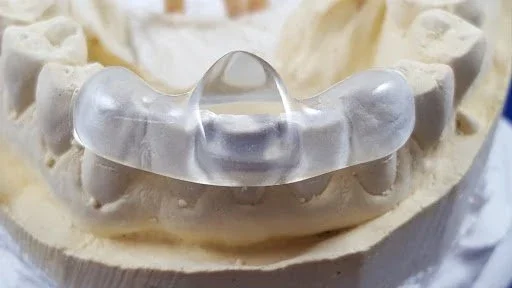
The NTI-tss is an anterior bite-stop appliance. Unlike a conventional full-coverage night guard, the traditional NTI design covers only a limited number of front teeth and prevents the posterior teeth from contacting normally while the appliance is engaged.
The FDA record identifies the original product as the NTI Tension Suppression System, submitted by NTI-TSS, Inc. It received a substantially equivalent decision under 510(k) number K010876 on June 20, 2001.
How Does the NTI-tss Device Work?
The NTI design creates contact at the anterior teeth while keeping the posterior teeth and canines out of occlusion. The intended effect is to reduce clenching intensity and associated muscular activity.
Current NTI-tss Plus materials similarly describe the appliance as an anterior device designed to reduce clenching forces.
Because only part of the dentition is covered, fit, monitoring, duration of use, and changes in the patient’s occlusion can be clinically important.
What Is the NTI-tss Designed to Treat?
FDA and current product information describe the NTI system primarily in connection with migraine and tension-type headaches and reduction of clenching-related muscular activity.
Later FDA documentation referencing the original NTI device also describes indications involving prophylactic treatment of medically diagnosed migraine pain and migraine-associated tension-type headaches through reduction of trigeminally innervated muscular activity.
Dentists may consider individual symptoms and diagnoses when deciding whether an occlusal appliance is appropriate.
Is the NTI-tss FDA Cleared?
Yes. The original NTI Tension Suppression System received FDA 510(k) clearance in 2001 under K010876. The FDA classified it as a mouthguard for migraine/tension headache and determined it substantially equivalent to a legally marketed predicate device.
FDA clearance is important regulatory information, but it does not mean a medical device cannot produce complications in individual patients.
Douglass v. NTI-TSS, Inc. Lawsuit Explained
Douglass v. NTI-TSS, Inc., 632 F. Supp. 2d 486 (D. Md. 2009), is a key documented case associated with NTI-tss litigation.
According to the court’s memorandum, Holly Douglass was fitted with a partial-coverage NTI mouth guard in April 2003. She later developed symptoms that included difficulty eating because her front teeth no longer contacted properly. Her dentist diagnosed a severe anterior open bite.
What Did the Plaintiff Allege?
Douglass alleged that she had not been adequately warned about the possibility of developing an anterior open bite.
Her lawsuit asserted multiple causes of action, including negligence, willful and wanton misconduct, strict products liability, breach of warranties, fraud, and negligent misrepresentation.
These were allegations contained in the complaint. The dismissal of the case did not constitute a trial finding that NTI caused her dental condition.
What Was the Alleged Anterior Open Bite Injury?
The complaint described a severe anterior open bite in which the upper and lower front teeth no longer contacted properly.
Douglass reportedly experienced changes in speech and difficulty eating. She alleged that the condition required substantial diagnostic and treatment services and caused physical and emotional injury.
Anterior open bite can involve complex dental or skeletal factors, so establishing the cause in an individual patient generally requires professional evaluation rather than simply showing that the person used an NTI device.
What Did the Court Decide in the NTI-TSS Lawsuit?
The U.S. District Court for the District of Maryland granted NTI-TSS, Inc.’s motion to dismiss.
The ruling focused substantially on procedural and pleading issues, including Maryland’s statute of limitations and whether remaining allegations were sufficient to state viable claims.
It therefore should not be described as a jury verdict determining that the device was either defective or non-defective.
Why Were the Plaintiff’s Claims Dismissed?
The court concluded that most claims were barred by Maryland’s statute of limitations.
The court found that Douglass had information by December 2004 suggesting a potential connection between the product and her open bite but did not bring the NTI action until December 2008. It also rejected her attempt to toll the limitations period based on alleged fraudulent concealment, including because the pleadings did not demonstrate sufficient diligence.
The decision illustrates why timing can become critical in product-liability cases.
NTI Night Guard Side Effects and Complications
Potential complications discussed in scientific literature, FDA reports, litigation, and patient reports include changes in occlusion, pressure on individual teeth, discomfort, tooth movement, and open bite.
A systematic review concluded that NTI-tss complications identified in the available literature predominantly related to single teeth or occlusion. The authors emphasized appropriate patient selection and compliance with follow-up appointments.
Can an NTI Night Guard Change Your Bite?
Bite changes have been reported in connection with NTI appliances.
The Douglass complaint involved an alleged severe anterior open bite, while the systematic review identified occlusal complications in the literature.
A patient’s bite can change for multiple reasons, however. Determining whether an appliance caused a particular change requires an assessment of baseline records, wear duration, appliance design, dental conditions, and other potential causes.
Can an NTI Device Cause an Anterior Open Bite?
Anterior open bite has been reported as a potential complication associated with NTI use.
The systematic review identified a case involving an anterior open bite after prolonged use, and the Douglass litigation specifically concerned an alleged open-bite injury.
Those reports demonstrate that the issue has been documented; they do not establish that every NTI user will experience an open bite.
Can an NTI Night Guard Cause Tooth Movement?
Tooth movement has been reported. One FDA MAUDE report submitted in 2016 described a patient reporting that teeth were shifting after use of an NTI splint.
MAUDE reports are surveillance information and cannot independently establish causation, incidence rates, or product defect. A dentist or orthodontist can compare current tooth positions with earlier photographs, models, scans, and X-rays when evaluating suspected movement.
Can an NTI Device Cause Tooth or Jaw Pain?
Some users report tooth, facial, or jaw discomfort, while other patients use NTI appliances specifically to reduce clenching-related pain.
Scientific evidence is mixed depending on the condition and comparator. A systematic review found some trials showing reduced muscular activity, while results for TMD outcomes differed among studies.
New or worsening pain deserves dental evaluation, particularly when accompanied by tooth mobility, bite changes, or difficulty chewing.
Can an NTI Night Guard Become Loose or Dislodged?
Because the traditional NTI-tss Plus is a relatively small anterior appliance, retention is an important fitting consideration.
Current product materials distinguish the anterior NTI-tss Plus from the full-arch OmniSplint, which was designed in part to address concerns associated with a smaller appliance.
A device that becomes noticeably looser should be evaluated rather than assumed to remain properly fitted.
NTI Night Guard and Bite Changes
Occlusion describes how the upper and lower teeth contact. Because the traditional NTI appliance provides only partial coverage, questions about occlusal change are especially relevant.
The published systematic review of NTI-tss evidence identified complications involving occlusion and individual teeth and recommended appropriate follow-up.
Why Can Partial-Coverage Appliances Affect the Bite?
A partial-coverage appliance does not provide equal coverage to every tooth. Some teeth contact the device while others remain out of occlusion.
Over time, forces on selected teeth and changes involving uncovered teeth may alter how the arches meet in susceptible patients. This is one reason clinicians monitor tooth position and occlusion during appliance therapy.
The exact mechanism and clinical significance vary by patient and appliance configuration.
Are Bite Changes Permanent?
Not necessarily. Some occlusal changes may improve after an appliance is discontinued or adjusted, while others may require restorative or orthodontic treatment.
Whether a change is reversible depends on factors such as the nature of tooth movement, duration of appliance use, periodontal health, skeletal relationships, and how long the altered bite has existed.
Anyone noticing persistent changes should obtain an individualized dental assessment rather than assuming the bite will automatically return to its prior position.
Does Long-Term NTI Use Increase the Risk of Occlusal Changes?
Long-term use is one reason regular monitoring matters with partial-coverage appliances.
Published literature has documented occlusal complications, while modern full-arch NTI OmniSplint marketing specifically emphasizes full coverage in addressing concerns associated with long-term use and posterior tooth changes.
That does not provide a precise risk percentage for every patient. Duration, fit, dental anatomy, compliance, and follow-up can all affect clinical outcomes.
NTI Night Guard Aspiration and Swallowing Concerns
The traditional NTI-tss Plus is much smaller than many full-arch guards. That naturally raises questions about whether a loose appliance could be swallowed or aspirated.
Current NTI OmniSplint materials specifically contrast its full-arch configuration with the smaller NTI-tss Plus and describe aspiration concerns as one reason for the full-coverage design.
Can an NTI Night Guard Be Swallowed?
A small oral appliance can potentially become dislodged, making ingestion a practical concern if retention is inadequate.
Online users have described suspected swallowing incidents, but individual social-media reports cannot establish how frequently such events occur or prove a design defect.
A missing appliance accompanied by choking, breathing difficulty, chest pain, swallowing difficulty, or significant abdominal symptoms warrants prompt medical attention.
Can an NTI Device Become Lodged in the Esophagus?
A swallowed foreign object can potentially become lodged in the esophagus, although the likelihood depends on its size, shape, orientation, and the individual patient.
A person who believes an oral appliance was swallowed and develops difficulty swallowing, drooling, chest discomfort, vomiting, breathing problems, or other concerning symptoms should seek medical evaluation.
Online anecdotes should not be used to determine whether a swallowed device has safely passed.
How Does Device Fit Affect This Risk?
Retention is central to reducing the chance that a small appliance will unexpectedly dislodge.
An NTI that has become loose because of wear, dental work, tooth movement, material changes, or an initial fitting problem should be reassessed. Current professional suppliers require dental impressions or digital scans for NTI appliances rather than treating the professional product as a generic one-size-fits-all guard.
NTI Night Guard FDA Status and Safety Reports
The NTI Tension Suppression System has a documented FDA regulatory history.
The FDA’s 510(k) database shows that NTI-TSS, Inc. submitted K010876 in March 2001 and received a substantially equivalent decision on June 20, 2001.
FDA databases also contain adverse-event reports associated with NTI devices. These reports are useful safety signals but are not equivalent to findings of legal liability.
When Was the NTI Tension Suppression System FDA Cleared?
The FDA decision date for the original NTI Tension Suppression System was June 20, 2001.
The application was handled through the traditional 510(k) pathway and reviewed by the dental panel.
A 510(k) clearance generally means the agency determined that the device was substantially equivalent to a legally marketed predicate for the relevant regulatory purposes.
What Was the NTI Device Cleared to Treat?
FDA records classify the device as a mouthguard for migraine/tension headache.
Related FDA documentation describes its indications in connection with prophylactic treatment of medically diagnosed migraine pain and migraine-associated tension-type headaches through reduction of trigeminally innervated muscular activity.
Current NTI-tss Plus materials likewise describe FDA clearance for prevention of migraine and tension-type headaches.
Have Adverse Events Been Reported With NTI Devices?
Yes. Adverse-event information involving NTI devices appears in the FDA MAUDE database.
For example, a 2016 report described tooth shifting and worsening pain following use of an NTI splint.
Importantly, MAUDE reports may be incomplete and can contain unverified information. Their presence does not establish that the device caused an event or reveal the incidence rate among all users.
Who Makes the NTI Night Guard?
The history of the NTI product involves several entities.
The original 2001 FDA record identifies NTI-TSS, Inc. as the applicant for the NTI Tension Suppression System. Trademark records later identify Boyd Research, Inc. as owner of NTI-TSS and NTI-TSS Plus marks. Current dental laboratories manufacture or supply NTI appliances to dental professionals.
Who Developed the NTI-tss Device?
The NTI concept is associated with dentist Dr. James Boyd. Current industry materials describe him as the creator of the original nociceptive trigeminal inhibition tension suppression system.
The design was developed around anterior contact intended to reduce clenching intensity and related muscular activity.
Who Owns the NTI-tss Trademark?
Trademark records identify Boyd Research, Inc. as the current owner of the registered NTI-TSS mark.
The trademark was originally associated with NTI-TSS, Inc. before ownership changed. Records likewise identify Boyd Research as owner of the NTI-TSS Plus trademark.
Trademark ownership is separate from determining who manufactured a particular appliance received by an individual patient.
Who Manufactures or Supplies NTI Devices Today?
Current professional dental suppliers include laboratories offering the NTI-tss Plus and NTI OmniSplint to dentists.
Glidewell currently markets both devices, and Crown World Dental also lists the NTI-tss Plus and OmniSplint in its professional appliance portfolio.
Patients investigating a specific device should check their dental records, laboratory prescription, invoice, packaging, or dentist’s records to identify who supplied that particular appliance.
NTI-tss vs. Traditional Night Guard
The major difference is coverage.
A traditional stabilization-style night guard commonly covers an entire dental arch. The NTI-tss Plus is an anterior appliance that covers a limited number of front teeth and keeps the posterior teeth out of contact.
That design difference affects both how the appliance works and the types of complications clinicians may monitor.
What Is the Difference Between an NTI and a Full-Coverage Night Guard?
An NTI-tss uses limited anterior contact to reduce clenching intensity. A conventional full-coverage guard distributes contact across a broader dental surface.
Full-coverage guards may be used primarily to protect teeth and manage occlusal forces, depending on their design. NTI appliances use anterior disclusion as a central functional feature.
Neither design is automatically appropriate for every patient.
Which Teeth Does an NTI-tss Cover?
The NTI-tss Plus covers the anterior teeth rather than an entire arch.
Current supplier materials state that the device may be prescribed for the upper or lower arch. Its design keeps the posterior teeth and canines out of occlusion.
The precise teeth covered and retention characteristics depend on the prescribed configuration and the patient’s anatomy.
How Do the Potential Risks Differ?
Partial coverage raises particular concerns involving localized force, tooth movement, posterior tooth changes, and occlusal alteration.
Full-coverage appliances avoid some partial-coverage mechanics but have their own potential problems, including discomfort, poor fit, material wear, and altered jaw symptoms.
The relevant comparison therefore depends on diagnosis, design, fit, intended treatment period, and clinical supervision.
NTI-tss vs. NTI OmniSplint
The NTI OmniSplint is a newer full-arch alternative that retains the anterior-disclusion concept while providing broader tooth coverage.
Glidewell describes the OmniSplint as covering both arches and reducing clenching forces while addressing concerns associated with aspiration, posterior tooth supereruption, and long-term use.
What Is the NTI OmniSplint?
The NTI OmniSplint is a dual full-arch occlusal appliance designed to reduce clenching intensity while maintaining anterior disclusion.
Current product information describes it as FDA cleared for prevention of migraine and tension-type headaches.
Unlike the smaller anterior NTI-tss Plus, it provides coverage across both dental arches.
How Is the OmniSplint Different From the NTI-tss Plus?
The principal distinction is coverage.
The NTI-tss Plus is a single-arch anterior device. Crown World lists it as a one-arch appliance, while the OmniSplint is listed as a two-arch design.
Both aim to reduce clenching intensity, but the OmniSplint extends material across the arches instead of relying on a small anterior appliance alone.
Why Does the OmniSplint Use Full-Arch Coverage?
Full-arch coverage was designed to address several concerns associated with smaller partial-coverage appliances.
Glidewell states that the OmniSplint’s design addresses concerns involving aspiration, posterior tooth supereruption, and long-term use while maintaining an anterior point-stop concept.
Those manufacturer statements describe design objectives and should not be interpreted as proof that complications are impossible.
NTI Night Guard Reviews and Patient Experiences
Patient experiences with NTI appliances vary substantially.
Some users report reduced headaches or clenching-related symptoms. Others describe discomfort, pressure on front teeth, bite changes, tooth movement, or dissatisfaction with treatment.
Clinical outcomes cannot be determined from review averages alone because diagnosis, appliance design, fit, wear schedule, follow-up, and underlying dental conditions differ among patients.
What Do Patients Report About NTI Night Guards?
Online discussions contain both favorable and unfavorable experiences.
Some people report long-term symptom relief, while others say they experienced front-tooth pressure, bite alteration, or limited improvement. Reddit discussions, for example, include users reporting years of successful use alongside others describing significant dental problems.
This variation is one reason individual dental monitoring is more informative than relying on another person’s experience.
What Complaints Are Associated With NTI Devices?
Common themes in online complaints include:
- Bite changes or an open bite
- Pressure or soreness in front teeth
- Tooth movement
- Jaw or facial discomfort
- Concerns about long-term wear
- Cost and insurance coverage
- Poor fit or difficulty adjusting to the appliance
Some of these concerns also appear in published literature or FDA reports, giving them more context than online anecdotes alone.
Are Online Reviews Evidence of a Product Defect?
No. Reviews can identify patterns worth investigating, but they do not prove that a product is defective.
A product-liability case normally requires evidence connecting a legally recognized defect or inadequate warning to the plaintiff’s injury. Medical or dental records, expert testimony, product information, and causation evidence can be far more important than online reviews.
Reviews also suffer from selection bias because people with unusually positive or negative experiences may be more likely to post.
NTI Night Guard Reddit Discussions
Reddit contains extensive discussions about NTI appliances, particularly in communities focused on TMJ disorders, bruxism, and dentistry.
The posts range from strong praise to serious complaints. That makes Reddit useful for identifying questions patients are asking, but not for determining complication rates or proving medical causation.
What Side Effects Do Users Discuss on Reddit?
Users have discussed open bites, front-tooth soreness, perceived tooth movement, jaw discomfort, clenching pressure, and concerns about supereruption.
Other users report successful long-term use and meaningful improvement in symptoms. One 2025 discussion, for example, included both a positive long-term experience and another user’s report of problems that led them back to a full-arch splint.
These are personal accounts, not controlled clinical evidence.
How Reliable Are Reddit Reports About NTI Night Guards?
Reddit reports have limited evidentiary value.
Posts generally cannot verify a person’s diagnosis, exact appliance, fit, treatment instructions, dental history, or whether another condition contributed to the outcome. They also do not provide a reliable denominator showing how many people used the device without problems.
They are best treated as anecdotal experiences that may suggest questions to discuss with a dentist.
How Much Does an NTI Night Guard Cost?
Patient prices vary because an NTI appliance may involve more than the laboratory fabrication fee.
A dentist may charge for examination, impressions or digital scanning, appliance delivery, adjustments, and follow-up visits. Current laboratory pricing provides some context: Crown World lists professional laboratory prices of approximately $131 for the NTI-tss Plus and $142 for the OmniSplint, but those are not necessarily the prices charged to patients.
What Factors Affect the Price of an NTI Night Guard?
The final patient cost may depend on:
- Dentist or specialist fees
- Geographic location
- Digital scanning or impressions
- Laboratory charges
- Number of adjustment visits
- Replacement or warranty terms
- Whether additional diagnostic work is required
Online patient discussions show quoted prices varying considerably, reinforcing that laboratory cost and retail dental treatment cost are not the same.
Does Dental Insurance Cover an NTI Device?
Coverage depends on the insurance policy, diagnosis, billing code, medical necessity requirements, deductible, and whether the provider is in network.
Some patients report that their plans did not cover the appliance, but an individual should verify benefits directly with the insurer before relying on another patient’s experience.
A dental office may also be able to submit a pre-treatment estimate.
Where Can You Buy an NTI Night Guard?
Professional NTI-tss Plus appliances are offered through dental laboratories and supplied to dental professionals.
Current Glidewell pricing is explicitly available to dental professionals, and Crown World requests full-arch impressions or digital scans and bite information for fabrication.
That process differs substantially from buying a generic boil-and-bite mouthguard.
Do You Need a Dentist to Get an NTI-tss Device?
For the professional NTI-tss Plus system described by major dental laboratories, a dentist or other appropriate dental professional is involved in prescribing, fitting, and monitoring the appliance.
That clinical involvement matters because the device changes occlusal contact and may require adjustments or follow-up.
Professional evaluation can also determine whether symptoms attributed to grinding or clenching require a different diagnosis or treatment.
Can You Buy an NTI Night Guard Online?
Consumers can find various anterior guards and products marketed online, but an online mouthguard should not automatically be assumed to be the same professional NTI-tss Plus device.
Product design, materials, fit, regulatory status, and clinical supervision may differ substantially.
When comparing products, consumers should verify the manufacturer, exact model, intended use, FDA status where relevant, and whether professional fitting is required.
Who May Be at Risk of NTI Night Guard Complications?
Risk cannot be determined from one factor alone. Dental anatomy, periodontal health, bite relationships, existing restorations, appliance retention, duration of wear, and follow-up all matter.
Current supplier information, for example, identifies advanced periodontal disease as a contraindication for NTI appliances and provides arch-selection considerations based on overbite, overjet, missing incisors, veneers, and retention.
Who May Not Be a Good Candidate for an NTI Device?
A person may require additional evaluation when there is significant periodontal disease, mobile teeth, unusual bite relationships, extensive anterior restorations, missing incisors, or other conditions affecting retention or force distribution.
The appropriate choice depends on the specific appliance design and clinical findings.
Patients should not self-diagnose candidacy based solely on an online checklist.
What Symptoms Should NTI Users Discuss With a Dentist?
Users should consider contacting their dentist if they notice:
- Front teeth no longer touching normally
- New spaces or tooth movement
- Persistent tooth soreness
- Loose teeth
- New or worsening jaw pain
- Difficulty chewing
- An appliance becoming unusually loose
- Significant changes in how the teeth meet
Early documentation can help distinguish temporary morning changes from a persistent occlusal problem.
What Should You Do If an NTI Night Guard Changes Your Bite?
A noticeable bite change deserves professional assessment, particularly if it persists after the appliance has been removed.
Patients can help the evaluation by documenting when the change began, how frequently the NTI was worn, and whether symptoms have progressed. Previous dental records can provide an important baseline.
Should You Stop Wearing an NTI Device?
A patient who develops a significant bite change, persistent pain, tooth mobility, or another concerning symptom should promptly contact the prescribing dentist before continuing routine use.
Whether the appliance should be stopped, modified, or replaced depends on the patient’s circumstances.
Urgent symptoms such as breathing or swallowing difficulty require appropriate medical attention rather than waiting for a routine dental appointment.
What Dental Records Should You Keep?
Potentially useful records include:
- Pre-treatment and current X-rays
- Intraoral scans or dental models
- Clinical photographs
- Treatment notes
- Appliance prescriptions
- Laboratory records
- Informed-consent documents
- Receipts and invoices
- Communications with the dental office
- Orthodontic or restorative treatment estimates
These records can help both clinicians and, where relevant, attorneys understand the chronology.
When Should You Seek a Second Dental Opinion?
A second opinion can be useful when symptoms persist, a substantial bite change has developed, extensive corrective treatment is recommended, or the explanation for the problem remains uncertain.
An orthodontist, prosthodontist, or dentist experienced with occlusion may provide additional assessment depending on the problem.
Obtaining another opinion does not itself mean the original treatment was negligent.
Can You File an NTI Night Guard Lawsuit?
A person who believes an NTI appliance caused a serious injury can consult a product-liability attorney, but injury alone does not automatically create a successful lawsuit.
Potential claims could involve alleged design defects, manufacturing defects, inadequate warnings, negligence, warranty theories, or professional dental negligence, depending on the facts and jurisdiction.
The Douglass decision also demonstrates how statutes of limitations can defeat claims before a court reaches their underlying merits.
What Could Be Required to Bring a Product Liability Claim?
Requirements vary by state, but a claimant may need to establish matters such as:
- Identification of the product and responsible entity
- A legally actionable defect or inadequate warning
- Actual injury or compensable loss
- A causal connection between the product and injury
- Timely filing within the applicable limitations period
Some cases also require qualified expert testimony to establish medical or dental causation.
What Evidence May Be Needed for an NTI Night Guard Claim?
Evidence may include the appliance itself, photographs, dental records before and after treatment, scans, X-rays, treatment notes, informed-consent documents, receipts, communications, and records of corrective care.
Preserving the actual appliance can be particularly important. A claimant generally should not alter, discard, or destroy a device that may become evidence.
Expert review may be needed to distinguish appliance-related changes from preexisting or unrelated dental conditions.
How Does the Statute of Limitations Affect a Potential Claim?
Every jurisdiction imposes deadlines for filing civil claims, but the length of those deadlines and when they begin to run vary.
Douglass is a useful example. The court determined that most of the plaintiff’s claims were untimely and rejected arguments that alleged concealment extended the filing period.
Someone considering litigation should therefore obtain jurisdiction-specific legal advice rather than relying on a generic online deadline.
NTI Night Guard Lawsuit Settlement and Compensation
There is no verified nationwide NTI Night Guard settlement fund or standardized payout schedule identified in the sources reviewed as of September 2026.
This distinction matters because search results may contain speculative settlement estimates. Without an actual settlement agreement, court approval, or claims administrator, such figures should not be presented as established compensation amounts.
An individual lawsuit, if legally viable, would be evaluated according to its own evidence and damages.
Has an NTI Night Guard Settlement Been Announced?
No nationwide settlement was verified through the court, FDA, and other public sources reviewed for this article.
The documented Douglass case ended with dismissal rather than a publicly established class settlement.
Consumers should verify any purported settlement by looking for a case name, court, docket number, official administrator, and court-approved documents.
Is There an NTI Night Guard Settlement Amount?
There is no verified standardized NTI Night Guard settlement amount or payout table.
Websites that provide estimated compensation ranges may be discussing hypothetical damages rather than money available under an actual settlement.
The value of an individual product-liability claim, where legally supportable, depends on the evidence, severity of injury, treatment expenses, causation, jurisdiction, and other case-specific factors.
What Damages Could Be Sought in an Individual Product Liability Case?
Depending on applicable law and proof, claimed damages might include past and future dental treatment expenses, lost income, pain and suffering, or other losses resulting from an established injury.
More serious cases involving orthodontic treatment, restorative procedures, or other corrective care could involve greater documented expenses.
Whether any category is recoverable depends on the governing law and the evidence linking those losses to the alleged wrongful conduct.
Read: Liletta IUD Lawsuit
Read: Care Access Research Lawsuit
Read: Hairitage by Mindy Lawsuit
Read: Rocket Lawyer
Read: Meaningful Beauty Lawsuit
Read: Native Soap Lawsuit
Read: Goonzquad Lawsuit
Frequently Asked Questions
Is there an NTI Night Guard lawsuit?
Yes, documented litigation exists, including Douglass v. NTI-TSS, Inc. However, reviewed sources do not establish a current nationwide NTI class action in 2026.
What happened in Douglass v. NTI-TSS, Inc.?
The plaintiff alleged an NTI device contributed to severe open bite. The federal court dismissed the case, largely because claims were time-barred.
Can an NTI night guard permanently change your bite?
Bite changes and open bite have been reported with NTI use. Whether a particular change becomes permanent depends on individual dental and treatment factors.
What are the side effects of an NTI mouth guard?
Reported concerns include tooth soreness, occlusal changes, tooth movement, open bite, discomfort, and localized dental complications, although individual experiences vary.
Is the NTI-tss device FDA cleared?
Yes. The original NTI Tension Suppression System received FDA 510(k) clearance on June 20, 2001, under clearance number K010876.
Final Thoughts
The NTI Night Guard Lawsuit search topic combines a documented historical product-liability case with broader questions about reported dental complications. Douglass v. NTI-TSS, Inc. involved allegations of a severe anterior open bite, but the case was dismissed primarily on limitations and pleading grounds rather than resolved through a product-defect trial.
Scientific literature and FDA adverse-event records show that occlusal changes, tooth-related complications, and pain have been reported with NTI devices. Those reports deserve context: they do not establish that every NTI device is defective or that the appliance caused every reported injury.
As of September 2026, no nationwide NTI Night Guard class settlement or verified standard payout schedule was identified in the sources reviewed. Anyone experiencing a significant bite change should seek appropriate dental evaluation, preserve relevant records, and obtain individualized legal advice if a serious injury may support a claim.