
Rael has attracted growing online attention from consumers searching for information about a possible Rael Tampons Lawsuit, settlements, product safety, and organic-labeling claims. However, the documented litigation involving Rael requires an important distinction: the major organic-labeling case concerns period underwear, pads, and panty liners rather than Rael tampons themselves.
Separate litigation has also challenged how Rael marketed Natural Feminine Wipes. These cases have fueled broader searches about Rael products, including questions about payouts, PFAS, recalls, ingredients, and whether tampon customers can file claims.
This guide separates verified court proceedings from online speculation and explains the current legal status, the products actually named in the litigation, and what consumers should know before relying on settlement or compensation claims found online.
What Is the Rael Tampons Lawsuit?
The phrase “Rael Tampons Lawsuit” is commonly used online as a broad search term, but it can create the impression that a major lawsuit specifically targeting Rael tampons has been filed. The publicly documented litigation reviewed for this article does not support that characterization.
One significant case is Environmental Democracy Project v. Rael, Inc., an action challenging organic-related representations involving Rael period underwear, pads, and panty liners. The California Court of Appeal described allegations that certain products were sold as “organic” or as containing organic ingredients even though, according to the plaintiff, their composition did not satisfy applicable organic standards.
Another case, Blansette v. Rael, Inc., concerned Natural Feminine Wipes and allegations that the term “natural” was misleading because the wipes allegedly contained synthetic ingredients.
Consumers should therefore distinguish a search for a “Rael tampons lawsuit” from the actual products and allegations identified in court filings.
Rael Tampons Lawsuit Update 2026
As of October 2026, the most significant ongoing Rael litigation identified in public court records is the California organic-labeling dispute.
The California Court of Appeal reversed a trial-court judgment in November 2025 and held that the California Organic Food and Farming Act, or COFFA, could apply to products marketed as organic, including the feminine hygiene products involved in the case. Rael subsequently petitioned the California Supreme Court for review.
The California Supreme Court granted review on March 18, 2026. Its docket identifies the central issue as whether COFFA applies to personal-care products marketed as organic. As of September 2026, the matter remained listed among civil issues pending before the California Supreme Court.
This does not mean a court has finally determined that Rael violated California law. Supreme Court review remains part of the legal process.
Is There Actually a Lawsuit Over Rael Tampons?
Based on the court records reviewed, the prominent cases driving current searches are not specifically lawsuits alleging that Rael tampons are defective, contaminated, or unlawfully labeled.
The Environmental Democracy Project litigation identifies period underwear, organic cotton cover pads, and organic cotton cover panty liners. The Blansette action centered on Natural Feminine Wipes.
That distinction matters because search terms can become broader than the underlying litigation. A consumer seeing references to a “Rael lawsuit” should not automatically assume every Rael menstrual-care product is involved.
Rael tampons are separately regulated menstrual devices. FDA records identify the Rael Tampon as an unscented menstrual tampon and show that it received a substantially equivalent determination through the 510(k) process in July 2019.
Why Are People Searching for a Rael Tampons Lawsuit?
Several overlapping issues appear to be driving these searches.
Consumers may encounter:
- Reports about Rael’s organic-labeling litigation.
- Information about the Natural Feminine Wipes case.
- Online discussions about menstrual-product ingredients.
- Broader concerns about PFAS and metals in period products.
- Searches for settlements, payouts, and claim forms.
- Confusion between Rael pads, tampons, liners, underwear, and wipes.
Search results can combine these separate subjects even though they do not necessarily involve the same product or legal allegations.
The safest approach is to identify the case name, court, case number, products involved, and current procedural status before treating an online claim as established fact.
What Lawsuits Have Been Filed Against Rael?
Two documented proceedings are particularly relevant to consumer searches.
Environmental Democracy Project v. Rael, Inc. concerns alleged violations of California organic-labeling requirements involving period underwear, pads, and panty liners. The case eventually reached the California Supreme Court after the Court of Appeal reversed a judgment favoring Rael.
Blansette v. Rael, Inc. was filed in federal court in January 2023. It challenged allegedly misleading “natural” representations associated with Natural Feminine Wipes. The plaintiff asserted California consumer-protection and related claims.
These are separate proceedings involving different products, legal theories, and procedural histories.
Environmental Democracy Project v. Rael, Inc. Explained
Environmental Democracy Project, or EDP, challenged Rael’s marketing of certain feminine hygiene products using organic-related terminology.
According to the appellate opinion, EDP alleged that Rael sold products represented as “organic” or containing organic materials even though the products allegedly failed to comply with requirements imposed by California’s organic-products law.
The Alameda County Superior Court initially entered judgment on the pleadings for Rael. Its reasoning was that COFFA did not apply to the personal-care products at issue.
The Court of Appeal disagreed and reversed. It interpreted the statute more broadly, concluding that COFFA applied to products marketed as organic, including the feminine hygiene products involved.
Rael then sought California Supreme Court review.
Who Filed the Lawsuit Against Rael?
Environmental Democracy Project filed the action against Rael, Inc.
The Court of Appeal described EDP as a California nonprofit organization focused on protecting consumers from allegedly deceptive environmental claims concerning consumer products.
The lawsuit sought to challenge Rael’s alleged sale and advertising of certain products as organic or as containing organic ingredients.
When Was the Lawsuit Filed?
The underlying Alameda County Superior Court matter carries case number 22CV019973, reflecting litigation that began in 2022.
After the trial court entered judgment in March 2024, EDP appealed. California appellate records show that the notice of appeal was filed on April 29, 2024.
The Court of Appeal issued its published opinion on November 26, 2025.
Which Rael Products Are Involved?
The appellate decision discusses three principal product categories:
- Organic cotton cover period underwear.
- Organic cotton cover pads.
- Organic cotton cover panty liners.
The allegations concerned how these products were represented as organic or as containing organic materials.
Importantly, the appellate opinion’s discussion of the challenged products should not automatically be extended to Rael’s entire product catalog.
What Does the Lawsuit Allege?
EDP alleged that certain Rael products were marketed in ways that did not comply with California organic-product requirements.
According to the appellate record, the complaint alleged that some products contained lower percentages of certified organic material than required for particular organic representations and included other components that the plaintiff argued were inconsistent with applicable organic standards.
Those are allegations made by the plaintiff. They should not be described as a final judicial finding that Rael engaged in unlawful labeling.
What Are the Rael Organic Labeling Allegations?
The organic-labeling dispute centers on whether Rael’s representations concerning certain feminine hygiene products were permissible under California law.
EDP’s allegations focused both on the amount of certified organic material and on the presence of other components in finished products.
The dispute also presents a broader legal question: whether COFFA applies to personal-care products of this type at all.
That statutory issue became especially important because the trial court and Court of Appeal reached different conclusions. The California Supreme Court accepted the case to address whether COFFA applies to personal-care products marketed as organic.
Rael Organic Cotton Cover Pads
Rael’s organic cotton cover pads are specifically discussed in the Environmental Democracy Project case.
According to the allegations quoted in the appellate materials, the pads contained less than 70 percent certified organic materials while being marketed with organic-related representations. The plaintiff also challenged other materials contained in the finished product.
This allegation concerns labeling compliance. It does not, by itself, establish that the pads are unsafe or defective.
Rael Organic Cotton Panty Liners
The lawsuit also addressed organic cotton cover panty liners.
EDP alleged that the liners were marketed with representations involving certified organic cotton while only a portion of the finished product consisted of organically grown cotton.
Again, the dispute concerns what organic labeling rules require when a finished personal-care product contains both organic cotton and other materials.
Rael Period Underwear
Period underwear was another product category identified in the litigation.
The complaint challenged organic-related representations associated with the product’s cotton cover and overall composition.
The case does not establish that all components of a product labeled with an organic-cotton claim must themselves be organic. Rather, the parties dispute how California organic law applies to the particular representations and products at issue.
Alleged Organic Material Percentage Issues
A central allegation is that certain finished products did not contain the percentage of certified organic material that EDP believed was required for the representations used.
The percentage issue matters because different organic statements can carry different regulatory implications.
Whether those requirements legally apply to personal-care products is precisely part of the dispute now before the California Supreme Court.
Synthetic and Non-Organic Material Allegations
EDP also alleged that some products contained synthetic, nonagricultural, or non-organically produced components.
The presence of those components is relevant to the plaintiff’s labeling theory. It should not be interpreted as proof that those materials are inherently dangerous.
The case concerns compliance with organic-labeling rules, not a judicial determination that synthetic components caused consumers physical injury.
Does the Organic Labeling Lawsuit Include Rael Tampons?
The key products identified in the Environmental Democracy Project appellate opinion are period underwear, pads, and panty liners.
Rael tampons should therefore not be described as a confirmed target of that organic-labeling action based solely on the available appellate decision.
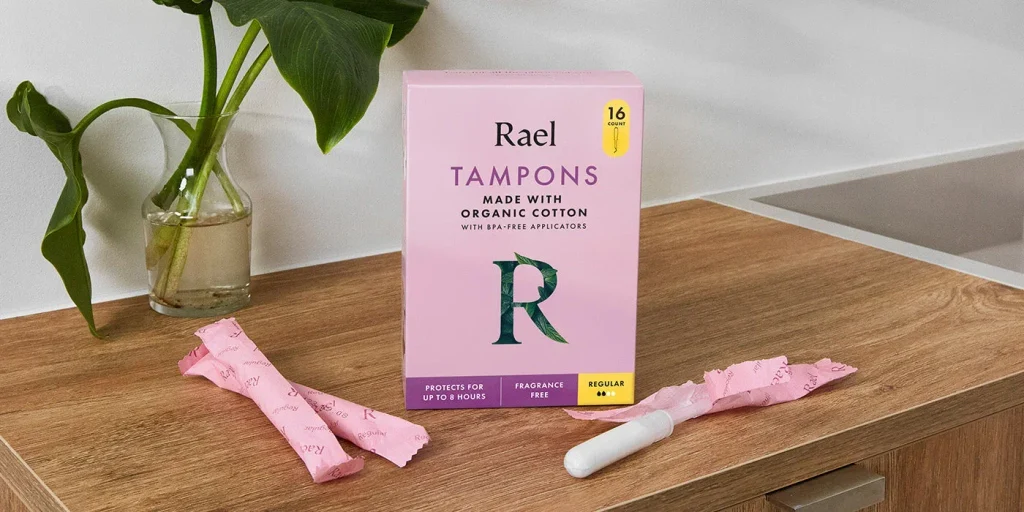
Rael does sell tampons made with organic cotton. FDA documentation for the Rael Tampon describes an unscented menstrual tampon with a 100% organic cotton absorbent pledget, withdrawal cord, and applicator.
That product information is separate from the allegations made in the EDP litigation.
What Did the Trial Court Initially Decide?
The Alameda County Superior Court granted judgment on the pleadings in favor of Rael.
The trial court concluded that COFFA did not regulate the feminine hygiene products at issue because it interpreted the law as applying to specified categories such as agricultural products, cosmetics, and pet food rather than these personal-care products.
That ruling did not resolve factual questions about product composition after a trial. Instead, it disposed of the case based on the court’s interpretation of the governing statute.
EDP appealed that decision.
What Did the California Court of Appeal Decide in 2025?
On November 26, 2025, California’s First District Court of Appeal reversed the trial court.
The appellate court concluded that COFFA applies to products sold as organic or represented as containing organic materials, including the feminine hygiene products involved in the litigation.
A modified opinion was issued on December 18, 2025. The modification did not change the judgment, and Rael’s petition for rehearing was denied.
The appellate ruling did not amount to a final finding that Rael had violated the statute. It addressed the threshold question of whether the statute could apply.
Rael Lawsuit 2026: California Supreme Court Review
The litigation entered another stage when Rael sought review by the California Supreme Court.
Rael filed its petition for review on January 5, 2026. The California Supreme Court granted the petition on March 18, 2026 under case number S294668.
The case therefore remains important not merely for Rael but also for the interpretation of California organic-labeling law as applied to personal-care products.
As of September 2026, the California Supreme Court continued to identify the issue as pending.
Why Did Rael Ask the California Supreme Court to Review the Case?
Rael sought further review after losing the statutory-interpretation issue in the Court of Appeal.
The dispute concerns the reach of COFFA and whether the statute applies to personal-care products marketed as organic.
Because the Court of Appeal’s interpretation differed from the position accepted by the trial court, Supreme Court review provides an opportunity for California’s highest court to clarify the governing rule.
When Did the California Supreme Court Grant Review?
The California Supreme Court granted Rael’s petition on March 18, 2026.
The official docket lists Environmental Democracy Project as plaintiff and appellant and Rael, Inc. as defendant and respondent.
Granting review means the Supreme Court agreed to consider the legal issue. It does not mean the court agreed with either party’s ultimate position.
What Legal Question Is the Supreme Court Considering?
The California Supreme Court’s published pending-issues document states the question directly: whether the California Organic Food and Farming Act applies to personal-care products marketed as organic.
That issue determines whether the organic-labeling provisions relied upon by EDP can govern the types of products challenged in the lawsuit.
The Supreme Court’s eventual interpretation could determine what happens next in the underlying litigation.
Has the Supreme Court Ruled That Rael Violated the Law?
No.
Granting review is not a finding of liability. As of the latest court information reviewed for this article, the California Supreme Court was considering the statutory question and had not issued a final merits decision declaring that Rael violated COFFA.
Consumers should therefore avoid treating the Court of Appeal decision or Supreme Court review as proof that Rael has been found legally liable for the underlying labeling allegations.
Blansette v. Rael, Inc. Explained
Blansette v. Rael, Inc. was a separate federal consumer lawsuit filed on January 3, 2023 in the U.S. District Court for the Northern District of California.
Plaintiff Sarah Blansette alleged that Rael misleadingly marketed Natural Feminine Wipes as “natural” despite allegedly using multiple synthetic ingredients.
The lawsuit asserted claims under California consumer-protection statutes and unjust enrichment.
Court records show that the parties later filed a stipulated dismissal in July 2023. The dismissal filing described the claims asserted in the case and ended the federal action.
What Products Were Involved?
The original complaint specifically identified Rael Natural Feminine Wipes.
Although the complaint used broader language concerning Rael cosmetic, hygiene, and beauty products, its defined product at filing specifically included Natural Feminine Wipes.
Consumers should not convert those allegations into claims about Rael tampons, pads, or every product sold under the brand unless a filing actually includes them.
Why Were Rael Feminine Wipes Called “Natural”?
The plaintiff challenged packaging and marketing that allegedly led reasonable consumers to understand the wipes as natural products.
Blansette argued that consumers value products perceived as natural and may pay more for them.
Her legal theory was that the representations were misleading because the formulation allegedly contained ingredients characterized in the complaint as synthetic.
These were plaintiff allegations rather than established findings following a trial.
What Synthetic Ingredients Did the Complaint Identify?
The complaint identified several ingredients that the plaintiff characterized as synthetic, including:
- Phenoxyethanol.
- Polysorbate 20.
- Sodium benzoate.
- Citric acid.
- Caprylyl glycol.
- Ethylhexylglycerin.
- 1,2-hexanediol.
- Butylene glycol.
The presence of an ingredient described as synthetic does not independently establish that a product is unsafe. The lawsuit’s theory concerned whether marketing the wipes as “natural” was misleading.
What Consumer Protection Claims Were Filed?
The stipulated dismissal identifies claims for alleged violations of California’s Unfair Competition Law, False Advertising Law, Consumer Legal Remedies Act, and unjust enrichment.
These causes of action generally permit consumers to challenge allegedly deceptive or misleading commercial practices when the statutory requirements are satisfied.
The filing of those claims does not establish that Rael committed the alleged violations.
Is Blansette v. Rael a Tampon Lawsuit?
No. The documented complaint focused on Natural Feminine Wipes.
That distinction is important because Rael sells multiple menstrual, intimate-care, skincare, and wellness products. Litigation involving one item should not automatically be described as litigation concerning another.
The Blansette case also should not be confused with Environmental Democracy Project’s organic-labeling litigation. They involved different plaintiffs, courts, products, and legal theories.
Rael Pads Lawsuit Explained
The phrase “Rael pads lawsuit” more closely corresponds to the Environmental Democracy Project litigation because organic cotton cover pads are specifically identified in that case.
EDP alleges that Rael’s organic-related marketing for those pads failed to comply with California organic-labeling requirements.
The legal dispute does not primarily allege that pads physically injured consumers. Instead, it challenges how their organic composition was represented.
The California Supreme Court is now reviewing whether COFFA applies to personal-care products marketed as organic, making the statutory question central to the future of the case.
What Is the Difference Between the Rael Pads and Tampons Lawsuit Searches?
The primary difference is the connection to documented litigation.
Rael pads are expressly discussed in the Environmental Democracy Project case. Rael tampons are not among the principal challenged products identified in the appellate opinion.
Consumers searching “Rael tampons lawsuit” may still encounter the pads litigation because search engines associate both with the same period-care brand.
For legal accuracy, however, a broad search query should not be treated as evidence that a particular product has been sued over.
Rael Pads Lawsuit Outcome: Has a Final Decision Been Reached?
No final resolution of the organic-labeling dispute had been reached as of the latest 2026 records reviewed.
The trial court originally ruled for Rael. The Court of Appeal reversed that decision in November 2025. Rael then obtained California Supreme Court review in March 2026.
As of September 2026, the California Supreme Court continued to list the statutory question among its pending civil issues.
Accordingly, the appellate history should not be described as a final determination that consumers are entitled to money or that Rael has definitively violated California law.
Rael Tampons Lawsuit Payout: Is Compensation Available?
There is no verified court-approved Rael tampon settlement identified in the reviewed records that currently provides a general compensation program for tampon purchasers.
A lawsuit filing does not automatically create a payout. Compensation generally requires a settlement, judgment, or another legally recognized resolution establishing who qualifies and how claims are handled.
The Environmental Democracy Project litigation remains under Supreme Court review and is not a court-approved consumer settlement program.
Consumers should be cautious with websites or social posts claiming that ordinary Rael tampon purchasers can currently submit a settlement claim unless the information can be verified through court records or an authorized settlement administrator.
Has Rael Reached a Class Action Settlement?
The reviewed records do not establish a current court-approved nationwide class settlement covering Rael tampon purchasers.
The EDP case is an organic-labeling action currently under California Supreme Court review.
The Blansette federal action was a proposed class case, but court records show a stipulated dismissal filed in July 2023. The dismissal itself does not establish a classwide compensation fund.
A genuine class action settlement typically produces court notices, defined class criteria, deadlines, administrator information, and approval proceedings.
Is There a Rael Tampons Settlement Amount?
No verified Rael tampon settlement amount is established by the court records reviewed for this article.
Online dollar figures should therefore be treated cautiously unless they can be traced to an actual settlement agreement, judicial order, or authorized claims administrator.
Settlement amounts can also be misleading when they refer to unrelated brands or cases involving similar products.
Before repeating a figure, consumers should verify the exact case name and court docket associated with it.
Is There a Rael Tampons Claim Form?
No verified court-authorized Rael tampon claim form was identified in connection with the litigation discussed here.
A legitimate class settlement claim form normally identifies:
- The exact lawsuit.
- The settlement administrator.
- Who qualifies.
- Covered purchases or dates.
- Filing deadlines.
- Required documentation.
- Court approval information.
Consumers should avoid providing Social Security numbers, banking credentials, passwords, or unnecessary personal information to unofficial sites claiming to process Rael settlement payments.
Can Rael Customers Join a Class Action Lawsuit?
There is no general rule allowing every Rael customer to simply “join” the documented litigation.
Eligibility in a class action depends on how a proposed or certified class is defined. If a case settles, the settlement agreement and court-approved notice normally explain who is included and whether a claim form is necessary.
The Environmental Democracy Project case is not presently a general compensation program for anyone who purchased a Rael product.
Consumers with individual legal concerns can consult a qualified attorney about their circumstances rather than relying on social-media eligibility claims.
Is There a Rael Settlement Payout Date?
No verified payout date exists for a Rael tampon settlement based on the cases discussed here.
Payout dates become meaningful only after an actual settlement exists, the required approval process occurs, claims are evaluated, and any appeals or other conditions are addressed.
Because the major organic-labeling case remained before the California Supreme Court in 2026, consumers should not interpret online “payout dates” as official without checking the underlying court documents.
Rael Tampons Ingredients
Rael tampons have their own regulatory and product documentation separate from the organic-labeling lawsuit.
The FDA’s 510(k) summary describes the Rael Tampon as a traditional unscented menstrual tampon made with a 100% organic cotton absorbent pledget, withdrawal cord, and applicator. It was cleared in Regular and Super absorbencies.
Current product formulations can change, so consumers should rely on the packaging for the particular product they purchase when checking materials or ingredients.
What Is the Absorbent Material Made From?
The FDA’s 2019 510(k) summary describes the absorbent pledget as 100% organic cotton.
The pledget is the absorbent portion inserted during use.
The regulatory documentation also describes the tampon as unscented and identifies its intended purpose as absorbing menstrual or other vaginal discharge.
What Materials Are Used in Rael Tampons?
Public product information lists certified organically grown cotton for the absorbent material, cover, and withdrawal cord.
Other listed components can include cotton sewing thread, water-repellent wax associated with the string or thread, an applicator, and an individual wrapper.
Because manufacturing specifications can change, the label on the current package remains the best product-specific source.
Are Rael Tampons Fragrance-Free?
FDA documentation classifies the Rael Tampon as an unscented menstrual tampon.
Rael’s current product information also describes its tampons as unscented and says they avoid synthetic fragrances.
Consumers with allergies or sensitivities should nevertheless review current packaging because formulations and manufacturing details can change.
Are Rael Tampons Made With Organic Cotton?
Yes. FDA documentation for the product describes a 100% organic cotton absorbent pledget, while Rael currently markets its tampon core as certified organic cotton.
This should not be confused with the EDP allegations concerning the overall composition and labeling of other Rael products.
Different products can contain different materials and use different organic-related representations.
Rael Tampons Applicator
Rael offers tampon products with applicators designed to assist insertion.
The FDA 510(k) summary describes an applicator with a rounded tip, while current Rael product information identifies a BPA-free plastic applicator for at least some current tampon products.
Applicator material is separate from the absorbent cotton portion of the tampon.
What Is the Applicator Made From?
Current Rael product information describes the applicator on its Super Tampons Made With Organic Cotton as BPA-free plastic.
Consumers should check the exact package because Rael may sell different configurations or update product specifications.
The applicator should not be confused with the tampon’s absorbent core.
Are Applicator Materials Part of the Rael Lawsuits?
The principal lawsuits discussed in this article do not establish a legal claim that Rael’s tampon applicators are defective or unlawfully marketed because of their materials.
The Environmental Democracy Project case concerns organic-related representations for other feminine hygiene products.
The Blansette case involved Natural Feminine Wipes.
Claims about tampon applicators should therefore be evaluated separately rather than attributed to those lawsuits.
Have Rael Tampons Been Recalled?
The FDA records reviewed for this article identify the Rael Tampon’s 510(k) clearance but did not establish that the litigation discussed here resulted from a Rael tampon recall.
FDA recall databases contain recalls involving other tampon brands and products, so a generic search for “tampon recall” can produce unrelated results. For example, FDA records in 2025–2026 identify recalls involving Daye and other feminine-care products rather than establishing a Rael recall.
Consumers concerned about a specific lot should check current FDA recall information and the manufacturer’s notices.
Are Rael Tampons Safe to Use?
FDA records show that the Rael Tampon received a substantially equivalent determination in 2019 as a Class II unscented menstrual tampon.
That regulatory status should not be interpreted as a guarantee that no individual will ever experience irritation or another adverse event.
All tampons also carry important usage considerations, including the risk of toxic shock syndrome. Users should follow package directions, select appropriate absorbency, change tampons as directed, and seek medical attention for concerning symptoms.
Questions about individual medical suitability are best addressed with a healthcare professional.
Does the Rael Lawsuit Claim Its Tampons Are Unsafe?
The documented lawsuits discussed here should not be characterized as findings that Rael tampons are unsafe.
Environmental Democracy Project focuses on organic-labeling requirements involving other products. Blansette challenged “natural” marketing of feminine wipes.
Neither dispute establishes that Rael tampons caused physical injuries or that a court determined the tampons are dangerous.
This distinction is particularly important because labeling litigation and product-injury litigation involve different legal questions and evidence.
Are PFAS Claims Part of the Rael Lawsuit?
The central allegations in the documented EDP and Blansette cases are not PFAS claims.
EDP challenges organic-related marketing under California law. Blansette challenged allegedly misleading “natural” representations concerning wipes.
Online discussions may connect Rael with broader concerns about PFAS in menstrual products, but those discussions should not be merged with court allegations unless the actual complaint or subsequent filing makes such a claim.
A concern discussed online is not equivalent to a pleaded allegation or judicial finding.
Have Courts Found Harmful PFAS in Rael Tampons or Pads?
The court decisions and filings reviewed for the cases discussed here do not establish a judicial finding that harmful PFAS were detected in Rael tampons or pads.
The Environmental Democracy Project opinion concerns organic-labeling law and product composition in that regulatory context, not a finding of PFAS contamination.
Consumers should distinguish laboratory testing, media reporting, advocacy research, lawsuits, and final court findings. Each carries a different evidentiary meaning.
Are Heavy Metals Part of the Rael Lawsuit?
Heavy-metal contamination is not a central allegation in the documented Rael cases covered here.
Research and public discussion about metals in menstrual products can generate searches connecting individual brands to broader industry concerns. However, general research should not be transformed into a brand-specific legal allegation without supporting evidence.
The Environmental Democracy Project case concerns organic labeling, while Blansette concerned “natural” marketing of wipes.
No inference about Rael tampon contamination should be drawn solely from those lawsuits.
Rael Pads Lawsuit Reddit Discussions
Reddit and other discussion platforms can provide insight into what consumers are worried about, but they are not substitutes for court records.
Posts about Rael may combine product reviews, ingredient concerns, personal experiences, rumors about PFAS, and genuine litigation updates.
That mixture makes source verification especially important.
When a post mentions a settlement or lawsuit, consumers can search for the actual case name and compare the claim with court dockets before relying on it.
What Are Consumers Saying About Rael Products?
Consumer discussions about period-care products commonly address comfort, absorbency, ingredients, irritation, packaging, price, applicators, leakage, and preferences for organic cotton.
Individual experiences can be useful when evaluating ordinary product preferences.
However, a review does not prove that a product is defective or that a manufacturer violated consumer-protection laws.
Medical complaints and legal allegations require more careful evaluation than ordinary product opinions.
Why Should Reddit Claims Be Separated From Court Records?
Reddit posts are user-generated statements that generally have not been tested through litigation.
Court records identify actual parties, allegations, motions, rulings, and procedural outcomes.
For example, an online user might say there is a “Rael tampon settlement,” while an actual docket may show only an unrelated labeling case involving pads.
Checking primary legal records prevents those distinctions from being lost.
Rael Tampons Reviews and Consumer Complaints
Reviews of Rael tampons can provide practical information about individual experiences, but reviews vary significantly from user to user.
Some consumers may focus on organic cotton, applicator design, absorbency, or comfort. Others may report dissatisfaction with fit, leakage, insertion, packaging, or performance.
Consumer complaints should not automatically be treated as evidence of a widespread defect.
Likewise, positive reviews cannot establish that a product is suitable for every individual. Product performance, anatomy, flow, sensitivities, and usage habits can affect experiences.
Is the Rael Lawsuit a Product Injury Case?
The major Environmental Democracy Project litigation is not primarily framed as a personal-injury case.
Its central issue concerns organic marketing and whether California’s organic-products statute applies to the personal-care products involved.
The Blansette action was similarly focused on allegedly misleading “natural” marketing rather than allegations that the wipes caused a specific physical injury to a class of users.
This is different from litigation alleging defective design, toxic exposure, or bodily harm.
Is the Rael Lawsuit About False Advertising?
Advertising and labeling representations are central to the documented disputes, although the precise legal theories differ.
Environmental Democracy Project challenges organic-related representations under California organic law.
Blansette alleged misleading “natural” marketing and asserted claims under California’s Unfair Competition Law, False Advertising Law, Consumer Legal Remedies Act, and unjust enrichment.
Calling every proceeding simply a “false advertising lawsuit” can therefore oversimplify the different statutes and allegations involved.
Cora Pads Lawsuit vs. Rael Lawsuit
Searches involving Cora and Rael can appear together because both brands sell menstrual-care products and use marketing associated with cotton or ingredient-conscious period care.
However, lawsuits involving separate manufacturers must be evaluated independently.
A claim made against one company does not establish that another company used the same materials, made the same representations, or violated the same law.
For Rael, the key documented dispute discussed here concerns the application of California organic law to particular personal-care products.
Are the Cora and Rael Cases Connected?
There is no basis in the Rael court records discussed here to treat litigation involving Cora as the same proceeding as Environmental Democracy Project v. Rael, Inc.
Separate defendants generally mean separate factual records, product representations, evidence, and procedural histories.
Consumers should therefore verify each case by its own caption and docket rather than grouping menstrual-product litigation together.
How Do the Allegations Differ?
The Rael EDP litigation centers on organic representations for period underwear, pads, and panty liners and whether those representations are governed by COFFA.
Other menstrual-product lawsuits may involve different theories, including advertising, ingredients, safety representations, or consumer-protection statutes.
The existence of similar search terms does not establish identical allegations.
A reliable comparison should begin with the complaints and court orders from each individual case.
Rael Lawsuit Timeline
The Rael litigation has developed across state and federal proceedings rather than through one single “tampon lawsuit.”
Key dates include:
- 2022: Environmental Democracy Project initiated its California case.
- January 2023: Sarah Blansette filed her federal proposed class action.
- March 2024: Judgment was entered in the EDP case at the trial-court level.
- November 2025: The California Court of Appeal reversed.
- December 2025: The appellate opinion was modified without changing the judgment.
- March 2026: California Supreme Court review was granted.
- 2026: The organic-labeling issue remained pending before the state’s highest court.
These dates help distinguish actual procedural developments from online speculation.
2022: Environmental Democracy Project Case Begins
Environmental Democracy Project initiated litigation against Rael in Alameda County Superior Court.
The case challenged organic-related representations associated with certain Rael feminine hygiene products.
The underlying Superior Court case number is 22CV019973, which is also identified in the subsequent appellate record.
The dispute eventually became focused on whether California organic law applies to these personal-care products.
January 2023: Blansette Class Action Filed
Sarah Blansette filed her proposed class action against Rael on January 3, 2023 in the Northern District of California.
Her allegations concerned Natural Feminine Wipes marketed as “natural.”
The federal proceeding was separate from Environmental Democracy Project’s California organic-labeling action.
The parties later stipulated to dismissal in July 2023.
Trial Court Dismisses the Organic Labeling Claims
The Alameda County Superior Court granted judgment on the pleadings for Rael.
It concluded that COFFA did not apply to the feminine hygiene products at issue.
That ruling prevented EDP’s claims from proceeding under the statutory interpretation advanced by the organization.
EDP appealed, creating the appellate dispute that eventually reached California’s highest court.
November 2025: California Court of Appeal Reverses
On November 26, 2025, the First District Court of Appeal reversed the trial court’s judgment.
The appellate court held that COFFA applies to products marketed as organic or containing organic materials, including the products challenged by EDP.
The decision revived the legal theory that the trial court had rejected.
Rael subsequently pursued further review.
December 2025: Modified Appellate Opinion Issued
On December 18, 2025, the Court of Appeal issued a modified version of its opinion.
The modification order specifically stated that there was no change in judgment, and Rael’s petition for rehearing was denied.
The appellate outcome therefore remained a reversal of the trial-court judgment.
Rael then sought review in the California Supreme Court.
March 2026: California Supreme Court Grants Review
Rael filed its petition for review on January 5, 2026.
After briefing concerning whether review should be accepted, the California Supreme Court granted the petition on March 18, 2026.
The grant moved the dispute into California’s highest court.
It did not decide whether the underlying labeling allegations were ultimately proven.
2026: Organic Labeling Dispute Remains Under Review
As of the latest 2026 information reviewed, the Supreme Court proceeding remained active.
An August 2026 court minute extended Rael’s time to serve and file its reply brief on the merits to November 9, 2026.
A September 2026 California Supreme Court publication continued to list Environmental Democracy Project v. Rael, Inc. among pending civil issues.
That procedural status means a final Supreme Court merits decision had not yet resolved the statutory question.
How to Verify a Real Rael Lawsuit or Settlement
Consumers can verify legal claims by working backward from the supposed settlement or lawsuit to primary records.
Useful checks include:
- Find the complete case name.
- Confirm the court and case number.
- Review the official docket.
- Look for an actual settlement agreement.
- Check whether a judge granted preliminary or final approval.
- Verify any settlement administrator independently.
- Compare eligibility and deadlines with court-approved notices.
For the organic-labeling dispute, California’s appellate records identify Supreme Court case number S294668 and Court of Appeal case number A170385.
How to Avoid Fake Rael Settlement Claim Forms
Be cautious when a page promises quick compensation without clearly identifying the lawsuit behind it.
A suspicious page may use phrases such as “claim your payout now” while providing no court, docket number, settlement order, or administrator details.
Before submitting information, verify:
- The lawsuit actually exists.
- A settlement has actually been reached.
- The claims website is authorized.
- The deadline matches court documents.
- The requested information is reasonable.
Never assume that a website ranking for “Rael tampon payout” is an official settlement portal.
What Could Happen Next in the Rael Lawsuit?
The most important next development is the California Supreme Court’s handling of the COFFA question.
The court could resolve how California organic law applies to personal-care products marketed as organic. That ruling would affect the legal framework governing the EDP case and potentially influence how similar products are marketed in California.
However, deciding the statutory issue is not necessarily the same as deciding every factual allegation or awarding consumers money.
Additional proceedings could be required depending on the Supreme Court’s ruling and the procedural posture of the case.
Until further court action occurs, settlement and payout claims should not be assumed.
Read: Chobani Lawsuit
Read: United Settlement
Read: Fidelity $2.5M Settlement
Read: TruLife Distribution Lawsuit
Read: Amway Pyramid Scheme Lawsuit
Read: Mad City Windows Lawsuit
Frequently Asked Questions
Is There a Lawsuit Against Rael Tampons?
The major documented Rael cases involve organic labeling of pads, liners and period underwear, plus “natural” marketing of feminine wipes—not a confirmed tampon-specific class action.
What Is the Rael Lawsuit About?
The ongoing EDP case concerns whether Rael’s organic-related representations for certain personal-care products are governed by California’s Organic Food and Farming Act.
Is There a Rael Tampons Lawsuit Payout?
No verified court-approved payout program for Rael tampon purchasers was identified in the litigation reviewed here, so unofficial compensation claims should be independently verified.
Are Rael Tampons Part of the Organic Labeling Lawsuit?
The appellate opinion principally identifies period underwear, organic cotton cover pads, and panty liners rather than Rael tampons as the challenged products.
Has Rael Reached a Class Action Settlement?
No court-approved nationwide Rael tampon settlement is established by the cases reviewed here; the principal organic-labeling dispute remained under California Supreme Court review in 2026.
Final Thoughts
The phrase Rael Tampons Lawsuit can be misleading when used without context. Rael has faced documented litigation, but the most significant ongoing case concerns organic-labeling allegations involving period underwear, pads, and panty liners. A separate federal action challenged “natural” representations for feminine wipes and was dismissed by stipulation in 2023.
The California organic-labeling dispute remains legally significant. The Court of Appeal reversed an earlier judgment favoring Rael, and the California Supreme Court granted review in March 2026 to decide whether COFFA applies to personal-care products marketed as organic.
Consumers should therefore separate verified court proceedings from claims about tampon contamination, PFAS, settlement payouts, or claim forms. Legal outcomes depend on the issues actually pleaded, supporting evidence, and subsequent court decisions.