

Chobani is one of the best-known Greek yogurt brands in the United States, but a consumer lawsuit filed in California has drawn attention to how some of its plain yogurt products are labeled. The Chobani lawsuit 2025 centers on allegations that certain products marketed with an “Only Natural Ingredients” statement contained phthalates identified through third-party testing.
Consumers searching the case are often trying to determine whether the allegations have been proven, whether a class action exists, whether compensation is available, and whether the dispute means Chobani yogurt has been recalled or is unsafe.
The legal picture requires some distinction. The Wysocki case remains a putative class action involving labeling allegations, while other Chobani disputes involve Zero Sugar yogurt and protein-content advertising. This guide explains what the court records establish, what remains alleged, and where the litigation stood in 2026.
What Is the Chobani Lawsuit 2025 About?
The primary case behind searches for the Chobani lawsuit is Wysocki v. Chobani, LLC, filed in the U.S. District Court for the Southern District of California on April 16, 2025. Plaintiff Amy Wysocki brought the action on behalf of herself and proposed groups of other consumers.
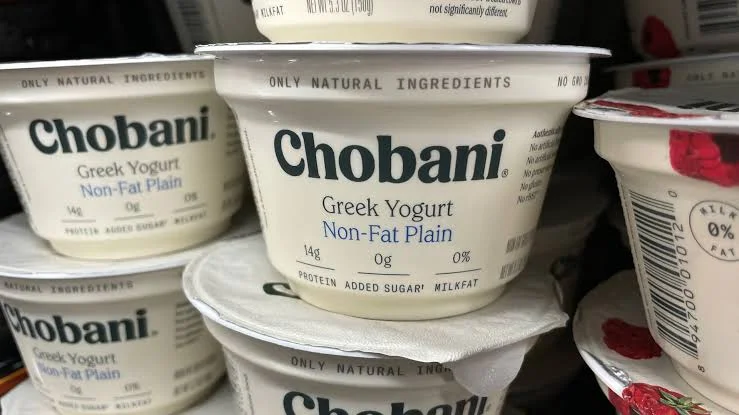
The dispute focuses on Chobani Greek Yogurt Nonfat Plain and Greek Yogurt Whole Milk Plain. The complaint alleges that the “Only Natural Ingredients” representation was misleading because third-party testing reportedly identified certain phthalates or related plasticizer chemicals in tested products.
Importantly, these are allegations in civil litigation. The lawsuit does not establish that Chobani intentionally contaminated yogurt, that every container contains the chemicals at issue, or that consumers suffered physical injuries.
The case instead primarily concerns whether consumers were allegedly misled into purchasing products they otherwise would not have bought, or would have paid less for, because of the labeling representation.
Chobani Lawsuit 2025 Update: What Is the Current Status?
A significant development occurred on April 6, 2026, when U.S. District Judge James E. Simmons Jr. ruled on Chobani’s motion to dismiss.
The court granted the motion in part and denied it in part. Some allegations and remedies were dismissed with leave to amend, while other portions of the plaintiff’s case survived the pleading-stage challenge.
The ruling did not determine that Chobani was liable. A motion-to-dismiss decision generally addresses whether allegations are legally sufficient to continue, assuming properly pleaded facts are true for purposes of that stage.
As of the verified 2026 information discussed here, no final judgment or court-approved settlement establishing payments to consumers had been identified.
Wysocki v. Chobani, LLC Explained
Wysocki v. Chobani, LLC, Case No. 3:25-cv-00907-JES-VET, is a federal consumer-labeling lawsuit.
The original complaint asserted claims under California’s Consumers Legal Remedies Act, Unfair Competition Law, and False Advertising Law. It also included breach-of-express-warranty and unjust-enrichment/restitution theories.
The plaintiff sought to pursue California consumer claims and proposed broader claims involving consumers outside California. However, filing a case as a proposed class action does not automatically create a certified class.
Who Filed the Lawsuit Against Chobani?
Amy Wysocki filed the lawsuit against Chobani LLC.
According to the court record, Wysocki alleged that she purchased Chobani Greek Yogurt Nonfat Plain in 2023. She claimed she relied on Chobani’s labeling and would have paid less—or not purchased the product—had she known about the alleged presence of phthalates.
Her claimed economic injury forms the basis of the consumer-protection lawsuit. The case is not primarily framed as a personal-injury lawsuit seeking damages for a diagnosed illness.
When and Where Was the Lawsuit Filed?
The complaint was filed on April 16, 2025, in the U.S. District Court for the Southern District of California.
The federal case number is 3:25-cv-00907-JES-VET. Judge James E. Simmons Jr. is the presiding district judge.
Chobani later moved to dismiss the complaint, leading to the April 6, 2026 order that allowed portions of the lawsuit to continue while dismissing other theories with permission to amend.
Which Chobani Products Are Involved?
The court’s April 2026 order identifies two products at the center of the litigation:
- Chobani Greek Yogurt Nonfat Plain
- Chobani Greek Yogurt Whole Milk Plain
The lawsuit should therefore not be interpreted as an allegation concerning every product Chobani manufactures.
Other Chobani products appear in separate litigation, including Chobani Zero Sugar yogurt in the Franco case and Chobani 20G Protein yogurt in Danone’s 2026 lawsuit.
What Does the Lawsuit Allege?
The plaintiff alleges that Chobani represented the relevant yogurts as containing “Only Natural Ingredients” while third-party testing reportedly detected certain chemicals characterized in the complaint as non-natural.
The complaint uses those allegations to support consumer-protection, false-advertising, warranty, and related theories.
Chobani challenged both the factual and legal sufficiency of those claims. The April 2026 court decision allowed significant portions to move beyond the dismissal stage, but that procedural ruling should not be confused with proof of the allegations.
Why Was Chobani Sued in 2025?
The lawsuit was filed because the plaintiff claims the challenged labeling created an expectation about what the yogurt contained.
Her theory is essentially economic: she alleges she paid for a product represented as containing only natural ingredients but would have made a different purchasing decision if the alleged chemical presence had been disclosed.
The litigation therefore combines product-labeling questions with California consumer-protection law.
“Only Natural Ingredients” Labeling Claims
The phrase “Only Natural Ingredients” is central to the case.
Chobani argued, among other points, that its products did not expressly state they were “phthalate-free.” The plaintiff argued that a reasonable consumer could nevertheless understand “Only Natural Ingredients” as representing that the product did not contain non-natural substances.
At the dismissal stage, the court found the plaintiff had sufficiently pleaded relevant portions of her misrepresentation theory for them to continue.
That does not mean the label has ultimately been found unlawful. The merits may depend on evidence developed later in the litigation.
Alleged Phthalates in Chobani Yogurt
The complaint relied on testing associated with PlasticList, which reportedly tested Chobani products in 2024.
The court described allegations concerning DEHP, DEP, and DEHT in connection with the tested products. DBP was also discussed, but the judge found the original complaint did not adequately plead the DBP-specific allegation and dismissed that portion with leave to amend.
Third-party testing results are evidence cited by a plaintiff; they are not themselves a judicial finding that every Chobani yogurt product contains the same substances or concentrations.
Plastic Packaging and Chemical Migration Allegations
The plaintiff further alleged that the yogurt containers were made from #5 plastic and suggested the packaging could have been a source of some or all of the detected chemicals.
Chobani disputed the plaintiff’s attempt to connect later testing to the specific product she purchased in 2023. The court nevertheless found the allegations sufficient to create a plausible inference at the pleading stage.
The court did not make a final scientific finding establishing that Chobani packaging caused chemical migration into all relevant products.
False Advertising Claims
The plaintiff asserted a claim under California’s False Advertising Law, arguing that the challenged representation could mislead consumers about the nature of the yogurt.
The legal question is not simply whether a chemical can be detected. The case also concerns what a reasonable consumer would understand the “Only Natural Ingredients” representation to communicate.
Parts of the plaintiff’s claims survived Chobani’s motion to dismiss, while certain equitable-relief theories were dismissed with leave to amend.
Consumer Protection Claims
The complaint also invoked California’s Consumers Legal Remedies Act and Unfair Competition Law.
These statutes can provide remedies when qualifying business practices or representations allegedly deceive or economically harm consumers.
The court declined to dismiss all of these claims outright. However, it dismissed certain omission-based and equitable theories with leave to amend. The underlying litigation therefore remained unresolved rather than ending with the April 2026 decision.
What Are Phthalates?
Phthalates are chemicals commonly associated with plastics and are often used as plasticizers to make materials such as PVC softer and less brittle.
They have historically had applications in food-contact materials, including certain adhesives, lubricants, sealants, and packaging components.
FDA regulations currently permit specified phthalates for particular food-contact applications, while phthalates are not authorized to be directly added to food. The agency has continued reviewing the safety and use of authorized phthalates as scientific information evolves.
In May 2026, the FDA released a scientific evaluation concerning eight phthalates authorized as plasticizers for food-contact use as part of its ongoing post-market review.
Which Phthalates Were Discussed in the Chobani Lawsuit?
Several chemicals appear in the complaint and related testing discussion.
They should not be treated as interchangeable. Different substances have different regulatory histories, uses, chemical properties, and alleged concentrations.
The April 2026 decision particularly discussed DEHP, DEP, DEHT, and DBP when reviewing whether the plaintiff had adequately pleaded her claims.
DEHP
DEHP, or di(2-ethylhexyl) phthalate, is a plasticizer that has been used in plastic materials.
The Wysocki complaint alleged that testing detected DEHP in Chobani products. The court treated those testing allegations as part of the plaintiff’s factual theory at the motion-to-dismiss stage.
Separately, the FDA included DEHP among four phthalates it proposed grouping as chemically or pharmacologically related substances for purposes of a future cumulative risk assessment in 2026.
DBP
DBP stands for dibutyl phthalate.
The original complaint discussed DBP, but the April 2026 court order found that it did not plead the DBP allegation with sufficient particularity. The court noted that the complaint did not adequately allege when, how, or in what manner DBP was present in the products at issue.
Accordingly, allegations specifically premised on DBP were dismissed with leave to amend.
DEHT
DEHT, or bis(2-ethylhexyl) terephthalate, is commonly used as a plasticizer and is chemically distinct from DEHP.
The plaintiff cited third-party testing that allegedly detected DEHT in the relevant Chobani products.
Its presence in testing does not independently establish that Chobani violated consumer-protection law. The litigation concerns how the alleged detection relates to the product representation and the plaintiff’s purchasing decision.
DEP
DEP stands for diethyl phthalate.
It was among the chemicals the complaint alleged had been detected through third-party testing.
As with the other substances, the litigation remains centered on allegations and their relationship to Chobani’s labeling. Detection in particular tested samples should not be generalized into a finding about every Chobani yogurt product without supporting evidence.
How Were Phthalates Allegedly Detected in Chobani Products?
The plaintiff relied on results attributed to PlasticList and third-party laboratory testing performed on products collected in 2024.
According to the court record, PlasticList contracted with a third-party ISO/IEC 17025-accredited laboratory to test products for plastic chemicals. The plaintiff cited those results to support allegations concerning DEHP, DEP, and DEHT.
A major issue raised by Chobani was timing. Wysocki allegedly purchased yogurt in 2023, while the testing took place later.
The plaintiff attempted to bridge that gap by alleging that the product she purchased and tested products used the same type of plastic container. At the pleading stage, the judge found the allegations sufficiently plausible to continue.
What Did the PlasticList Testing Report?
Testing data associated with PlasticList reported measurements for several plasticizer-related compounds in tested Chobani yogurt samples.
For example, publicly reproduced PlasticList-derived data for Chobani Greek Yogurt Nonfat Plain reported measurable DEHP and DEHT in some samples while other tested samples produced results below the relevant quantitation limit.
Those results require context. They represent particular samples and do not establish universal contamination across all Chobani products, manufacturing dates, or containers.
They also do not independently answer whether a product violated labeling law or posed a health risk. Those questions require separate legal, scientific, and regulatory analysis.
Did the Plaintiff Prove Her Chobani Yogurt Contained Phthalates?
Not in the sense of establishing that fact through a final trial judgment.
The plaintiff alleged that testing of later products, combined with similarities in packaging, supported an inference that the yogurt she purchased also contained certain chemicals.
Chobani challenged that inference because Wysocki’s purchase allegedly occurred in 2023 while the cited testing occurred in 2024.
At the motion-to-dismiss stage, the court found the allegations sufficiently plausible for relevant claims to continue.
That procedural determination is different from proving through admissible evidence that Wysocki’s particular container contained a specified chemical at a specified concentration.
What Did Chobani Argue in Its Motion to Dismiss?
Chobani challenged the complaint on several grounds under federal pleading and jurisdictional rules.
Among other arguments, the company disputed whether the plaintiff adequately connected the tested products to the yogurt she personally purchased. Chobani also argued that the products did not specifically represent themselves as phthalate-free.
The company further raised arguments concerning California’s safe-harbor doctrine and the alleged chemical levels.
The judge concluded that some issues—particularly contested scientific questions—could not appropriately be resolved on the limited record at the motion-to-dismiss stage.
What Did the Court Decide About the Chobani Lawsuit?
On April 6, 2026, the court granted in part and denied in part Chobani’s motion to dismiss.
That means neither side received a complete victory.
The court rejected Chobani’s attempt to eliminate the entire case at that stage. At the same time, it identified deficiencies in several portions of the original complaint and dismissed them with permission for the plaintiff to amend.
The decision did not establish Chobani’s liability, certify a class, approve compensation, or determine that Chobani yogurt caused physical injuries.
Which Claims Survived the Motion to Dismiss?
Significant portions of the plaintiff’s affirmative misrepresentation theories survived.
The court also denied Chobani’s motion to dismiss the express-warranty claim. It found the plaintiff had sufficiently pleaded the required elements at that stage.
The court further denied Chobani’s attempt to dismiss the entire case on Proposition 65 safe-harbor grounds because doing so would have required resolving disputed scientific and factual questions inappropriate for the pleading stage.
Which Claims Were Dismissed?
The court dismissed several portions of the original complaint with leave to amend.
These included:
- Allegations premised specifically on DBP because they lacked sufficient particularity.
- Fraudulent-omission theories under the UCL, FAL, and CLRA.
- Certain equitable-relief claims.
- The unjust-enrichment/restitution claim as originally pleaded.
Because leave to amend was granted, dismissal of these theories was not necessarily a permanent adjudication of their merits.
Why Was the Plaintiff Allowed to Amend the Complaint?
Federal courts generally permit amendment when pleading deficiencies may potentially be corrected.
Here, the judge concluded that the identified shortcomings did not necessarily justify permanently terminating those portions of the case.
The plaintiff was therefore granted an opportunity to file a First Amended Complaint addressing deficiencies identified by the court.
This is a common procedural development and does not mean the amended claims will ultimately succeed.
Chobani Lawsuit 2026 Update
The most significant verified 2026 development in the Wysocki litigation is the April ruling on Chobani’s motion to dismiss.
That decision narrowed portions of the original complaint while permitting other claims to continue.
Consumers should also distinguish this litigation from two separate developments in 2026: the Seventh Circuit’s decision reviving the Franco Zero Sugar lawsuit and Danone’s lawsuit concerning Chobani’s 20G Protein yogurt.
Those cases involve different plaintiffs, legal theories, and product representations.
April 2026 Motion to Dismiss Decision
On April 6, 2026, Judge James E. Simmons Jr. issued a 25-page order addressing Chobani’s motion.
The court denied dismissal of the entire lawsuit, allowed important misrepresentation and warranty theories to proceed, and dismissed certain other theories with leave to amend.
The ruling was procedural. It determined which allegations were sufficiently pleaded, not which party should ultimately prevail after discovery or trial.
What Happened After the Court’s Decision?
The April order authorized Wysocki to amend portions of her complaint.
The publicly accessible court materials reviewed for this article establish the April 2026 ruling, but they do not provide enough verified information to characterize every subsequent docket development through September 2026.
Accordingly, consumers should rely on the federal docket or PACER for the newest filing-level status rather than assuming that older settlement or class-action websites reflect the latest proceedings.
Is the Chobani Lawsuit Still Active?
The April 2026 ruling did not terminate Wysocki v. Chobani.
Instead, it permitted substantial portions of the litigation to continue and gave the plaintiff leave to amend dismissed portions.
No verified final judgment or court-approved settlement ending the dispute was identified in the sources reviewed for this article.
Because federal dockets can change quickly, anyone relying on the status for legal or claims purposes should verify the current docket directly.
Is the Chobani Lawsuit a Class Action?
It is more precise to call Wysocki v. Chobani a putative or proposed class action.
Wysocki filed the case on behalf of herself and other allegedly similarly situated consumers.
However, filing a complaint containing class allegations is different from obtaining class certification.
Until a court certifies a class, the lawsuit should not be described as though every potentially affected Chobani customer has automatically become a member of a legally certified class.
Has the Chobani Class Been Certified?
The April 2026 motion-to-dismiss order did not certify a consumer class.
Class certification typically occurs later in litigation after the parties address whether requirements such as numerosity, commonality, typicality, adequacy, and other Rule 23 standards have been satisfied.
Therefore, consumers should be cautious with websites describing the Wysocki case simply as an established nationwide Chobani class action.
At the stage reflected in the verified materials, proposed classes had been alleged, but class certification had not been established by the April ruling.
Who Could Potentially Be Included in the Chobani Class Action?
The original complaint proposed groups of consumers who allegedly purchased relevant Chobani products under circumstances similar to Wysocki.
Potential class membership, however, should not be confused with actual eligibility for money.
No court-approved settlement or claims program reviewed here has established final compensation criteria.
If the case eventually reaches certification or settlement, the applicable court orders and settlement documents would define exactly which products, purchase periods, jurisdictions, and consumers qualify.
California Consumers
The plaintiff asserted California consumer-protection claims under the CLRA, UCL, and FAL on behalf of a proposed California class.
These claims are significant because Wysocki’s theories rely heavily on California laws governing allegedly misleading product representations.
Whether a California class is ultimately certified will depend on later proceedings and the evidence before the court.
Proposed Nationwide Class
The original complaint also asserted certain theories on behalf of a proposed national group of consumers.
The April order describes the express-warranty and unjust-enrichment/restitution counts as having been asserted on behalf of Wysocki and a purported national class.
A proposed nationwide class is not the same as a certified nationwide class.
Can Consumers Sign Up for the Chobani Class Action Lawsuit?
There is no verified court-approved signup process simply because the Wysocki lawsuit was filed.
In most class litigation, consumers do not “join” a proposed class by submitting information to random websites while the case remains pending.
If a settlement is eventually approved and requires claims, an authorized settlement administrator may establish an official website, eligibility rules, deadlines, and claim procedures.
Consumers should verify any such program against court records before providing personal information.
Is There an Official Chobani Lawsuit Claim Form?
No verified court-approved claim form for the Wysocki phthalates lawsuit was identified in the materials reviewed for this article.
That is consistent with the fact that no verified settlement establishing a consumer claims process has been announced.
A legitimate claim form would normally be connected to a court-approved settlement and authorized administrator.
Consumers should be skeptical of websites implying that submitting personal details today guarantees participation or compensation.
Has the Chobani Lawsuit Reached a Settlement?
No verified court-approved settlement in Wysocki v. Chobani was identified as of the 2026 information reviewed here.
The April 2026 proceeding involved a motion to dismiss—not settlement approval.
Those are fundamentally different legal events.
A settlement would normally produce identifiable court filings addressing the proposed agreement, class definition, notice procedures, attorney fees, release terms, and potentially a claims administrator.
Until such documentation exists, payout estimates should be treated as speculation rather than established compensation.
Chobani Lawsuit 2025 Payout: Is Compensation Available?
No confirmed payout program arising from the Wysocki litigation has been established in the verified sources reviewed here.
That means there is currently no reliable basis for stating that purchasers will receive a specific dollar amount.
Compensation could become relevant if the parties later reach a settlement or if plaintiffs obtain a judgment that creates monetary relief.
Until then, online payout estimates are not equivalent to court-approved compensation.
Has a Chobani Settlement Payout Date Been Announced?
No verified settlement payout date has been announced for the Wysocki phthalates case in the materials reviewed here.
Without an approved settlement, there generally cannot be a meaningful distribution schedule.
If the litigation eventually settles, payment timing could depend on preliminary approval, consumer notice, a claim deadline, objections, final approval, appeals, and claim processing.
Any website publishing a definite payout date should therefore be checked against the federal court docket.
Is the Chobani Lawsuit a Cancer Lawsuit?
The Wysocki case should not be characterized as a traditional cancer lawsuit.
It is principally a consumer-labeling and economic-injury case concerning alleged chemical presence and the “Only Natural Ingredients” representation.
The complaint discusses alleged health concerns associated with phthalates, but that does not mean the plaintiff proved that Chobani yogurt caused cancer.
Nor does the April 2026 court decision establish such a causal connection.
Does the Complaint Allege That Chobani Yogurt Causes Cancer?
The litigation discusses alleged health concerns associated with chemicals identified in the complaint, but the core legal theory is not that Wysocki developed cancer after eating Chobani yogurt.
Her alleged injury is primarily economic.
Consumers should therefore distinguish references to toxicological concerns from a proven allegation that a specific Chobani product caused cancer in a specific person.
No such causation finding was made in the April 2026 dismissal ruling.
What Health Concerns Does the Complaint Discuss?
The complaint characterizes certain phthalates as potentially harmful and cites concerns associated with exposure.
At the regulatory level, the FDA continues evaluating phthalates used in food-contact applications. In May 2026, the agency advanced its scientific review of currently authorized plasticizers, including work that could inform future cumulative risk assessment.
That continuing regulatory review should not be interpreted as an FDA finding that Chobani yogurt causes a particular disease.
Are Health-Risk Allegations the Same as Proof of Injury?
No.
A lawsuit may cite studies, toxicological information, or alleged chemical exposure without proving that a particular consumer suffered a disease because of a particular product.
Personal-injury causation generally requires evidence connecting exposure, dose, injury, and the defendant’s conduct.
The Wysocki litigation, as reflected in the reviewed materials, is primarily focused on alleged consumer deception and economic harm rather than adjudicated physical injury.
Chobani Cancer Lawsuit Reddit Discussions: Claims vs. Court Records
Online discussions sometimes describe the litigation using phrases such as “Chobani cancer lawsuit,” “toxic yogurt,” or similar language.
Those descriptions can overstate what the court record actually establishes.
The federal case is a proposed consumer class action concerning alleged phthalates and an “Only Natural Ingredients” representation. The April 2026 ruling did not find that Chobani yogurt causes cancer.
Reddit posts and social-media discussions may help show what consumers are worried about, but they are not substitutes for complaints, judicial orders, FDA information, or scientific evidence.
Is Chobani Yogurt Safe to Eat?
The Wysocki lawsuit alone does not establish that Chobani yogurt is unsafe to eat.
The court specifically declined to resolve contested scientific questions at the motion-to-dismiss stage. A judge allowing consumer-labeling allegations to continue is not equivalent to a regulatory finding that the food poses an unacceptable health risk.
The FDA continues to evaluate phthalates in food-contact applications. It currently permits specified uses while reviewing newer scientific information.
Consumers with individual medical or dietary concerns should rely on appropriate health professionals and current food-safety guidance rather than interpreting a pending civil complaint as a medical conclusion.
Has Chobani Yogurt Been Recalled in 2026?
The reviewed sources did not establish an FDA recall of the Chobani plain Greek yogurt products based on the allegations in the Wysocki lawsuit.
A lawsuit and a product recall are separate processes.
A private plaintiff may file consumer litigation without the FDA ordering or announcing a recall. Likewise, a recall may occur for reasons entirely unrelated to civil litigation.
Consumers checking current recall status should use the FDA’s official recall and safety-alert resources rather than assuming that a lawsuit automatically means a product was recalled.
Which Chobani Yogurt Is Recalled?
The Wysocki litigation itself does not establish a 2026 recall of Chobani Greek Yogurt Nonfat Plain or Greek Yogurt Whole Milk Plain.
Those products are named in the lawsuit because of the plaintiff’s labeling and testing allegations, not because the court ordered them recalled.
This distinction matters because online articles sometimes combine lawsuit allegations with recall terminology even when no corresponding regulatory action has been established.
Is a Chobani Recall Related to the 2025 Lawsuit?
No verified recall tied to the Wysocki phthalates allegations was identified in the reviewed materials.
The 2025 lawsuit is a private civil case alleging misleading labeling and related consumer-law violations.
A recall would generally involve separate action by a manufacturer or regulatory authority based on applicable food-safety considerations.
Consumers should therefore avoid treating “lawsuit,” “recall,” and “settlement” as interchangeable terms.
Franco v. Chobani, LLC Explained
Franco v. Chobani, LLC is a separate lawsuit involving Chobani Zero Sugar yogurt.
Jason and Abigail Franco alleged that the product was marketed as “sugar free” even though it contained four grams per serving of allulose, a monosaccharide used as a sweetener.
The case raised an important question about federal food-labeling regulations and whether allulose falls within the regulatory definition of sugar.
On July 27, 2026, the U.S. Court of Appeals for the Seventh Circuit reversed the district court’s dismissal and allowed the plaintiffs’ case to proceed.
What Is the Chobani Zero Sugar Lawsuit About?
The Francos challenged Chobani’s use of “sugar free” or Zero Sugar labeling.
Their state-law consumer claims depended substantially on how federal regulations define “total sugars.”
The district court had concluded that the lawsuit was preempted based partly on FDA enforcement guidance concerning allulose.
The Seventh Circuit later disagreed with that analysis and concluded that the plaintiffs had plausibly alleged consumer deception.
Why Is Allulose Central to the Lawsuit?
Allulose is a monosaccharide used as a sweetener.
Federal regulations define total sugars by reference to free mono- and disaccharides. The FDA had previously exercised enforcement discretion concerning how allulose is reflected in nutrition labeling.
During the appeal, the FDA explained that the regulatory definition itself includes all monosaccharides, including allulose.
The Seventh Circuit found that interpretation persuasive and concluded that allulose falls within the applicable regulatory definition of sugar.
Why Was the Case Initially Dismissed?
The district court dismissed the Francos’ claims after concluding they were preempted by federal law.
Its analysis relied on FDA enforcement guidance that allowed allulose to be excluded from certain sugar-labeling calculations.
If Chobani’s labeling complied with the relevant federal standard, state-law claims attempting to impose a different requirement could face federal preemption.
The Seventh Circuit ultimately concluded that the regulatory text required a different analysis.
What Did the Seventh Circuit Decide in 2026?
On July 27, 2026, the Seventh Circuit reversed the dismissal.
The appellate court held that allulose is a sugar under the relevant federal regulation because it is a monosaccharide. It also concluded that the Francos had plausibly alleged consumer deception.
Accordingly, their state-law claims were not barred on the preemption theory adopted by the district court.
The appellate ruling did not award damages or finally determine Chobani’s liability.
What Happens After the Case Was Revived?
The Seventh Circuit’s ruling permits the case to proceed in the district court rather than ending at the pleading stage.
Further proceedings may address factual evidence, defenses, class issues, and other matters that the appellate decision did not finally resolve.
A reversal of dismissal is therefore an important development, but it is not the same as a final judgment for the plaintiffs or an approved settlement.
Is the Chobani Zero Sugar Lawsuit Related to the 2025 Phthalates Case?
The cases involve the same defendant but are legally distinct.
Wysocki v. Chobani concerns alleged phthalates and the “Only Natural Ingredients” representation on certain plain Greek yogurt products.
Franco v. Chobani concerns whether Zero Sugar yogurt containing allulose was deceptively marketed as sugar free.
They involve different plaintiffs, courts, products, factual allegations, and legal questions. Consumers researching one should not assume developments in the other automatically apply.
Chobani 20G Protein Lawsuit Explained
Another Chobani dispute emerged in 2026 involving Danone, the parent company of Dannon.
Danone sued Chobani in federal court over claims concerning Chobani 20G Protein yogurt. The dispute focuses on how Chobani calculates and advertises the product’s protein content.
Unlike Wysocki and Franco, this case is a commercial dispute brought by a competing food company rather than a proposed consumer class action.
Why Did Danone Sue Chobani in 2026?
Danone accused Chobani of misleading consumers about the protein content of Chobani 20G Protein yogurt.
According to Danone’s allegations, Chobani reaches its advertised 20-gram figure by using a larger serving size than the standard serving Danone says should apply under FDA rules.
Danone sought relief including label changes and unspecified damages. Chobani disputed Danone’s broader litigation campaign against it.
What Are the Protein Labeling Allegations?
Danone alleges that if Chobani’s protein amount were calculated using the serving size Danone contends is required, the product would provide fewer than 18 grams rather than the advertised 20 grams per standard serving.
That is Danone’s allegation, not a final judicial determination.
The dispute therefore centers on labeling methodology, serving-size rules, competitive positioning, and whether consumers could allegedly receive a misleading impression about protein content.
Is the Danone Lawsuit a Consumer Class Action?
No.
Danone is a competing food company, not a consumer seeking to represent a class of Chobani purchasers.
The lawsuit therefore should not be confused with Wysocki or Franco when consumers search for a “Chobani class action.”
It is a business-to-business legal dispute involving alleged advertising and labeling practices.
What Other Lawsuits Has Chobani Faced?
Chobani has been involved in multiple disputes concerning product labeling, advertising, and competition.
The cases discussed here include:
- Wysocki v. Chobani — alleged phthalates and “Only Natural Ingredients.”
- Franco v. Chobani — Zero Sugar yogurt and allulose.
- Danone’s 20G Protein litigation — protein-content and serving-size allegations.
- Separate Danone litigation involving coffee branding associated with Chobani-owned La Colombe.
These disputes are legally independent. A ruling or settlement in one should not automatically be applied to another.
How to Tell Which Chobani Lawsuit You Are Reading About
The easiest method is to identify the product and allegation.
If the article mentions phthalates, PlasticList, “Only Natural Ingredients,” or Amy Wysocki, it is likely discussing Wysocki v. Chobani.
If it mentions allulose, Zero Sugar, Jason and Abigail Franco, or the Seventh Circuit, it concerns Franco v. Chobani.
If it mentions Danone, Oikos, 20 grams of protein, or serving sizes, it is likely discussing the 2026 competitor lawsuit.
Checking the case name, docket number, court, and filing date prevents separate disputes from being incorrectly combined.
How to Verify a Real Chobani Class Action or Settlement
Consumers should verify legal information through primary or authoritative sources whenever possible.
Useful checks include:
- Search the federal court docket by case name or docket number.
- Confirm whether a court has actually certified a class.
- Look for a preliminary or final settlement-approval order.
- Verify the identity of any court-authorized settlement administrator.
- Check whether an official claim deadline appears in court documents.
- Distinguish attorney advertising from an authorized settlement notice.
A news article saying a lawsuit was filed does not establish that compensation is available.
How to Avoid Fake Chobani Lawsuit Claim Websites
Be cautious when a website promises guaranteed compensation, requests sensitive information before an official claims process exists, or presents an estimated payout as though it has already been approved.
Before submitting information, verify whether the site is named in court documents as an authorized administrator.
Consumers should also avoid paying fees simply to submit a class-action settlement claim. Legitimate settlement notices generally explain the administrator, eligibility criteria, deadlines, and available options clearly.
Most importantly, confirm the underlying case. The existence of a lawsuit does not mean a settlement fund exists.
Chobani Lawsuit Timeline
The Chobani litigation landscape includes several distinct developments from 2025 through 2026.
For the Wysocki case, the key dates involve the filing of the complaint, Chobani’s dismissal motion, and the court’s April 2026 ruling.
Separate events occurred in the Franco and Danone disputes later in 2026.
Keeping these timelines separate prevents unrelated cases from being presented as one large Chobani lawsuit.
April 2025: Wysocki Lawsuit Filed
Amy Wysocki filed Wysocki v. Chobani, LLC on April 16, 2025, in the Southern District of California.
The complaint challenged labeling on certain plain Greek yogurt products and cited third-party testing concerning alleged phthalates.
It sought relief under California consumer-protection laws and other legal theories on behalf of Wysocki and proposed classes of purchasers.
June 2025: Chobani Files Motion to Dismiss
Chobani filed its motion to dismiss on June 11, 2025.
The company challenged the complaint under multiple federal procedural rules and disputed whether the plaintiff had adequately alleged actionable deception and injury.
The parties subsequently briefed the issues before the court ruled in April 2026.
April 2026: Court Grants and Denies Motion in Part
On April 6, 2026, Judge Simmons granted Chobani’s motion in part and denied it in part.
DBP-specific allegations, omission theories, certain equitable remedies, and unjust enrichment as originally pleaded were among the matters dismissed with leave to amend.
Other important portions of the lawsuit survived, including the express-warranty claim and substantial aspects of the affirmative misrepresentation theory.
July 2026: Seventh Circuit Revives Separate Zero Sugar Case
On July 27, 2026, the Seventh Circuit reversed the dismissal of Franco v. Chobani.
The court concluded that allulose falls within the relevant federal regulatory definition of sugar and that the Francos plausibly alleged consumer deception.
The case was allowed to continue in district court.
2026: Danone Files Chobani 20G Protein Lawsuit
Danone filed a separate federal lawsuit in 2026 challenging Chobani’s protein-content representations.
The company alleged that Chobani’s 20G Protein yogurt uses a larger serving size to reach the advertised protein amount and argued that a standard serving would contain less protein.
The case is a commercial dispute and not the same consumer class litigation as Wysocki or Franco.
What Could Happen Next in the Chobani Lawsuit?
Several procedural paths remain possible in the Wysocki litigation.
The parties could continue litigating through amended pleadings, discovery, class-certification proceedings, summary judgment, trial, settlement discussions, or some combination of those stages.
If class certification is requested, the court would separately determine whether the requirements for proceeding on behalf of a class have been satisfied.
A settlement is also possible in civil litigation, but it should not be assumed merely because the case survived part of a motion to dismiss.
Until additional court orders establish otherwise, claims of guaranteed compensation, a fixed payout, or a final finding of wrongdoing remain premature.
Read: Amway Pyramid Scheme Lawsuit
Read: Mad City Windows Lawsuit
Read: Blue World Pools Lawsuit
Read: Sony PlayStation Lawsuit
Read: Cash App Spam Text Lawsuit Settlement
Read: Hyundai Class Action Lawsuit
Frequently Asked Questions
What Is the Chobani Lawsuit 2025 About?
It alleges certain Chobani plain Greek yogurts were misleadingly marketed as containing “Only Natural Ingredients” despite third-party testing cited by the plaintiff.
Is There a Class Action Lawsuit Against Chobani?
Yes, Wysocki was filed as a proposed class action, but filing class allegations does not itself mean a court has certified the proposed class.
Can I Sign Up for the Chobani Class Action Lawsuit?
No verified court-approved claims process has been established for the Wysocki case. Check official court records before submitting information to third-party websites.
Is There a Chobani Lawsuit Payout?
No confirmed settlement payout has been established in the verified Wysocki materials reviewed here. Any specific payment estimates should therefore be treated cautiously.
Has Chobani Yogurt Been Recalled in 2026?
The reviewed sources do not establish a 2026 recall tied to the Wysocki phthalates lawsuit. A pending lawsuit does not automatically trigger a product recall.
Final Thoughts
The Chobani lawsuit 2025 remains an important consumer-labeling dispute involving allegations about phthalates and the “Only Natural Ingredients” representation on certain Chobani Greek yogurt products. The April 2026 court decision allowed significant portions of the case to continue while dismissing some theories with leave to amend. That ruling did not establish that Chobani violated the law or that the allegations have been proven.
Consumers should also distinguish the Wysocki case from separate litigation involving Chobani Zero Sugar and Chobani 20G Protein products. At this stage, no verified court-approved settlement, official claim form, or confirmed payout has been established for the Wysocki case. Anyone following the litigation should rely on current court records for new developments, since class certification, settlement discussions, amended claims, or other rulings could change the case status.